
“Virgin” and “processed” are often treated as simple quality grades. In practice, they describe how hair has been handled—not whether a finished extension will automatically perform well or poorly.
Virgin hair has not been chemically colored, permed, relaxed, or otherwise chemically altered after collection. Processed hair has been changed to create a particular shade, curl pattern, texture, or finish.
Processing can weaken hair when it is aggressive or poorly controlled, but carefully processed, cuticle-aligned human hair can still be an excellent choice—especially when a salon or brand needs consistent blondes, highlights, fashion shades, or repeatable textures.
For buyers, the useful question is not simply “Is it virgin?” It is: What was the starting hair, what processing was performed, are the cuticles intact and aligned, and how did the batch perform after washing?
Virgin Hair vs Processed Hair: The Short Answer
Quick answer: Choose virgin hair when you want a natural dark shade, maximum room for custom coloring, and the least chemically altered starting point. Choose high-quality processed hair when shade accuracy, texture consistency, and ready-to-wear convenience matter more.
In either case, cuticle condition, batch consistency, manufacturing controls, installation, and aftercare determine real-world performance.
| Factor | Virgin hair | Processed hair |
| Chemical history | No chemical color, perm, or relaxer after collection | Colored, lightened, permed, relaxed, coated, or otherwise altered |
| Typical color range | Natural donor shades | Natural, blonde, highlighted, ombré, gray, and fashion shades |
| Texture | Natural texture; may vary from bundle to bundle | Can be made more uniform and repeatable |
| Cuticles | May be intact and aligned, but the label alone does not prove it | May remain aligned or may be damaged/removed, depending on process and grade |
| Color flexibility | Good starting point for professional custom color | Further lightening may be limited; darkening is generally safer than additional bleaching |
| Consistency | Natural variation is normal | Often easier to match across batches when QC is strong |
| Lifespan | Often longer when the hair is healthy and well cared for | Ranges widely; gentle processing can perform well, while overprocessing shortens useful life |
| Best fit | Natural colors, custom color work, premium positioning | Ready-made shades, blondes, highlights, uniform patterns, faster service |
What Is Virgin Hair?
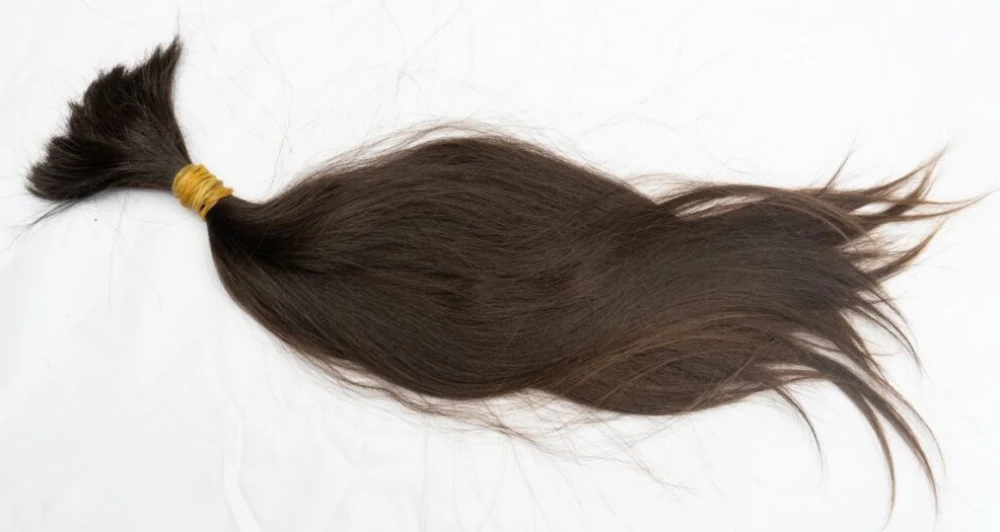
What is virgin hair?
In the hair extension trade, virgin hair generally means human hair that has not been chemically colored, bleached, permed, or relaxed after collection. Its natural pigment and structure are still present. When the cuticles are also intact and aligned from root to tip, the hair tends to feel smoother, retain moisture more effectively, and resist friction-related tangling better than mixed-direction hair.
The term is not a complete specification. “Virgin” does not guarantee that every bundle came from one donor, that the cuticles are intact, or that the hair has never been steamed. Suppliers use the label differently, so buyers should ask for a written definition and testing evidence rather than relying on the name alone.
Related: virgin hair extensions and raw hair vs virgin hair.
What Is Processed Hair?
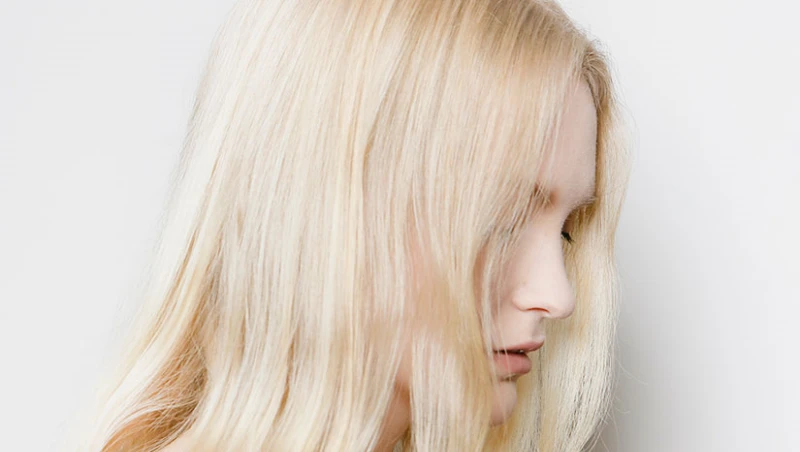
Virgin, Raw, Remy, and Human Hair Are Not the Same Label
These terms describe different attributes, which is why product listings can sound contradictory:
- Human hair describes the fiber source. It does not tell you how the hair was collected, aligned, or processed.
- Remy hair describes cuticle direction: the strands are kept aligned from root to tip. Remy hair can be virgin or color-processed.
- Virgin hair describes chemical history. It can also be Remy when the cuticles are intact and aligned.
- Raw hair is usually used for hair sold in its natural color and texture with no chemical or steam patterning, although supplier definitions still vary.
For a deeper explanation of cuticle direction, see full cuticle Remy vs Remy vs non-Remy hair.
Is Virgin Hair Always Better?
No. Virgin hair is the better starting material for some jobs, but “better” depends on the result the customer needs.
Virgin hair is usually the better fit when:
- The target shade is close to the donor’s natural color.
- A professional colorist wants control over the coloring process.
- Natural variation is acceptable or desirable.
- The product is positioned around minimal chemical alteration and long-term reuse.
- The buyer can verify cuticle alignment, donor-hair quality, and batch consistency.
Processed hair is often the better fit when:
- The order requires blonde, highlighted, rooted, ombré, gray, or fashion shades.
- A salon needs a ready-to-install match without performing color work in-house.
- A brand needs consistent shade and texture across repeated production runs.
- The intended style is fixed and additional lightening is not planned.
- The manufacturer can document controlled processing and post-wash performance.
How Processing Changes Hair Performance?
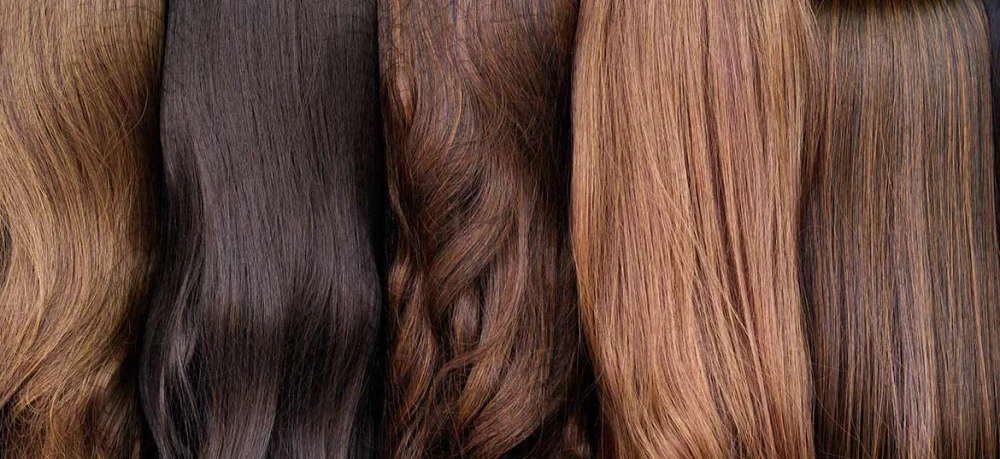
1. Cuticle condition and tangling
Hair cuticles overlap like roof shingles. When they remain intact and point in the same direction, strands slide past one another more easily. Chemical lightening can raise and weaken the cuticle; mixed-direction or stripped-cuticle hair relies more heavily on coatings for an initially smooth feel. That is why a first-touch test is not enough. Evaluate the hair after several shampoo cycles.
2. Color and batch consistency
Virgin hair keeps natural undertones and variation. That can create a beautiful, realistic result, but it also makes exact repeat orders harder. Processed hair gives a manufacturer more control over shade, root depth, highlight placement, and pattern, provided the factory uses a stable formula and objective color tolerance.
3. Styling and recoloring
Virgin hair offers more room for professional customization because it has not already used part of its chemical “budget.” It can still be damaged by bleach, permanent color, or high heat. Processed hair may be safely heat-styled within supplier guidance, but repeated lightening is risky. Whenever possible, order close to the final shade and perform a strand test before any chemical service.
4. Lifespan and value
There is no credible universal lifespan for either category. Installation method, frequency of wear, color level, strand diameter, bond construction, home care, water quality, and heat exposure all matter. Compare suppliers by validated wash-cycle results, reusability, shedding, tangling, and cost per wear—not by an unsupported promise that every bundle lasts a fixed number of months or years.
How to Check Hair Quality Before Placing a Bulk Order?
A sample should be tested the way the customer will actually use it. For B2B orders, ask the manufacturer to identify the batch and provide the acceptance standard before production.
| Check | What to verify |
| Specification review | Confirm fiber source, virgin/processed definition, Remy status, donor count if relevant, processes performed, coatings, color level, texture method, and tolerances. |
| Pre-wash inspection | Record weight, length, tip fullness, odor, color, luster, weft or bond construction, and initial combing loss. |
| Wash-cycle test | Use the agreed shampoo and water temperature. Air-dry consistently. Photograph and score tangling, matting, frizz, curl retention, color bleed, shedding, and feel after repeated cycles. |
| Cuticle check | Use microscopy or a trained cuticle-direction check. Do not assume “Remy” or “virgin” proves alignment. |
| Colorfastness test | Check rinse water and towel transfer, especially for dark, red, vivid, and rooted shades. |
| Strand/heat test | Perform chemical and heat tests on a small section using the exact salon protocol. Never promise bleach results without a strand test. |
| Batch comparison | Compare multiple pieces from the same lot and a repeat lot. Consistency is as important as the best individual sample. |
| Documentation | Approve a signed golden sample and written tolerance sheet before bulk production. |
See Alpha’s overview of hair extension quality control and its published quality standards.
Which Option Works Best by Extension Type?
Clip-in extensions
Clip-ins are removed between wears, so storage, brushing, and heat styling strongly affect lifespan. Virgin clip-in hair is useful for custom coloring and natural dark shades. Processed clip-ins are often more practical for ready-made blondes, highlights, and ombré shades.
Explore clip-in human hair extensions.
Tape-in extensions
For tape-ins, hair quality and adhesive construction both matter. A good hair sample can still fail if the tape swells, slips, or leaves excessive residue. Test the full system through washing, drying, removal, and retaping—not just loose hair.
Explore tape-in human hair extensions.
Weft extensions
Wefts should be checked for return hair, seam comfort, shedding, tip fullness, and behavior after washing. Virgin weft hair offers a strong base for custom color; processed wefts make commercial shade matching easier. The seam method and installation technique may affect the client experience as much as the fiber category.
Explore human hair weft extensions.
K-Tip and Other Bonded Extensions
Bonded hair is generally not reused in the same way as removable wefts or clip-ins, so predictable shade, bond integrity, and installation performance may outweigh the value of an untouched fiber. Test keratin consistency, shedding at the bond, and removal behavior alongside the hair itself.
Wigs and Toppers
The base construction, ventilation, density, knot work, cap fit, and color match all influence a wig or topper. Virgin hair can support premium custom work, while carefully processed hair provides the consistent shades and textures many finished systems require.
Questions Salons and Hair Brands Should Ask a Supplier
- How do you define virgin, raw, Remy, and processed hair in writing?
- Is the hair chemically colored, lightened, permed, steam-textured, acid-treated, coated, or cuticle-stripped?
- Are the cuticles intact and aligned? What test supports that claim?
- What incoming-hair grade and color level were used for this shade?
- How many wash cycles does the batch pass, and what are the pass/fail criteria?
- What are the tolerances for shade, weight, length, tip fullness, shedding, and texture?
- Can you provide samples from the same production process planned for the bulk order?
- How do you trace complaints back to a production lot?
- Will the approved sample, formula, and specification be retained for repeat orders?
- What claims are safe for the brand to place on packaging and product pages?
Care Tips for Virgin and Processed Human Hair
- Detangle gently from the ends upward before washing.
- Use extension-compatible shampoo and conditioner; follow the bond or adhesive manufacturer’s guidance.
- Keep conditioner and oil away from tapes, keratin bonds, and beads.
- Use a heat protectant and the lowest effective tool temperature.
- Do not bleach or permanently color an entire set before a strand test.
- Dry bonds and attachment areas thoroughly. Store removable extensions clean, dry, and detangled.
- Match the care instructions to the processing history; highly lightened hair usually needs more conditioning and less heat.
FAQ
Is processed human hair fake?
No. Processed human hair is still real human hair. “Processed” only means its color, texture, surface, or structure has been altered after collection.
Can virgin hair be Remy hair?
Yes. Virgin describes chemical history; Remy describes cuticle alignment. Hair can be both virgin and Remy.
Can Remy hair be processed?
Yes. Cuticle-aligned Remy hair can be colored or otherwise processed. The quality depends on the starting hair and how carefully the process is controlled.
Why is blonde hair usually processed?
Naturally light donor hair is limited and expensive. Most commercial blonde extensions are created by lifting darker hair and toning it to a target shade.
Can processed hair be colored again?
Sometimes, but further lightening carries significant risk. Darkening or toning may be possible after a strand test. Follow the supplier’s chemical history and guidance.
How can I tell whether hair is really virgin?
Appearance alone is not enough. Ask for a written definition, processing disclosure, cuticle evidence, batch traceability, and wash-test results. Validate a sample independently before a bulk order.
Which is better for a private-label hair brand?
Use the category that matches the customer promise. Virgin hair suits natural shades and professional customization. Processed hair suits consistent ready-made colors and textures. Build the specification around measurable performance, not a label alone.
Final Verdict
Virgin hair offers the least chemically altered starting point, which makes it valuable for natural shades, custom color work, and premium products. Processed hair offers something equally important: controlled color and texture at commercial scale. Well-processed cuticle-aligned hair can outperform poorly sourced hair sold under a premium label.
For salons, wholesalers, and hair brands, the safest buying rule is simple: define the terms, disclose the process, test washed samples, approve measurable tolerances, and keep every repeat order tied to the same specification.