
Choosing between 16 inch vs 20 inch hair extensions sounds simple: one option is four inches longer. Once the hair is installed, however, those four inches can change the whole effect. Sixteen inches usually gives you believable fullness and a polished medium-to-long finish.
Twenty inches creates a clearer length transformation and gives you more hair to work with for waves, braids, and long ponytails.
The better choice is not automatically the longer one. Your height, torso length, natural haircut, texture, attachment position, and the amount of extension hair all affect the result. A 20-inch set can look balanced on one person and sparse or difficult to blend on another. Likewise, a well-matched 16-inch set can look fuller and more expensive than longer hair with thin ends.
Here is the short answer: choose 16 inches when you want natural-looking volume, easier daily care, or a smaller jump from shoulder-length hair. Choose 20 inches when visible length is the priority and you are comfortable with a little more detangling, drying, and styling. Before you order either, measure from the point where the extensions will actually sit.
16 Inch vs 20 Inch Hair Extensions at a Glance
| Comparison point | 16-inch hair extensions | 20-inch hair extensions |
| Exact strand length | 40.64 cm | 50.8 cm |
| Typical visual effect | Natural fullness with moderate added length | Noticeably longer, more glamorous finish |
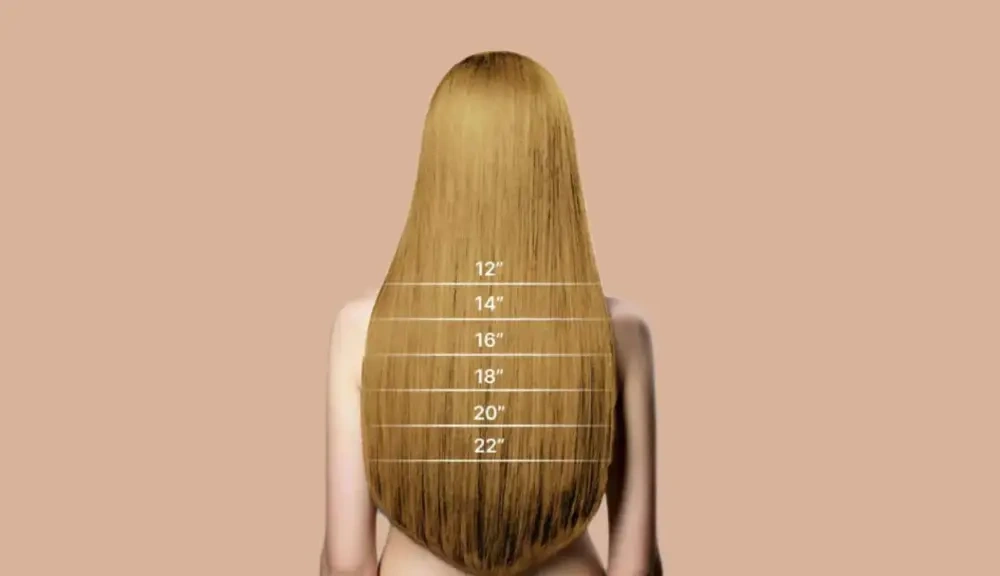
| Where straight hair may fall | Often around the chest or upper back | Often below the bust or around mid-back |
| Best starting point | Shoulder-length to medium natural hair; volume-led goals | Medium to long natural hair; length-led goals |
| Styling | Blowouts, soft waves, half-up styles, low ponytails and buns | Long waves, braids, high-impact ponytails and fuller updos |
| Daily handling | Faster to brush, wash and dry | More surface area to detangle, wash and protect |
| Fullness consideration | More strands can fit into the same gram weight | The same gram weight may look lighter through the ends |
| Overall impression | Subtle, practical and easy to wear | Dramatic, versatile and photo-ready |
These body placements are estimates, not guarantees. The same hair extension length sits differently on a petite person with a short torso than on a tall person with a long torso. Texture and installation height change it again.
What Does a Four-Inch Difference Really Look Like?
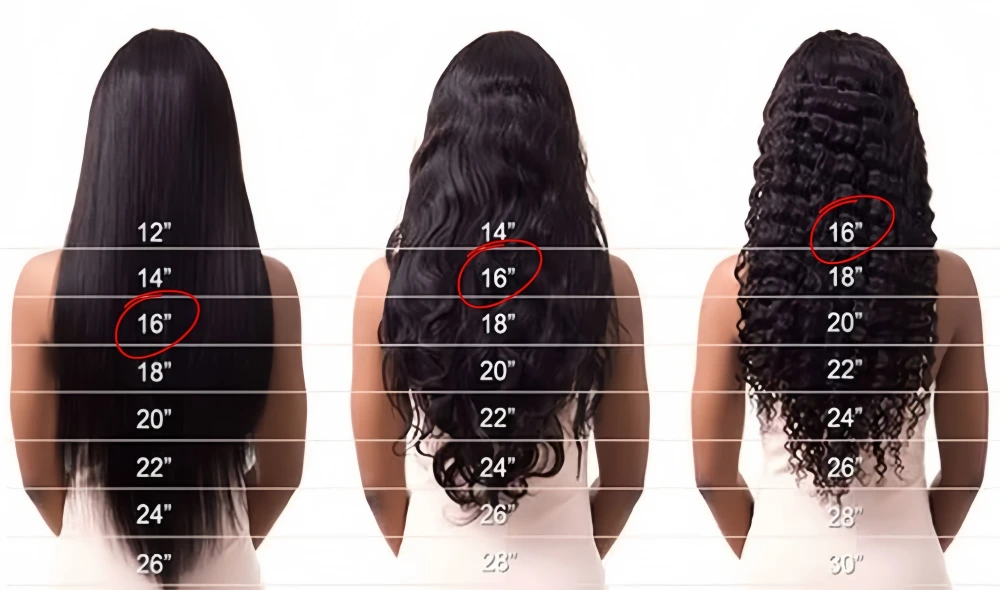
Four inches equals 10.16 cm. On a measuring tape, that gap may seem small. In hair, it is enough to move the ends from a natural chest-level finish to a distinctly long, mid-back look on many people.
The difference often looks larger in straight hair because the strands hang at their full visible length. Loose waves lift the ends slightly. Curls and coils create more spring, so their hanging length is shorter even though the strand still measures 16 or 20 inches when gently stretched.
Your installation point matters too. Clip-ins are commonly placed through several horizontal sections around the back and sides of your head. A halo sits from a different point, while tape-ins, bonds, and wefts are positioned according to your stylist’s sectioning plan. If you measure from the crown but the main weft sits lower, your estimate will be wrong.
That is why two photos labeled “20-inch extensions” can look completely different. The models may have different heights, textures, installation points, densities, and haircuts. Use photos for inspiration, but use a tape measure for your decision.
How to Measure Before You Choose?

ou can preview both lengths in less than five minutes.
- Style your natural hair in the texture you expect to wear most often.
- Identify the likely attachment point. For clip-ins, start around the middle of your ear or the level where your main back weft will sit. For professional methods, ask your stylist where the rows or bonds will be placed.
- Hold a soft measuring tape at that point and let it follow the shape of your head and back.
- Mark 16 inches, then 20 inches. Check the view from the front, side, and back.
- Repeat the test while seated and with your hair pulled into your usual ponytail. A length that looks beautiful standing may feel inconvenient against a chair, collar, or workout clothes.
For a more detailed measuring method, use Alpha Hair’s guide to measuring hair extensions. If you are comparing several sizes for a collection, the broader hair extension length guide helps you place 16 and 20 inches within the full range.
When 16-Inch Hair Extensions Are the Better Choice?
Sixteen-inch extensions sit in the practical middle of a length range. They are long enough to create movement, soft waves, and a visible ponytail, but short enough to feel familiar if you normally wear shoulder-length or medium hair.
You will probably prefer 16 inches if:
- your main goal is fuller-looking ends rather than maximum length;
- your natural hair is around the shoulders or collarbone and you want an easier blend;
- you are new to extensions and want a manageable first length;
- you regularly exercise, wear uniforms, or keep your hair tied back;
- your natural hair is fine and your stylist wants to limit the installed weight;
- you prefer a polished everyday look for work, school, or client appointments.
A 16-inch hair extensions before-and-after result can still be striking. The change often comes from density: see-through ends become solid, the perimeter looks healthier, and a simple blowout holds a stronger shape. If your natural hair is already close to 16 inches, matching the length instead of going longer can give you the most convincing volume result.
Sixteen inches also leaves room for a blending cut. A stylist can soften a blunt natural perimeter, add face-framing pieces, or trim the extensions into a U-shaped finish without sacrificing the overall look.
When 20-Inch Hair Extensions Are Worth It?
Twenty-inch extensions make length part of the hairstyle. They are usually the better option when you want your before-and-after photos to show a clear transformation, not only added thickness.
You will probably prefer 20 inches if:
- you want long waves, braids, or a fuller statement ponytail;
- your natural hair is already medium length and can transition smoothly into longer ends;
- you are comfortable spending more time on brushing, washing, drying, and nighttime protection;
- you need extra length for a wedding, photoshoot, performance, or content day;
- you want enough cutting room for long layers and face framing;
- you have tried extensions before and know how longer hair fits your routine.
The 20 inch hair extensions before-and-after effect depends heavily on fullness. If you keep the same 100-gram pack while increasing the length, that weight is distributed across longer strands. Depending on the product construction, the ends may look less dense than they do in a 16-inch pack. If you want a thick, blunt 20-inch finish, compare the total grams, strand count, number of wefts, and drawing ratio – not just the length on the label.
Alpha Hair’s 20-inch hair extensions page gives you a starting point for product and wholesale options.
Seven Factors That Should Decide Your Length
1. Your natural length and haircut
The larger the gap between your natural ends and the extension ends, the more carefully the transition must be built. Shoulder-length hair can blend into 16 inches with a modest change. Taking a short, blunt cut directly to 20 inches may require more hair, deliberate placement, and a professional blending cut.
Do not treat “stay within four inches of your natural hair” as a universal law. It is a useful starting point, not a substitute for looking at your haircut. Thick, blunt ends show a length jump more clearly than soft layers. A skilled stylist may blend a larger change by mixing lengths and distributing density where your natural perimeter ends.
2. Your height and torso length
An inch is fixed; body placement is not. On a shorter frame, 20 inches may reach well into the mid-back. On a taller frame, the same hair may sit higher. Torso length often explains why two people of similar height see different results.
Instead of asking only, “How long are 16 inch hair extensions?” ask, “Where will 16 inches end on me from my planned installation point?” That small change gives you a useful answer.
3. Your texture and finished style
Extension hair is generally measured straight from the top of the weft, bond, or strand to the longest tips. Wavy, curly, and coily textures do not hang at that full measurement. The tighter the pattern, the more the visible length contracts.
If you want a 16-inch visual finish in curls, you may need to buy a longer measured length. Do not rely on a generic “size up two inches” rule for every curl pattern. Ask for a texture-specific length photo or sample, and confirm whether the supplier measures the hair stretched.
4. Installed weight, grams, and end density
Longer does not automatically mean heavier on your head. Installed weight depends on how many grams, wefts, tapes, or individual strands your stylist uses. A 120-gram 16-inch set is heavier than an 80-gram 20-inch set, even though the second set is longer.
Length does affect how a fixed weight looks. When equal pack weights are compared, a longer option may contain fewer strands or carry less visual density at the ends. Single-drawn hair has more natural length variation and a tapered finish. Double-drawn hair has more strands close to the stated length, so the ends look fuller. If you sell or buy extensions professionally, list the gram weight and end-density standard beside the length.
5. Attachment method
Length works differently across systems. Clip-in hair extensions let you test a dramatic 20-inch look without committing to daily wear. Tape-in hair extensions create a flatter, semi-permanent result, but the installed weight and placement need to suit the client’s natural hair. Weft extensions can build strong density, although the number of rows and the weft construction affect comfort and movement.
For bonds, tapes, rings, and sewn rows, do not choose length separately from the installation plan. Your stylist should decide how much hair your natural density can support and where the attachments can be hidden safely.
6. Maintenance and friction
Twenty-inch hair has more length rubbing against clothing, chair backs, seat belts, and bedding. That does not mean it will automatically tangle or wear out quickly, but it does mean you need to detangle carefully and protect the ends consistently.
With either length, brush from the ends upward, keep attachment areas free of heavy product, use heat protection, and follow the care instructions for your method. Product quality, chemical processing, home care, and wear frequency have more influence on service life than a four-inch difference alone.
7. Price and value
Longer hair usually costs more because long, usable donor hair is scarcer and more material is needed to create a full result. Your final cost can also rise if 20 inches requires extra grams or another pack to maintain the density you want.
Compare like with like. Check hair grade, cuticle direction, color processing, texture, gram weight, drawing ratio, attachment construction, and quality-control standard. A low price for “20 inches” is not good value if the pack is underweight or the ends are too thin for your intended style. Alpha Hair explains its inspection approach on the hair extension quality-control page.
16 Inch or 20 Inch: A Simple Decision Guide
Choose 16-inch hair extensions when you want:
- a volume-first result;
- a natural transition from shoulder-length hair;
- less daily handling;
- an easy first experience with extensions;
- a fuller-looking result from a moderate pack weight.
Choose 20-inch hair extensions when you want:
- an obvious length transformation;
- more room for braids, long waves, and statement ponytails;
- cutting room for long layers;
- a glamorous event or content look;
- long hair and you accept the extra care it needs.
Still split between them? Buy or sample 20 inches if you want the option to trim. Human hair extensions can be cut shorter, but a 16-inch set cannot be made longer. Have the hair installed before it is cut so your stylist can shape it in its final position. If your priority is fullness on fine hair, however, do not buy extra length “just in case” without checking the weight and density.
If You Are Choosing Lengths for a Salon or Hair Brand?
For a professional range, 16 and 20 inches do different jobs, so they should not share identical product copy.
Position 16 inches as your natural-volume and everyday option. Show it on more than one height and texture, include a straight measurement photo, and explain how it works with shoulder-length hair. Position 20 inches as your visible-length option, then make the density clear.
State the net hair weight, number of pieces or strands, and whether the product is single drawn, double drawn, or made to a custom end-density standard.
You can reduce returns by giving buyers three tools:
- a body-placement photo with the model’s height and texture;
- a simple measuring video from the intended attachment point;
- a chart that pairs length with pack weight, end density, and recommended use.
If you are building a private-label range, test both lengths in the same color and texture. That side-by-side sample tells you more than two separate catalog photos. Alpha Hair can customize extension type, length, color, weight, and packaging for brand and salon programs; use the color chart to plan shades, then contact Alpha Hair to discuss your specification.
FAQ
How long are 16 inch hair extensions?
Sixteen inches equals 40.64 cm. On many people, straight 16-inch extensions create a chest-length or upper-back finish, but the exact point depends on height, torso length, and where the extensions are attached. Measure 16 inches from your expected installation point for a personal preview.
How long are 20 inch hair extensions?
Twenty inches equals 50.8 cm. Straight 20-inch extensions often fall below the bust or around the mid-back. They can look longer on a petite frame and shorter on a tall frame. Waves and curls also reduce the visible hanging length.
Is the difference between 16 and 20 inch hair extensions noticeable?
Yes. The four-inch gap equals 10.16 cm, which is usually enough to change the look from natural medium-to-long hair to a clearly longer style. The contrast is strongest when both options have the same texture, attachment position, and end density.
Are 16-inch extensions better for short hair?
They are often easier to blend with shoulder-length or medium hair because the length jump is smaller. Very short or blunt hair may still need extra density, mixed lengths, and a blending cut. The safest choice depends on whether the attachments can be hidden and how much weight your natural hair can support.
Should you choose a longer length for curly hair?
Choose by finished appearance, not only the printed measurement. Curly extensions are usually measured while straight or gently stretched, so they hang shorter in their natural pattern. Use a photo of the exact texture, or measure a sample both stretched and relaxed before you order.
Can you mix 16-inch and 20-inch extensions?
Yes. Mixing lengths can create a softer transition and built-in layers, especially when your natural hair has a blunt perimeter. Your stylist should plan where each length sits so the result looks intentional rather than uneven.
Do you need more hair for 20-inch extensions?
Sometimes. The answer depends on your natural density, attachment method, pack weight, strand count, and desired end fullness. Longer hair sold at the same gram weight can look thinner through the ends, so a full 20-inch result may require more total hair than a 16-inch volume result. Ask for grams and density specifications instead of relying on a fixed number of packs.
Final Verdict
In the 16 inch vs 20 inch hair extensions decision, 16 inches wins for believable fullness, easier blending, and everyday manageability. Twenty inches wins for visible length, styling range, and a more dramatic transformation.
Your best choice reaches the right place, blends with your haircut, and stays full at the ends without excess weight. Measure from the attachment point and compare like for like.