
Yes, you can wear your hair up with micro ring extensions. Ponytails, buns, braids, and half-up styles can all work when the rings are fitted in the right places and you avoid pulling too tightly.
The easiest options are low or mid-height styles with a little softness at the roots. A very tight, sleek high ponytail is more demanding because it lifts the cover hair around the sides, crown, and nape. That can expose the rings or place unnecessary tension on your natural hair.
If you are a salon owner, stylist, hair brand, retailer, or wholesaler, this is also a product-quality question. The strand weight, ring size, silicone lining, ring color, tip consistency, and installation plan all affect how comfortably your customer can wear an updo.
Can I Wear My Hair Up With Micro Ring Extensions? The Short Answer
You can put micro ring extensions into most everyday updos, but the style should feel secure rather than tight. A well-fitted set moves with your natural hair, while a good cover layer keeps the small attachment points out of sight.
For daily wear, start with one of these styles:
- Low ponytail
- Low bun
- Loose braid
- Half-up, half-down style
- Textured mid-height ponytail
- Soft braided bun
A high ponytail or top knot is possible for many wearers, but it depends on ring placement, natural hair density, and how much the extensions have grown out. If the style hurts, pulls at the roots, or reveals several rings, take it down and choose a lower, looser option.
Why Micro Ring Extensions Can Work In Updos?
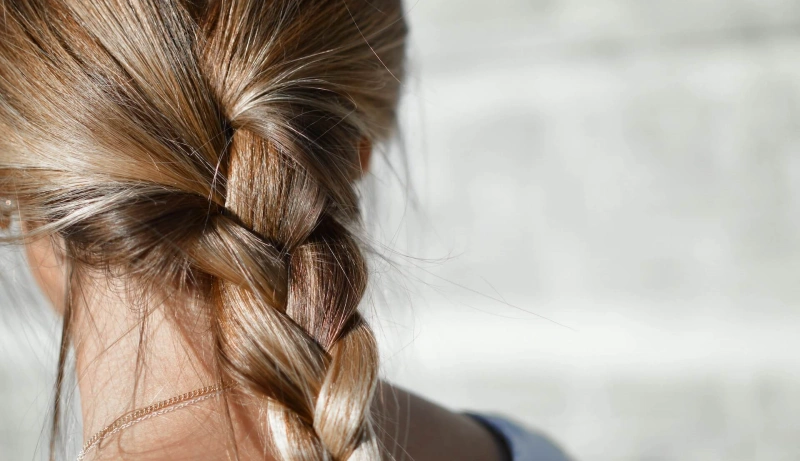
Micro ring hair extensions are installed strand by strand. A small section of natural hair and an extension strand are held together inside a tiny ring. No glue or heat is needed during fitting.
Because the strands can move separately, they usually offer more styling freedom than a wide attachment that sits in one fixed row. When the rings are placed far enough from the hairline and crown, your natural hair forms a cover layer over them. That cover layer is what keeps an updo looking natural.
Three details matter most:
- Placement: Rings placed too close to the temples, hairline, crown, or nape are more likely to show when you lift your hair.
- Tension: A tight elastic changes the direction of the extension strands and can pull on the small sections of natural hair supporting them.
- Blending: Matching the extension color, texture, and density to your own hair makes the finished style look balanced from roots to ends.
What Changes When You Put Your Hair Up?
When your hair is down, the top and side sections naturally fall over the rings. An updo moves that cover hair away from its usual position. The higher and tighter the style, the more likely you are to see gaps around the perimeter.
The base of the ponytail or bun matters too. If the elastic sits directly over several rings, the area can feel bulky or uncomfortable. A lower base usually asks less of the roots and makes the attachment points easier to hide.
Hair growth also changes the result. Just after a correct installation, the rings sit close enough to the scalp to stay controlled while still allowing comfortable movement. As your hair grows, the rings move farther from the scalp. They may twist more easily or become harder to conceal in a sleek style. Regular move-up appointments help restore the original placement.
The Best Updos For Micro Ring Extensions
Low Ponytail
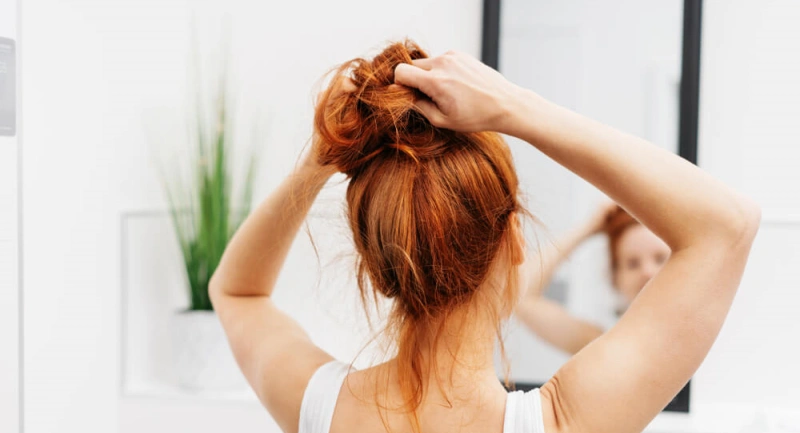
A low ponytail is the simplest place to start. It keeps the hair moving in a natural downward direction and places less lift on the crown. Gather your hair at the nape, secure it with a soft, snag-free tie, and wrap a small strand around the elastic for a neat finish.
Low Bun
A low bun works for the same reason. The bun sits below most of the attachment rows, and its shape helps cover the base. Keep the twist loose enough that you do not feel pulling at individual rings. Secure it with smooth pins rather than one very tight elastic.
Loose Braid
A braid blends your natural hair and extension strands together while spreading tension along the length. A side braid, low three-strand braid, or loose fishtail braid is practical for work, travel, exercise, or overnight protection.
Half-Up, Half-Down Style
A half-up style gives you height at the crown without lifting all the hair around the nape and sides. Take a modest top section, check that it contains no exposed rings, and secure it gently. Leave enough hair down to cover the attachment rows underneath.
Textured Mid-Height Ponytail
A mid-height ponytail can look polished without the strong lift of a high ponytail. Soft waves or light texture help hide small gaps and make the blend more forgiving. Avoid heavy backcombing directly over the rings.
Soft Braided Bun
Create a low ponytail, braid the length, and coil it into a bun. The braid adds structure, while the bun hides the base. This is a useful option for weddings, events, and salon styling demonstrations. For more ideas, see Alpha Hair’s guide to wearing hair up with extensions.
How To Put Your Hair In A Ponytail With Micro Ring Extensions?
Step 1: Check The Rings
Use your fingertips to feel around the attachment rows. If a ring is loose, hanging, painful, or badly twisted, do not build a tight style over it. Ask your stylist to check it.
Step 2: Detangle Gently
Use an extension brush or loop brush. Hold the hair near the roots to support the attachment points, then brush from the ends upward. Do not drag a fine comb through the rings.
Step 3: Leave Out A Cover Section
Clip away a thin layer of natural hair around the crown and sides. This will become your cover hair. It should be thick enough to lie over the rings without looking forced.
Step 4: Gather The Rest Of The Hair
Use your hands to guide the extension strands in the direction of the ponytail. For a higher style, tilt your head slightly toward the ponytail base so the strands can turn without a sharp pull.
Step 5: Secure The Ponytail
Choose a fabric-covered, coil, or other snag-free tie. Place it between attachment areas rather than directly on top of a row of rings. Tighten only until the ponytail feels stable.
Step 6: Add The Cover Hair
Release the top section and smooth it over the base. You can wrap a small strand around the elastic and pin it underneath. Use light styling product on the surface, but keep oil and heavy conditioner away from the rings.
Step 7: Check Every Angle
Use a hand mirror or take a quick photo of the back and sides. Turn your head, look down, and lift your chin. If a ring appears when you move, loosen the style and reposition the cover hair.
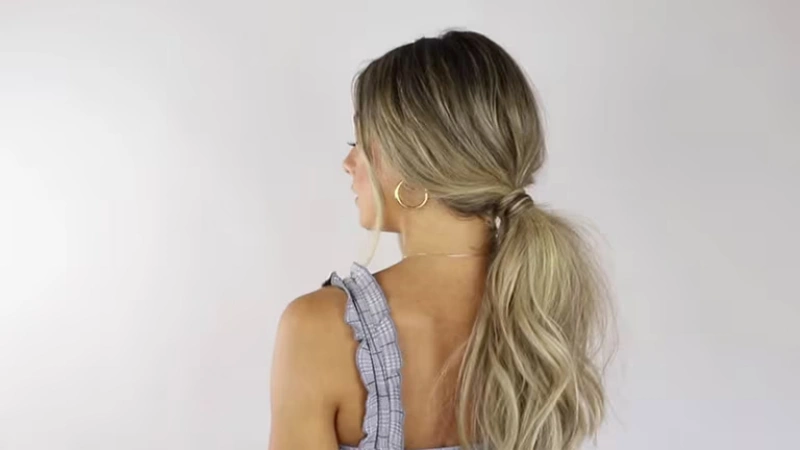
Can You Wear A High Ponytail With Micro Ring Extensions?
You can wear a high ponytail if your installation was planned for it and your natural hair provides enough coverage. Tell your stylist before fitting if high ponytails are part of your normal routine. The stylist can leave a clean perimeter and avoid placing rings where the hair needs to lift.
Keep the first attempts soft rather than slick. Guide the strands upward with your hands, use a flexible tie, and stop if you feel concentrated pulling. A textured high ponytail is usually easier to conceal than a glass-smooth one.
Do not treat pain as part of the styling process. A secure updo should not cause a headache, a burning feeling, or sharp tension at individual attachment points.
How To Keep The Rings Hidden?
Good concealment starts before styling. These choices make a visible difference:
- Leave enough natural hair around the hairline, crown, sides, and nape.
- Match the ring color to the client’s root color.
- Use smaller or lighter strands where coverage is limited.
- Blend the cut so the natural hair and extensions move as one shape.
- Add soft texture instead of pulling every section flat.
- Place the ponytail or bun between attachment rows.
- Check the style in daylight and from the back.
If rings keep showing in ordinary low styles, the issue may be placement rather than technique. Ask the installer to review the perimeter and strand distribution at the next appointment.
Updos To Avoid Or Modify
You do not need to ban a style forever, but repeated high tension can shorten wear time and stress the natural hair. Use extra care with:
- Very tight top knots
- Daily slicked-back high ponytails
- Small elastics that catch extension strands
- Heavy clips fixed directly over the rings
- Tight braids that pull at the hairline
- Styles that force grown-out rings into a sharp new direction
Rotate your styles during the week. A low ponytail one day, a braid the next, and a soft half-up style after that gives the same root sections a break from repeated tension.
How To Protect Your Hair Before And After An Updo?
Start with fully dry, detangled hair. Damp roots can encourage tangling around the rings, and wet extension hair is heavier. If you wash before styling, dry the root and attachment area carefully.
When you take the style down, remove pins and ties slowly. Support the ponytail base with one hand rather than pulling the elastic through the lengths. Then separate any crossed strands with your fingers and brush gently from the ends up.
Follow a simple care routine:
- Brush at least once or twice a day with an extension-friendly brush.
- Keep conditioner, oil, masks, and heavy styling cream away from the rings.
- Use heat protectant on the hair and keep hot tools away from the attachment points.
- Sleep with dry hair in a loose braid or low ponytail.
- Book maintenance at the schedule your stylist recommends.
For a fuller routine, use Alpha Hair’s micro bead hair extensions care guide. If you are worried about pulling or breakage, read do micro ring extensions ruin your hair.
When To Stop And Ask Your Stylist?
Take the style down and contact your stylist if you notice:
- Pain, burning, or a persistent headache
- Redness or sore spots around the rings
- Several loose or sliding rings
- Matting between attachment rows
- Broken natural hair around one section
- A ring bent out of shape
- Sudden pulling after an extension strand twists
Do not clamp loose rings yourself unless you are trained to do so. Over-tightening can crush the ring, catch too much hair, or create uneven pressure. Professional adjustment protects both the extension hair and the small natural-hair section supporting it.
What B2B Buyers Should Check Before Stocking Micro Ring Extensions?
For a hair brand or salon, easy updo styling begins with the product specification. A beautiful sample on a table is not enough. Test how the finished system behaves after fitting, washing, drying, brushing, and tying the hair up.
Hair Quality
Cuticle-aligned Remy human hair should stay smoother through repeated styling than heavily processed hair with mixed cuticle direction. Check softness, tangling, shedding, and how well the ends hold their density after washing.
Strand Weight
One strand weight does not suit every client. Lighter strands may be better around areas with less density, while fuller strands can support volume in stronger sections. Your supplier should be able to explain the available weights and tolerances.
Ring Construction
Check the internal lining, ring dimensions, edge finish, clamping behavior, and color coating. A ring should grip securely when fitted correctly without sharp edges or unstable deformation.
Root And Ring Colors
Visible hardware is a common customer complaint. Offer ring shades that blend with the root area, not just the extension length. A good assortment usually covers black, dark brown, medium brown, light brown, and blonde needs, with custom options for larger programs.
Tip Consistency
Compare the size, shape, and firmness of the tips across a full pack. Irregular tips slow installation and can create bulky attachment points. Consistent strand construction helps stylists produce cleaner rows and more predictable movement.
Shade And Texture Matching
Your extension shade, texture, and density should work with the client’s natural hair after styling, not only when both are straight on a color ring. Test blends under salon lighting and in daylight.
Sample And Wear Testing
Before a bulk order, fit a representative sample on a suitable model. Wash it several times, wear it down and up, apply moderate heat with protection, and check the rings after normal movement. Alpha supports hair extension samples for wholesale and OEM buyers so you can compare construction, color, comfort, and handling before scaling an order.
How Salons And Hair Brands Can Reduce Customer Complaints?
Clear guidance prevents many problems that customers may otherwise blame on the hair. Add a short aftercare card to every pack or salon service. Use plain instructions and show customers what “secure, not tight” feels like before they leave.
Your guidance should cover:
- Which updos suit the installation
- How to brush while supporting the roots
- Which ties and tools to use
- Where to keep conditioner and oil
- How to dry the ring area
- How to protect the hair at night
- When to book a move-up
- Which warning signs require a salon check
Ask about styling habits during the consultation. If your customer wears a high ponytail for work, sports, or dance, the installer needs that information before sectioning begins. The best retail and salon experience connects product choice, fitting, and aftercare instead of treating them as separate steps.
If you are developing a private-label range, Alpha’s OEM and ODM hair extension service can support custom colors, strand weights, packaging, labels, and sample approval.
FAQ
Will Micro Rings Show When You Wear Your Hair Up?
They should stay discreet in a suitable style when the extensions are placed correctly and you have enough cover hair. Low and textured updos are the easiest. If several rings show in a low ponytail, ask your stylist to review the placement.
Can You Wear Your Hair Up Every Day?
You can, but change the position and keep the tension low. Repeating the same tight ponytail every day pulls on the same sections of natural hair. Rotate between low ponytails, braids, buns, and half-up styles.
Can You Work Out With Micro Ring Extensions?
Yes. Use a loose braid, low ponytail, or secure mid-height ponytail that does not pull at the roots. After a sweaty workout, dry the scalp and ring area and separate the strands to prevent tangling.
Can You Sleep With Your Hair Up?
Use a loose low ponytail or braid, not a high bun or tight top knot. Make sure the hair is dry before bed. A silk or satin pillowcase can also reduce friction.
Can You Use Heat Tools Before Making An Updo?
Yes, if the extensions are human hair and your supplier or stylist approves heat styling. Apply heat protectant, use a moderate temperature, and keep the tool away from the rings and tips.
Can You Wear An Updo Right After Installation?
Follow your stylist’s advice. Micro rings do not need adhesive-curing time, but a fresh installation can feel tender while you adjust to it. Start with a loose, low style if needed, and never use an updo to cover pain from an overly tight fitting.
Are Micro Ring Extensions Suitable For Fine Hair?
They may suit some people with fine hair when a trained stylist uses lighter strands, careful section sizes, and discreet placement. They are not right for every client. Fragile hair, active shedding, sore scalp, or certain hair-loss conditions require professional assessment before fitting.
How Often Do Micro Ring Extensions Need Maintenance?
The schedule depends on hair growth, home care, and the installation. Many clients need a move-up roughly every six to ten weeks. Follow the plan set by the installer rather than waiting until the rings become difficult to control.
Conclusion
You can wear your hair up with micro ring extensions, and you do not need to limit yourself to one basic style. Start with low ponytails, low buns, loose braids, and half-up looks. Keep the roots comfortable, leave enough cover hair, and treat a high sleek ponytail as an occasional style that needs careful placement.
For salons and hair brands, the result starts long before the elastic goes in. Consistent hair, well-made rings, suitable strand weights, thoughtful fitting, and clear aftercare all help customers create updos with fewer visibility and comfort problems.
If you are building or expanding a micro ring range, test the hair as a complete system. Ask for samples, compare ring and strand specifications, and confirm how your supplier controls color, weight, tip consistency, and pack quality before you place a bulk order.