
Ready to try cutting curly hair at home? You can get salon-worthy results if you use the right tools and techniques. Alpha’s curly hair extensions give you stable curl patterns and premium quality, so you start with confidence. Before you pick up the shears, check your curl type and decide if you want a trim or a full haircut.
Grab some reference photos and set clear goals. Keep in mind, you need sharp shears, secure extensions, and careful blending for a natural look.
Key Takeaways
Understand your curl pattern before cutting. This helps you achieve the best results and highlights your features.
Use sharp shears and essential tools like sectioning clips and a wide-tooth comb for clean cuts and easy blending.
Cut curly hair extensions when dry. This allows you to see the natural curl pattern and avoid uneven results.
Layering is key for curly hair. It adds volume and movement while preventing a bulky appearance.
Consult a stylist if you notice damage or want advanced techniques. Professional help can ensure your curls look their best.
Understanding Curl Patterns and Goals
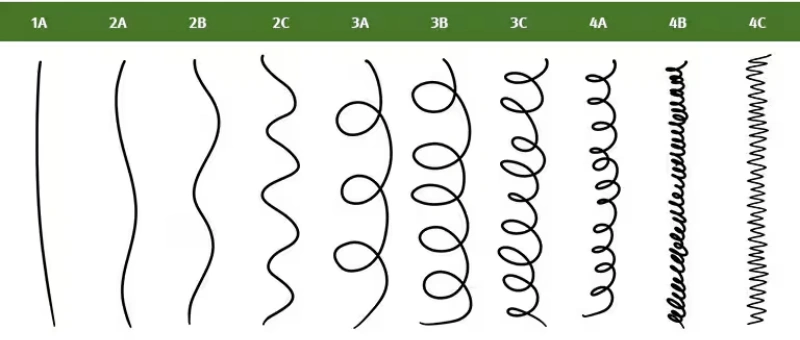
Before you start cutting, you need to understand your curl pattern and set clear goals. Every curl pattern reacts differently to scissors, so you want to sculpt your hair, not just cut it. This helps each curl fall into place and creates a shape that highlights your features.
Alpha’s curly hair extensions make this process easier because they offer stable curl patterns and customizable options. You can match your extensions to your natural curls or try a new look with confidence.
Trim vs Haircut for Curly Hair
You might wonder if you need a trim or a full haircut. Here’s how the two differ:
Trimming focuses on keeping your curl pattern healthy. You remove split ends and prevent damage.
Full haircuts change the length and shape, which can alter your curl pattern.
Regular trims reduce frizz and boost curl definition. Full haircuts reshape your curls and give you a fresh style.
Think about what you want. Do you just want to tidy up your curls, or are you ready for a big change? Alpha’s extensions let you experiment with both options, thanks to their consistent curl pattern and easy blending.
Identifying Curl Types
You need to know your curl pattern before you cut. Start by looking at your curls—are they loose waves or tight coils? Analyze factors like porosity, elasticity, and curl diameter. This helps you tailor your approach and get the best results.
Curly hair behaves differently when dry, which is why many stylists prefer to cut it in its natural, dry state.
Professional stylists use different systems to classify curl patterns. Here’s a quick look:
Classification System | Description |
|---|---|
Andre Walker Hair Typing System | Uses images for classification, created in the 1990s. |
CurlsBot Curl Typing System | Focuses on shrinkage versus elongation, newer and more detailed. |
Alpha’s curly hair extensions come in a range of curl patterns, so you can match your type or try something new.
Choosing Styles and Reference Images
You need a clear vision before you cut. Reference images help you and your stylist align your work with your expectations. Try finding inspiration on Pinterest or Instagram. This guides the cutting process and helps you achieve your desired look.
Understand your specific hair goals before cutting curly hair extensions.
Consider if you want to add volume, length, or shape to your curls.
Consult with a stylist who specializes in curly hair if you need advice.
Alpha’s extensions make it easy to customize your style. You can choose the curl pattern, density, and length to fit your goals.
Essential Tools for Cutting Curly Hair at Home
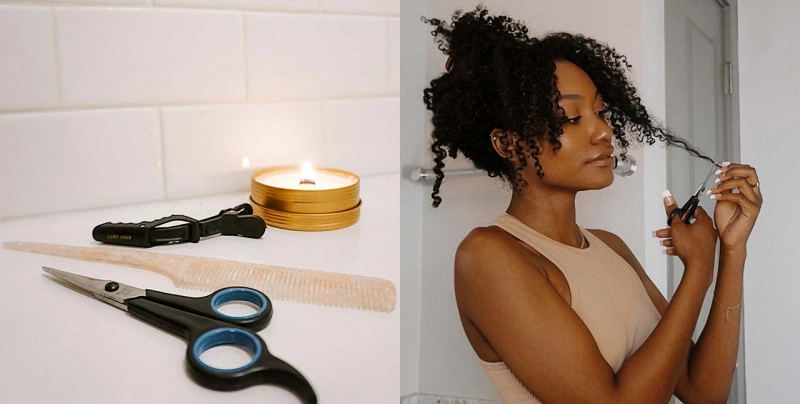
Must-Have Tools and Setup
You want to start with the right tools before you cut curly hair extensions. Sharp hair-cutting shears make a big difference. You also need sectioning clips, a wide-tooth comb, and a spray bottle with water. If you plan to layer or blend, grab a tail comb for precision.
A mirror helps you check your progress from different angles. You can use a cape or a towel to keep your workspace clean. Here’s a quick table to help you organize:
Tool | Purpose |
|---|---|
Hair-cutting shears | Clean, precise cuts |
Sectioning clips | Hold hair in place |
Wide-tooth comb | Gentle detangling |
Spray bottle | Light mist for curl control |
Tail comb | Sectioning and layering |
Mirror | Check shape and balance |
Cape/towel | Protect clothes and workspace |
Tip: Always use professional-grade tools for the best results. Dull scissors can cause frizz and uneven ends.
Preparing Your Workspace
Set up your workspace in a well-lit area. You want enough space to move around and see your hair from every angle. Lay out your tools so you can reach them easily.
Place a chair near a mirror and keep a towel handy. Make sure your extensions are clean and dry. You can use a small table to organize everything. Good lighting helps you spot uneven cuts and shape your curls better.
Using Alpha Curly Hair Extensions
Alpha’s curly hair extensions make cutting easier. The stable curl patterns help you predict how each section will fall. You can choose from over 30 shades and different curl types. The lightweight wefts let you section and blend without hassle.
If you want to customize your look, Alpha offers flexible options for curl pattern, density, and length. You get salon-quality results at home with extensions that stay soft and bouncy.
Note: Alpha’s extensions are designed for easy installation and blending. You can focus on shaping your curls without worrying about tangles or uneven texture.
Preparation Steps Before You Cut Curly Hair
Washing, Co-Washing, and Detangling
You want your extensions to look their best before you start the cutting process. Begin by detangling your curly hair extensions with a wide-tooth comb. Start at the ends and work your way up. This prevents breakage and keeps the curls intact. Next, co-wash your extensions using a sulfate-free conditioner.
Co-wash helps maintain moisture and softness, which is key for blending. If you prefer, use a gentle shampoo, but avoid harsh chemicals. Rinse with cold or lukewarm water. Apply a deep conditioner and leave it in for five to ten minutes. Rinse again and gently squeeze out excess water.
Lay your extensions flat or hang them to air dry. Co-wash is especially helpful for Alpha Curly Hair Extensions because it preserves their bounce and shine.
Tip: Detangle before washing to avoid knots and keep your curls defined.
Drying and Avoiding Styling Products
Always cut curly hair extensions when they are dry. Wet curls shrink and change shape as they dry, which can lead to uneven results. Dry cutting lets you see the natural curl pattern and helps you shape your style accurately. Skip styling products before the cutting process.
Products can weigh down the curls and make blending harder. You want clean, product-free hair so you can focus on blending the layers and achieving clean sections.
Step | Why It Matters |
|---|---|
Air dry | Maintains curl integrity |
No styling products | Prevents weighed-down curls |
Dry cutting | Ensures accurate shaping |
Sectioning for Precision
Sectioning is a must for cutting curly hair extensions. Use hair clips to create clean sections. This keeps your curls organized and makes blending easier. Work with small sections so you can focus on blending the layers and avoid mistakes. Use sharp scissors for precision and a wide-tooth comb for gentle detangling.
If you need to remove bulk, try texturizing shears. Point cutting softens blunt edges and helps with blending. Remember, layering is a great cutting tip for curly hair. It reduces bulk and lets curls spring naturally. Always factor in shrinkage so you don’t cut curls too short.
Cutting tips for curly hair: Dry cutting, clean sections, and careful blending give you salon-quality results.
Cutting Techniques for Curly Hair Extensions
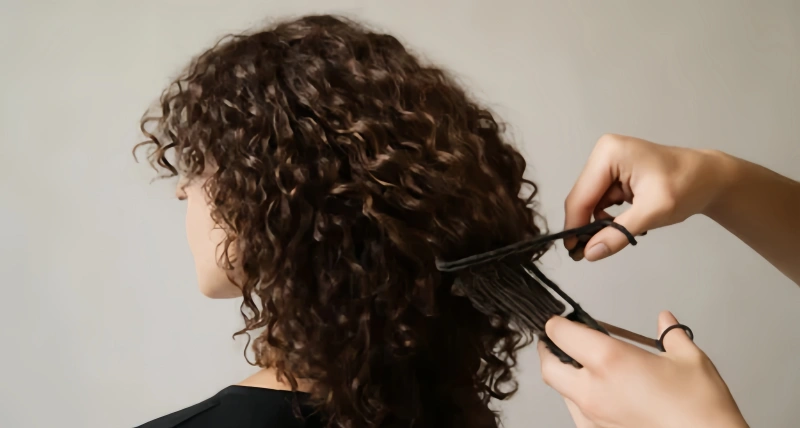
How to Cut Curly Hair Extensions: Step-by-Step Guide
Ready to start cutting curly hair at home? You can follow salon-level techniques and get a professional finish. Here’s a step-by-step guide that makes the process simple and effective:
Style your hair extensions as you normally would. This helps you see the natural curl pattern and visualize the final haircut.
Leave out the gel or heavy products. You want to see how your curls fall naturally before you cut curly hair.
Use really sharp scissors or shears. Start with the front section. Take small pieces and cut half an inch at a time. This lets you control the shape and avoid mistakes.
Swing your hair gently. Let the curls settle into their natural shape. This step helps you spot areas that need more attention.
Move to the back. Use a compact mirror to check your progress. Work in one-inch sections and use really sharp scissors for clean cuts.
Create layers by following the head’s curvature. Cut small amounts and check the shape often. This technique gives you a natural look and avoids the “shelf” effect.
Blend the layers. Tilt your head and use point cutting curly hair techniques to soften edges. This step makes your haircut look seamless.
Fluff your hair and check for stray curls. Use a hand-held mirror to inspect your work. Trim any uneven pieces.
Re-style your curls. Define them again to see the final result.
Tip: Always use really sharp scissors or shears. Dull tools can cause frizz and uneven ends.
You can use Alpha’s curly hair extensions for this process. Their stable curl patterns and lightweight wefts make sectioning and blending easier. You get salon-quality results even when cutting curly hair at home.
Layering and Blending
Layering is one of the most important techniques for curly hair extensions. It helps your extensions blend smoothly with your natural hair and creates a dynamic, voluminous look. When you cut curly hair, you want to mimic the natural pattern and avoid adding bulk.
Layering integrates extensions with your natural hair.
It mimics natural hair patterns and enhances the overall appearance.
Layered curls provide volume and movement without making your hair look heavy.
This technique prevents the “triangle effect” and allows for better product distribution.
Well-placed layers make curls more manageable and frizz-free.
Blending is another key technique. Match the texture, density, and color of your extensions to your natural hair. Use twisting and careful clipping techniques to achieve a seamless look. Proper preparation, including cleansing and moisturizing, creates the best foundation for blending.
Regular maintenance, like nighttime routines and gentle detangling, keeps your curls looking natural.
Note: Alpha’s curly hair extensions come in over 30 shades and various curl types. You can customize your look and achieve a natural blend every time.
Cutting Tips for Curly Hair Types
Different curl patterns need different cutting techniques. Here are some tips to help you get the best results:
For loose curls, use really sharp scissors and cut small sections. Point cutting curly hair techniques help soften blunt edges.
For tight coils, cut dry and avoid stretching the curls. Use shears to shape the curls naturally.
For mixed curl patterns, section your hair carefully. Use blending shears to transition between curl types.
Always cut curly hair extensions dry. Wet curls shrink and change shape, which can lead to uneven results.
Use point cutting curly hair techniques to create layers and add movement.
Avoid cutting too much at once. Small snips let you control the shape and prevent mistakes.
Curl Type | Cutting Techniques | Tools Needed |
|---|---|---|
Loose Curls | Point cutting curly hair, layering | Really sharp scissors |
Tight Coils | Dry cutting, shaping | Shears, blending razor |
Mixed Patterns | Sectioning, blending | Shears, blending razor |
Tip: Always use really sharp scissors or shears for cutting curly hair at home. This keeps your curls defined and prevents frizz.
Alpha’s curly hair extensions offer versatility. You can choose the curl pattern, density, and length to match your natural hair. Their stable curl patterns make cutting techniques for curly hair easier and more predictable.
Checking and Adjusting
After you finish your haircut, you need to check your work and make adjustments. Shake your head gently to let the curls fall into their natural shape. Use a hand-held mirror to inspect the back and sides. Look for uneven spots or stray curls.
Fluff your hair to see the volume and shape.
Trim any uneven pieces with really sharp scissors or shears.
Use point cutting curly hair techniques to soften edges and blend layers.
Restyle your curls to define them again.
If you notice areas that need more blending, use blending shears or a razor for a smooth transition.
Callout: Cutting curly hair at home takes practice. Don’t rush. Take your time and check your progress often.
Alpha’s curly hair extensions make this process easier. Their stable curl patterns and lightweight design let you adjust your haircut without worrying about tangles or uneven texture. You get a natural, salon-quality finish every time.
Aftercare and Professional Advice
Letting Curls Settle
You just finished cutting your curly hair extensions. Now, let your curls settle. Give them a few days to bounce back and show their true shape. Don’t rush into styling right away. Curls need time to relax and find their natural pattern.
Good lighting helps you spot any uneven spots or areas that need a touch-up. If you notice anything off, wait before making changes. Sometimes curls look different after a day or two.
Tip: Shake your hair gently and let the curls fall naturally. This helps you see the real volume and shape.
Restyling and Co-Washing
After cutting, you want your curls to stay soft and defined. Co-washing is a great routine for curly hair extensions. Here’s a simple step-by-step guide:
Section your hair into 5-6 parts using clips.
Wet each section thoroughly.
Apply conditioner to each section and detangle with a brush.
Deep condition for 15-30 minutes.
Rinse, leaving some conditioner in for kinkier textures.
Detangle completely and use a water and conditioner mix.
Apply a light sealant cream and brush through.
Scrunch with a cotton T-shirt and dry with a diffuser or air-dry.
Avoid touching curls while drying.
Refresh with a water and conditioner mix until your next co-wash.
You can restyle your extensions once the curls have settled. Use gentle products and avoid heavy styling creams. Make sure you have good lighting when you style, so you can see every curl.
When to Consult a Stylist?
Sometimes you need a professional touch. Here are signs you should reach out to a stylist:
You see excessive shedding or damage to your natural hair.
The installation feels uncomfortable.
You notice visible damage or uneven blending.
You want advanced techniques or a big style change.
A professional can help you choose the right extension method, especially if you want more styling versatility or need maintenance advice. Not all extensions are equal. Look for cuticle alignment and healthy protein structure. If you’re unsure, a stylist can guide you and keep your curls looking their best.
Conclusion
You can achieve a successful curly haircut at home if you trust your skills and follow the right steps. When you prepare your extensions and use good-quality shears, you protect the shape and keep your curls looking fresh. Waiting a few days lets your curls settle into their natural shape, so you see your desired look.
Salon techniques like point cutting and slide cutting help you blend layers and preserve the shape of your extensions. Choosing the right tools makes your styling experience easier and keeps your extensions in shape.
If you want salon-quality results, Alpha Curly Hair Extensions give you the confidence to embrace DIY and enjoy your new shape.
FAQ
Can you cut curly hair extensions at home?
Yes, you can cut curly hair extensions at home. Use sharp shears and follow salon techniques. Alpha’s extensions make the process easier because their curl patterns stay stable and blend well.
What tools do you need for cutting curly hair extensions?
You need sharp hair-cutting shears, sectioning clips, a wide-tooth comb, and a mirror. Alpha’s lightweight wefts help you section and blend without hassle.
Tip: Always use professional-grade tools for the best results.
Should you cut curly hair extensions dry or wet?
You should cut curly hair extensions dry. Wet curls shrink as they dry, which can lead to uneven results. Dry cutting lets you see the true curl pattern and shape.
How do you blend curly hair extensions with your natural hair?
Match the curl pattern, density, and color. Use layering and point cutting techniques. Alpha’s extensions come in over 30 shades, making blending easy and seamless.
Step | What to Do |
|---|---|
Match curls | Choose similar patterns |
Layer | Cut for movement |
Blend | Use point cutting |
How often should you trim curly hair extensions?
Trim your curly hair extensions every 8–12 weeks. Regular trims keep your curls healthy and prevent split ends. Alpha’s extensions hold their shape, so you can maintain your style longer.