
Hair weft placement is essential for achieving flawless, natural-looking hairstyles with extensions. Proper placement ensures seamless blending, added volume, and a long-lasting hold while minimizing damage to your natural hair. Understanding different techniques allows you to customize styles for various hair types and preferences, creating professional results at home or in salons.
Mastering hair weft placement also enhances styling flexibility. Whether you want length, volume, or highlights, precise placement ensures extensions look undetectable and move naturally. With the right tools, techniques, and guidance, anyone can achieve salon-quality results, giving confidence, versatility, and a polished finish that complements every hairstyle and occasion.
Where Should Wefts Be Placed?
Placing hair wefts correctly is essential for a natural, seamless look and long-lasting style. Proper placement ensures volume, prevents damage to natural hair, and allows for versatile styling. Knowing where to position wefts helps you achieve the perfect balance between fullness and comfort.
- Crown Area: Placing wefts at the crown adds volume and height, blending naturally with surrounding hair. This ensures seamless movement, prevents visible tracks, and creates a full, natural look even when parting or styling hair in updos.
- Sides of the Head: Wefts along the sides enhance thickness and frame the face beautifully. Proper alignment avoids uneven layering, ensures comfort, and helps the extensions blend flawlessly with natural hair for both straight and wavy styles.
- Nape of the Neck: Adding wefts at the nape increases fullness and prevents thin-looking hair from behind. Strategic placement provides a strong base for longer styles while remaining hidden, allowing natural movement without exposing tracks or causing discomfort.
- Temples and Near Hairline: Extensions near the temples or hairline require smaller, lighter wefts to avoid tension. Careful placement enhances face-framing layers, blends naturally, and ensures a polished, invisible look without showing any tracks.
Weft Extension Placement
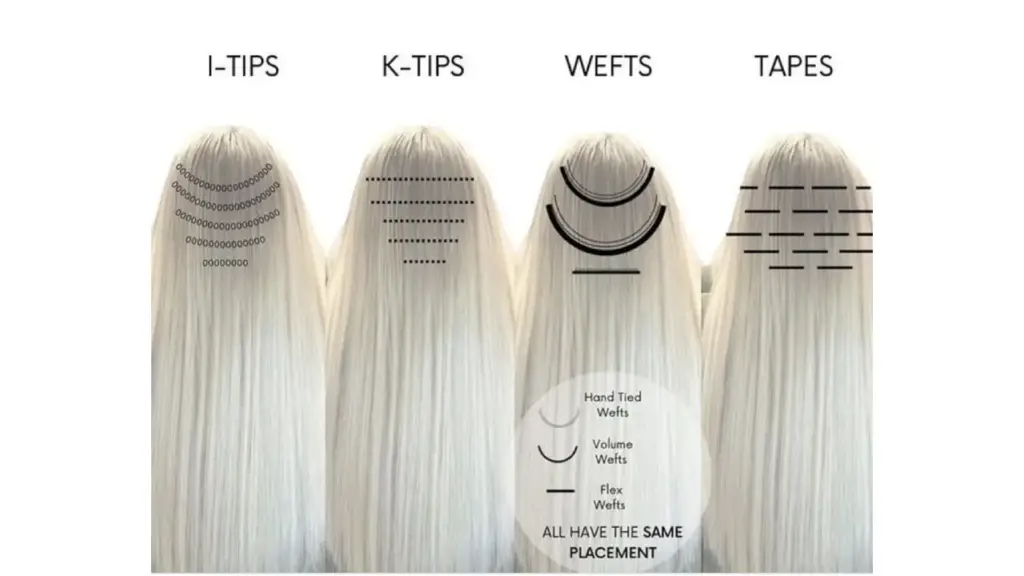
The four major hair extension application methods—I-TIPS, K-TIPS, WEFTS, and TAPES—focusing specifically on their placement strategies as depicted in the visual guide. Each method utilizes a distinct attachment mechanism, ranging from individual bonds to continuous wefts, demanding specific installation techniques for optimal blend and wear.
Understanding these placement patterns is fundamental for stylists to ensure client comfort, longevity of the extensions, and a natural-looking result regardless of the desired density or length addition.
I-Tip Hair Weft Placement
I-TIPS, or Individual Strand Extensions, involve meticulously attaching small bundles of extension hair to tiny sections of the client’s natural hair using silicone-lined beads or micro-rings. The technique requires precise sectioning to mimic natural hair growth patterns, which is crucial for achieving movement that looks truly organic. Unlike methods that involve heat or adhesive, this application relies on physically clamping the bead around the natural hair and the extension, allowing for 360-degree rotation of the extension for natural flow.
The visual placement shows a dotted pattern representing these small, individual anchor points spread across the desired area. Because the bonds are discreet, I-TIPS are ideal for subtle density increases or targeted length without the bulk of weft-based systems. Maintenance involves sliding the beads up the hair shaft closer to the scalp as the natural hair grows out, usually every eight to twelve weeks, ensuring the extensions remain seamless and comfortable over time.
K-Tip Hair Weft Placement
K-tips, or Keratin Tip Extensions, utilize a bond made of keratin, a natural hair protein, pre-applied to the extension tip. The application uses a specialized heat tool to melt this bond, fusing it securely and near-invisibly to a small section of the natural hair. The resulting bond is hard and durable, designed to last for several months before requiring maintenance or removal. This method is highly valued for its strength, allowing for effective heat styling and deep conditioning.
The placement must be strategically mapped out to avoid tension and ensure the bond sits flat against the head, mirroring natural fall lines. K-Tips are particularly effective for creating dramatic length and volume while maintaining superior discretion, as the bond lies flat against the scalp. Removal demands a specialized solvent to safely break down the keratin, ensuring minimal stress or damage to the underlying natural hair during the process.
Hair Weft Placement
Wefts are continuous strips of hair sewn or tied along one edge, creating a curtain-like section for application. The placement shown highlights that different weft styles—Hand Tied, Volume, and Flex—all share the same general placement strategy. These wefts are anchored to a foundation, often a row of small, tightly secured braids or a track made of specialized beads linked by thread, supporting the weight of the extension hair.
The weft hair placement is characterized by distinct horizontal rows that map out the area of full coverage. The stylist carefully curves and positions these rows to align with the head’s shape, preventing visible tracks when the hair is worn down. Wefts are excellent for achieving a significant amount of density and length quickly, as they cover a larger surface area in a single placement compared to individual methods like Tips.
Tape Hair Weft Placement
Tape-In Extensions utilize a sandwich technique, where two adhesive wefts secure a thin slice of the client’s natural hair between them. This creates extremely flat and lightweight bonds that are nearly undetectable, even when styled up. The medical-grade adhesive offers strong hold for several weeks but releases cleanly when treated with an alcohol-based solution, making it a relatively gentle semi-permanent choice.
The diagram clearly shows the horizontal rows of tape placement, which are typically stacked, beginning near the nape and moving upwards. Stylists meticulously ensure the natural hair is evenly distributed within the tape boundaries to prevent slippage and maintain wearer comfort. Tape-ins are popular due to their fast installation time and ability to lay completely flat, allowing for versatile styling options without revealing the attachment points.
| Extension Type | Attachment Mechanism | Placement Form | Key Advantage |
| I-TIPS | Micro-bead/Ring Clamp | Individual Dots | 360-degree movement |
| K-TIPS | Keratin Heat Fusion | Individual Fused Bonds | Durable, natural protein bond |
| WEFTS | Sewing/Beading Track | Horizontal Rows/Curved | Maximum density/coverage |
| TAPES | Adhesive Sandwich | Flat Horizontal Stacks | Fast application, nearly flat |
Where to Place Weft Extensions?
Weft extensions can dramatically transform your hairstyle, providing extra length, volume, and texture. Proper placement is key to achieving a natural look while protecting your hair. Knowing where to position wefts ensures seamless blending, balanced weight distribution, and lasting style, whether for daily wear, events, or layered haircuts.
- Crown Placement: Adds volume and lift at the top of your head, ideal for thinning hair or layered styles, creating a fuller appearance. Proper placement avoids visible lines, ensures natural blending, and enhances hair movement and styling flexibility.
- Nape Placement: Targets the lower back of your head, adding length and weight to thinner ends. Perfect for long hairstyles and layered looks, careful placement prevents tension, allows natural hair movement, and provides a stable foundation for additional wefts.
- Side Placement: Frames the face and enhances volume along cheeks and jawline, ideal for medium to long hair. Correct positioning ensures extensions follow the hair’s natural fall, prevent gaps, and maintain a seamless, natural-looking finish with added fullness.
- Temple Placement: Adds width and lift near the hairline, perfect for thinning temple areas. Properly aligned wefts blend with natural hair, reduce tension, and subtly enhance facial framing, creating a soft, natural contour without bulkiness.
- Diagonal or Layered Placement: Blends extensions into layered hairstyles, ensuring natural flow and movement. Staggering wefts diagonally prevents bulkiness, distributes weight evenly, and creates dimension, making hair look thick, voluminous, and naturally textured from roots to ends.
Conclusion
Proper hair weft placement transforms ordinary hairstyles into stunning, full-bodied looks. By following expert techniques and careful planning, extensions blend naturally and last longer. Whether sewing, bonding, or using micro-beads, consistent placement ensures comfort, durability, and a flawless finish every time, enhancing your overall hair experience.
Investing in high-quality hair wefts is key to achieving perfect results. Wholesale weft hair extensions from Alphahair provide premium, ethically sourced options that are easy to style and maintain. These extensions offer smooth texture, natural shine, and long-lasting performance, making them ideal for both professional stylists and home enthusiasts seeking top-tier quality.
Start creating your dream hairstyles today with Alphahair’s wholesale weft hair extensions. With a variety of lengths, colors, and textures, you can customize every look to match your vision. From everyday elegance to special occasions, the right weft placement combined with premium hair ensures flawless, head-turning results.