
If you are considering K-tip extensions, you have probably seen two completely different answers online. One person says the bonds left her hair healthy and long. Another says she noticed breakage, thinning, or sore spots after removal. So, do K tips damage your hair?
K-tip extensions do not automatically damage your hair, but they are not risk-free. A well-trained stylist can apply small, properly weighted bonds that move comfortably with your natural hair. With good home care and timely professional removal, many people wear K-tips without obvious damage.
Problems usually begin when the extensions are too heavy, the sections are too small, the bonds are placed under tension, the hair is already fragile, or the removal is rushed.
The safest way to think about K-tips is this: the method can work well, but the result depends on the entire service—not just the keratin bond. Your starting hair condition, your stylist’s technique, the extension hair quality, your daily routine, and your removal appointment all matter.
Quick Answer: Do K Tips Damage Your Hair?
K-tips can cause breakage, thinning, matting, or traction-related hair loss when they are poorly matched, installed, maintained, or removed. When the bond size and extension weight suit your hair, the application is comfortable, and you follow the correct care schedule, the risk is much lower.
You should not feel constant pulling, burning, sharp pain, or headaches after installation. Mild awareness of the bonds for the first day or two can be normal, but ongoing discomfort is a reason to contact your stylist.
If you already have active hair loss, a sensitive or inflamed scalp, severe bleach damage, or very brittle hair, you may need to postpone K-tips or choose a lighter, temporary method.
What Are K-Tip Hair Extensions?
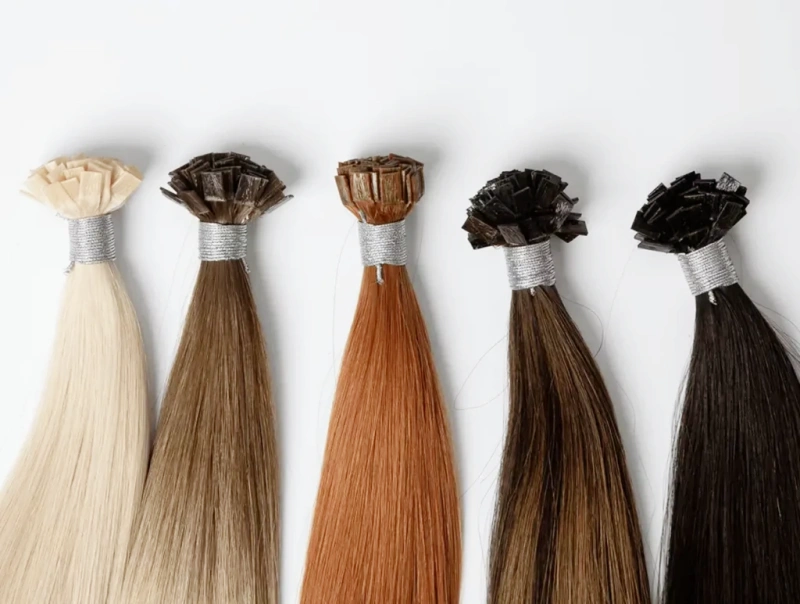
K-tip hair extensions are individual strands with a small pre-formed keratin bond at the top. You may also hear them called keratin-tip, fusion-bond, or pre-bonded extensions. During application, your stylist isolates a small section of your natural hair, softens the keratin tip with a controlled heating tool, and shapes the bond around that section. Once cooled, the compact bond holds the extension strand in place.
Because each strand is applied separately, your stylist can adjust the color, length, placement, and weight across your head. This makes K-tips easy to blend and discreet in many hairstyles, but it also makes precision essential. Small errors repeated across a full set can add up to unnecessary tension.
The heat used during application is concentrated on the keratin tip for a short time. It is not the same as running a flat iron repeatedly over the length of your hair. Still, controlled heat does not make poor technique harmless. Overheating, clamping the tool on your natural hair, using oversized bonds, or applying too close to the scalp can create problems.
Why Can K Tips Damage Hair?
When damage happens, it is usually caused by mechanical stress rather than the mere presence of keratin. These are the most common reasons.
The Extension Strand Is Too Heavy
Every K-tip strand hangs from a small section of your hair. If the extension weighs more than that section can comfortably support, the roots stay under tension as you wash, brush, sleep, and style. Fine areas around the temples and hairline are especially easy to overload.
A safe application is not about using the same bond size everywhere. Your stylist should adjust the weight and section size to your density. Stronger areas may support a standard strand, while delicate areas may need a smaller bond—or no bond at all.
The Bonds Are Placed Too Close or Too Tight
Your natural hair needs room to fall in its normal direction. A bond placed too close to the scalp, twisted away from the growth pattern, or pulled tight during installation can feel sore and may stress the follicle. Bonds should lie comfortably when your hair is down and should not pinch when you move your hair from side to side.
Too many bonds packed into one area can also create friction and knots.
Your Hair Is Already Compromised
K-tips add weight to your existing strands; they cannot make weak hair stronger. If your hair is breaking from bleach, relaxing, repeated heat styling, postpartum changes, illness, medication, or active shedding, even a technically neat installation may be too much at that moment.
This is why an honest consultation matters. Your stylist should examine your density, elasticity, breakage pattern, scalp condition, and chemical history—not simply ask how much length you want.
The Bonds Are Left In Too Long
As your hair grows, each bond moves farther from the scalp. Shed hairs remain trapped inside the attachment until removal. If you keep the set beyond the schedule recommended for your growth rate, those shed strands can wrap around neighboring hair and form tight tangles near the roots.
Overdue bonds also swing more freely, increasing leverage on your natural hair. A set that felt comfortable at week two may create more friction several months later. Your wear time should be based on your hair growth and bond condition, not on the longest timeline printed in a product description.
Removal Is Rushed or Done Without the Right Product
Removal is one of the highest-risk stages. A professional applies the correct remover, breaks down the bond, and slides the extension away without pulling your natural hair. She then separates the trapped shed hair and gently combs out residue.
If you squeeze a dry bond, peel it apart, drag it down the strand, or force a comb through matted regrowth, you can snap healthy hair. DIY videos can make removal look simple, but the back of your head is difficult to see and even harder to work on without tension. Professional removal is usually the safer choice.
Poor-Quality Extension Hair Creates Extra Friction
The attachment is only half of the system. Dry, heavily processed, mixed-direction hair may tangle quickly through the mid-lengths and ends. Every time you fight those tangles, force travels back toward the bonds.
High-quality, cuticle-aligned Remy hair stays smoother and is easier to detangle. That does not guarantee a damage-free result, but it reduces daily friction and makes proper care more manageable.
Do K Tips Make Your Hair Thin?
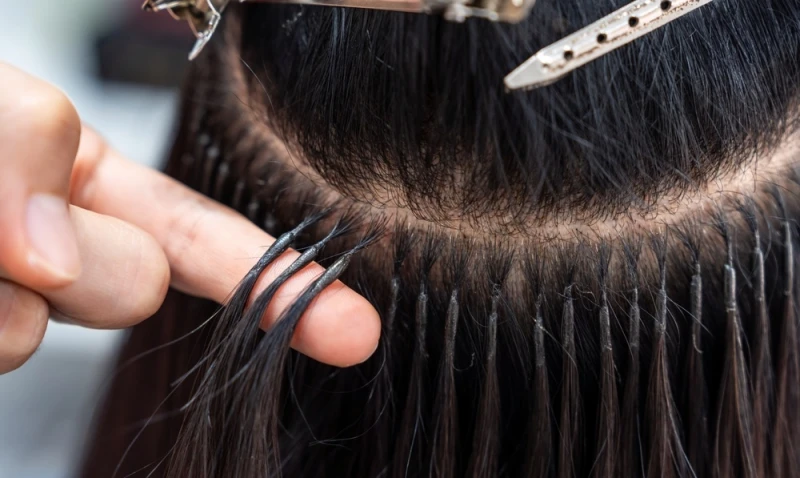
K-tips should not make healthy hair thin when the set is properly planned and removed. However, an unsuitable or poorly managed set can cause breakage and, in more serious cases, traction alopecia.
It is also easy to misread what you see immediately after removal. You naturally shed hair every day. With K-tips, many of those loose strands stay inside the bonds instead of falling onto your brush or shower floor. At removal, several months of trapped shedding may come out at once. Your hair will also look and feel less dense because you have become used to the extra extension volume.
That does not mean every post-removal concern is “just shedding.” Look at the pattern:
- Normal trapped shedding usually consists of full-length strands released from the bond area during removal.
- Breakage looks like shorter pieces of different lengths, often concentrated around attachment points.
- Traction-related thinning may appear as sparse areas, widening parts, broken hairs near the hairline, or tenderness that continued during wear.
- A sudden or persistent increase in shedding across your whole scalp may have another cause and deserves professional medical advice.
Take clear photos of your natural hair before installation and use similar lighting and parting after removal. Photos give you a more reliable comparison than memory alone.
Are K-Tip Extensions Safe for Fine or Thin Hair?
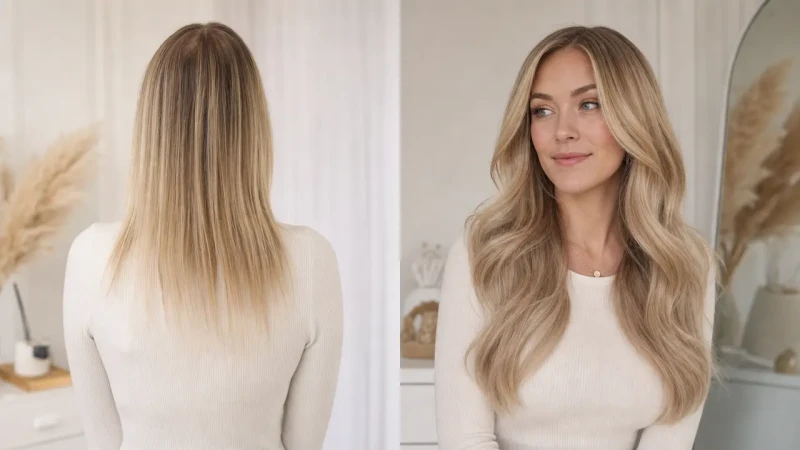
Fine hair and thin hair are not the same. Fine hair has a small strand diameter; thin hair has lower density. You can have fine but dense hair, coarse but sparse hair, or a combination. That distinction affects whether K-tips are appropriate.
K-tips may work on some fine hair because the individual bonds can be customized. A stylist can use smaller tips, lighter strands, fewer bonds, and conservative placement. But if your density is low, your hairline is fragile, or your scalp is visible through many sections, individual bonds may create more risk than benefit.
You may be a reasonable candidate if:
- Your natural hair is healthy, elastic, and not actively shedding.
- You have enough density to support and conceal the planned bonds.
- Your stylist is trained specifically in K-tip sizing, placement, and removal.
- You can follow a daily brushing, drying, and sleep routine.
- You will return for checks and removal on schedule.
You should pause and seek professional advice if:
- Your scalp is sore, inflamed, flaky, or showing open areas.
- You have unexplained hair loss, bald patches, or a rapidly widening part.
- Your hair breaks easily when wet or has severe chemical damage.
- You recently experienced significant postpartum, medical, or stress-related shedding.
- You cannot commit to professional removal.
For very delicate hair, lightweight tape-ins, a halo, or occasional clip-ins may be easier to manage. No method is universally safest; the best option suits your current hair and your willingness to maintain it.
What Should K Tips Feel Like After Installation?
A fresh set may feel unfamiliar when you lie down or run your fingers through your roots. That sensation should settle as you adjust. The bonds should not make you afraid to move your hair.
Contact your stylist promptly if you notice:
- Sharp or constant pain
- Burning, swelling, or red bumps around the bonds
- Headaches caused by pulling
- Bonds that prevent your hair from lying in its natural direction
- Several strands attached across one section or crossed hairs trapped in a bond
- Early matting, severe itching, or a strong increase in breakage
Do not wait weeks for pain to “grow out.” A stylist can inspect the placement and remove or replace individual bonds before a small issue becomes a larger one. If you see sores, signs of infection, or a new patch of hair loss, contact a qualified medical professional.
How to Prevent K-Tip Damage?
The best damage prevention starts before your installation and continues through removal.
1. Choose a K-Tip Specialist
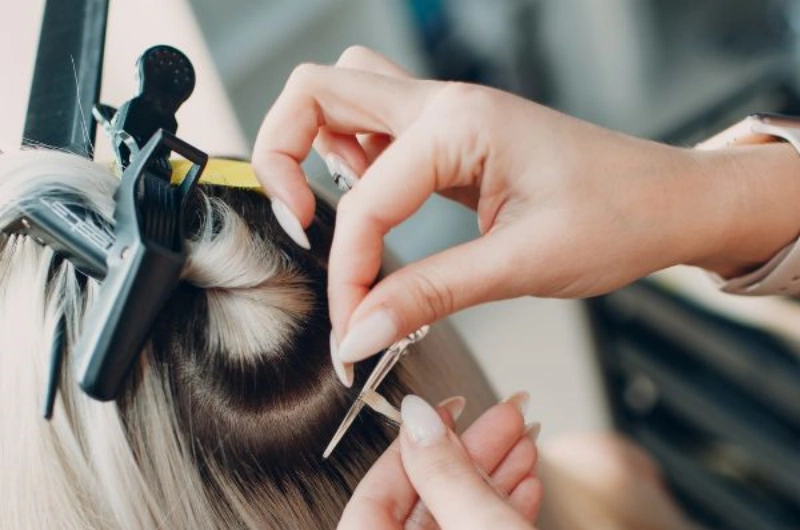
Ask how often the stylist installs and removes K-tips, what training she has completed, and whether you can see close-up photos of grown-out bonds and natural hair after removal—not only same-day transformations.
Ask what happens if the bonds hurt, slip, or mat. Clear aftercare and a correction policy matter.
2. Get a Real Hair and Scalp Assessment
Share your full chemical and shedding history. Mention recent bleach, relaxer, keratin treatment, medication changes, scalp problems, or previous extension damage. If your hair needs recovery time, postponing the service is better than disguising a problem with more hair.
3. Match Weight to Density
More grams do not always create a better result. The set should achieve your goal without placing unnecessary weight on your roots. If you have fine or low-density hair, ask whether mini bonds, lighter strands, partial volume, or a shorter length would be safer.
4. Keep the Bond Area Clean
Oil, conditioner, masks, and heavy silicone serums can soften or lubricate the attachment area, causing slippage. A loose extension may hang from fewer natural hairs and create extra pulling. Apply conditioner and oils from the mid-lengths downward unless your stylist gives different product-specific instructions.
5. Wash Without Scrubbing or Piling
Detangle before you shower. Let water run in the direction of your hair, massage shampoo between the bonds with your fingertips, and rinse thoroughly. Do not pile your lengths on top of your head or scrub the bonds in circles.
Follow the wait time recommended by your stylist after installation. Product systems differ, so a fixed rule from social media may not match the keratin used in your set.
6. Dry the Roots and Bonds Completely
Damp roots left for hours can encourage tangling and make the bond area harder to keep clean. After washing, blot your hair rather than twisting it. Dry the attachment area first on a comfortable setting, aiming the airflow downward. Keep high heat and hot tools off the bonds.
7. Brush With Support
Use an extension-safe or loop brush. Hold your hair near the roots with one hand and detangle the ends first with the other. Work upward in small sections, then brush carefully around the bonds. This prevents knots without transferring every tug to your scalp.
Brush consistently, including the hidden nape area. Avoiding the roots entirely allows shed hairs to weave together.
8. Protect Your Hair While You Sleep and Exercise
Never sleep with wet extensions. Put dry hair into one or two loose braids or a low ponytail, and consider a silk or satin pillowcase. During exercise, secure your hair without pulling the same area every day. After heavy sweating or swimming, rinse when appropriate and dry the bond area thoroughly.
9. Avoid High-Tension Hairstyles
K-tips offer plenty of styling freedom, but tight slicked-back buns, high ponytails, and repeated tension at the hairline can combine with the weight of the extensions. Rotate your styles and stop if an updo makes the bonds pull.
10. Book Checks and Removal Before You Need Them
Do not wait for widespread tangling or slipping. Follow the schedule set after your stylist evaluates your growth. Many K-tip sets are worn for roughly three to four months, but your safe timeline may be shorter. Fast growth, fine hair, dense shedding, or difficult aftercare can all change the date.
K-Tip Hair Extensions: Pros and Cons
K-tips offer a natural, customizable result, but you need to weigh that against the commitment.
| Pros | Cons |
|---|---|
| Individual bonds create natural movement | Installation and removal take time |
| Placement, shade, and density are highly customizable | The service usually costs more than temporary methods |
| Small bonds can be discreet in many hairstyles | Heat is used to soften the keratin tip |
| No wide tape tabs or weft track | Every bond places weight on a small section of hair |
| A well-maintained set can provide months of wear | Poor placement or late removal can cause breakage and matting |
| Quality human hair can be styled like your own lengths | Professional maintenance and removal are essential |
If you want a natural strand-by-strand finish and can follow the care routine, K-tips may be worth the chair time. For occasional wear, a temporary option may fit better.
Do K Tips Cause More Damage Than Other Extensions?
No extension method is automatically damage-free. Each one loads the hair differently.
- Tape-ins spread weight across a wider section and can suit some fine hair, but incorrect sandwiching, overlapping tabs, or rough adhesive removal can still cause breakage.
- I-tips and microlinks do not use heat or adhesive, but the bead and strand still create a point load. Beads placed too tightly or left to rotate can stress the hair.
- Wefts distribute hair across a track, but an overly tight row or a heavy weft can create concentrated tension.
- Clip-ins and halos are removable, so your scalp gets a break. However, daily clips in the same spots or an overtight halo wire can still irritate or break hair.
The safest comparison is not “heat versus no heat.” Look at total weight, placement, tension, maintenance, removal, and the condition of your natural hair.
How Long Can You Wear K Tips Without Damage?
There is no universal damage-free deadline. A common K-tip wear cycle is around 12 to 16 weeks, but how long your keratin extensions last depends on your growth rate, shedding, density, bond placement, and home care.
Your stylist may recommend earlier removal if the bonds have grown far from the scalp, the sections have lost too many supporting hairs, tangling has started, or your scalp feels uncomfortable. Keeping a set longer to “get your money’s worth” can turn an easy removal into a difficult one.
Pre-book removal at installation. You can adjust the appointment if needed instead of searching for help after matting begins.
What Should You Do After K-Tip Removal?
After professional removal, expect your hair to feel lighter and flatter. Your stylist should detangle the trapped shed hair before washing, then check for short broken pieces, irritated areas, or uneven density.
Use a gentle cleansing and conditioning routine. You do not need aggressive “detox” products or a complicated supplement stack simply because you wore extensions. Limit extra tension and high heat if your hair feels dry. If you plan to reinstall immediately, ask your stylist whether your scalp and strands are strong enough for another cycle and whether the placement or weight should change.
If you notice persistent tenderness, clear bald patches, increasing scalp visibility, or continued heavy shedding, pause extensions and speak with a dermatologist or other qualified hair-loss professional. Early assessment matters more than covering the area with a new set.
Frequently Asked Questions
Do K tips ruin your natural hair?
They should not ruin healthy hair when the set is correctly sized, comfortably installed, carefully maintained, and professionally removed. They can damage hair when weight, tension, wear time, or removal is poorly controlled.
Is it normal for K tips to hurt?
You may be aware of the bonds for a day or two, especially while sleeping, but sharp pain, constant pulling, headaches, bumps, or burning are not normal. Ask your stylist to inspect the painful bonds.
Can K tips cause traction alopecia?
Any extension that keeps excessive tension on the follicles can contribute to traction alopecia. Your risk rises with heavy strands, tight placement, repeated high-tension styling, and continued wear despite soreness or thinning.
Can your hair grow while wearing K tips?
Yes. K-tips do not stop normal growth at the scalp. As your hair grows, the bonds move downward. Growth does not guarantee that the lengths stay damage-free, so you still need timely removal and gentle care.
Are K tips bad for thin hair?
They can be too heavy for some low-density or fragile hair. Other people with fine but healthy, sufficiently dense hair may wear customized mini bonds successfully. You need an in-person assessment rather than a one-size-fits-all answer.
Can you wash your hair normally with K tips?
You can wash your scalp and lengths, but adjust your technique. Use bond-compatible products, avoid circular scrubbing at the roots, keep conditioner and oil away from the attachments, rinse well, and dry the bonds completely.
Can you swim with K-tip extensions?
You can, but chlorine, salt water, tangling, and prolonged moisture can shorten the life of the hair and bonds. Secure your hair loosely, follow your stylist’s pre-swim advice, rinse afterward, detangle gently, and dry the bond area.
Can K-tip hair be reused?
Some high-quality K-tip hair can be cleaned, trimmed, and re-tipped for another installation if it remains in good condition. Reuse depends on the hair quality, removal method, shedding, and your supplier’s system. The old keratin bond itself should not simply be reheated and reapplied.
Are K tips more damaging than tape-ins?
Not automatically. K-tips concentrate weight on individual sections, while tape-ins spread weight across wider panels. Your hair density, bond or tab weight, placement, care, and removal quality determine which method creates less stress for you.
Final Verdict: Are K Tips Bad for Your Hair?
So, do K tips damage your hair? They can—but damage is not an unavoidable part of wearing them. The best results come from healthy starting hair, conservative weight, clean placement, smooth high-quality extension hair, consistent aftercare, and patient professional removal.
Do not let a beautiful same-day photo replace a proper consultation. Ask how the stylist protects fine areas, what warning signs you should watch for, and exactly when the set should come out. If the bonds hurt or your hair starts to mat, act early.
If you own a salon, hair brand, or extension business, product consistency matters as much as technique. Alpha Hair manufactures full-cuticle Remy K-tip extensions with OEM and ODM options for professional buyers. You can request samples to test the hair, keratin consistency, bond size, wash performance, and removal behavior before placing a bulk order.