
Curling clip in extensions should give you soft, even curls that blend with your own hair—not dry ends, stiff sections, or a visible line between the two. The result depends on three things: the fiber, the heat, and the way you let each curl cool.
This guide shows you how to curl human hair clip-ins with a wand, curling iron, or straightener. You will also learn when to curl the wefts before installation, when to style everything together, how to make heatless curls, and what to do when the hair will not hold its shape.
If you buy clip-ins for a salon, retail store, online brand, or wholesale program, use the B2B checklist near the end. It will help you compare samples and give customers care instructions they can actually follow.
Can You Curl Clip-In Extensions?
Yes, you can curl clip-in extensions when they are made from human hair. Start with the lowest effective temperature, use a heat protectant, and keep the hot tool away from the clips and weft base.
Synthetic clip-ins need a different answer. Do not apply heat unless the label or supplier clearly says the fiber is heat-resistant and gives a maximum temperature. Some synthetic fibers can shrink, frizz, or melt even on a low setting. If the heat limit is missing, use a heatless method instead.
Human Hair Versus Synthetic Clip-Ins
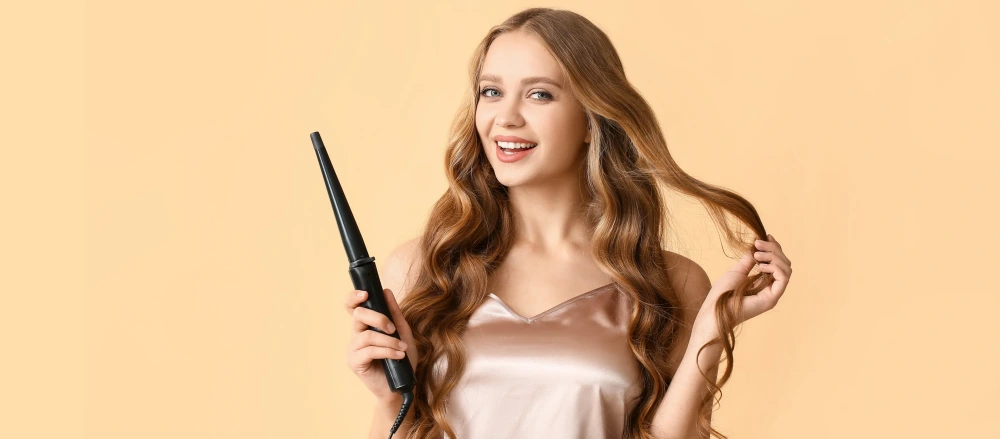
Human hair clip-ins give you the most styling freedom. Remy hair is especially useful for a curl-friendly range because the cuticles run in one direction, which helps reduce friction and tangling when the hair is handled correctly. Still, human hair extensions do not receive oil from the scalp, so repeated heat can dry them faster than your own hair.
Synthetic hair can arrive with a strong, ready-made curl pattern, but its styling range depends on the exact fiber. “Synthetic” does not automatically mean heat-safe. Check the care label before you test it.
Should You Curl Clip-In Extensions Before Or After Installing Them?
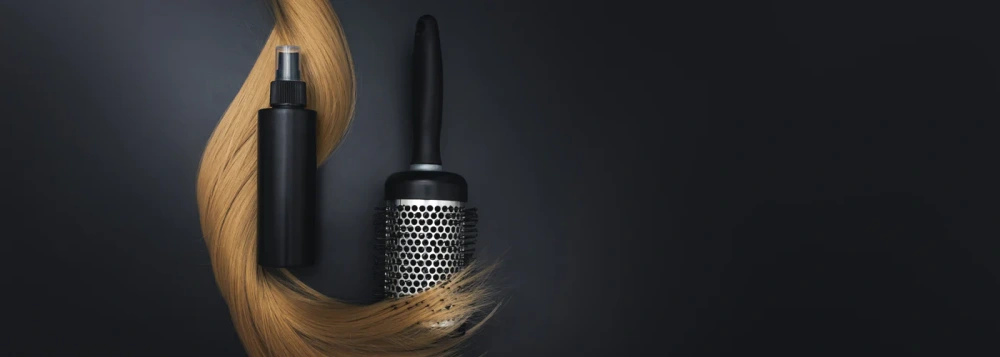
Both methods work. Choose the one that fits the finish you want.
Curl before installation when you want more control, need to style several wefts quickly, or want to prepare the hair the day before an appointment or photo shoot. A hanger or extension holder keeps the wefts steady and lets you see every section.
Curl after installation when blending is the priority. Combining a small amount of your own hair with a small amount of extension hair in the same curl creates one texture and softens the line between shorter layers and longer wefts.
For the best balance, pre-curl the extensions, install them, and then touch up a few mixed sections around the face and surface. This hybrid method limits repeated heat while giving you a natural finish.
What You Need Before Curling Clip-In Extensions?
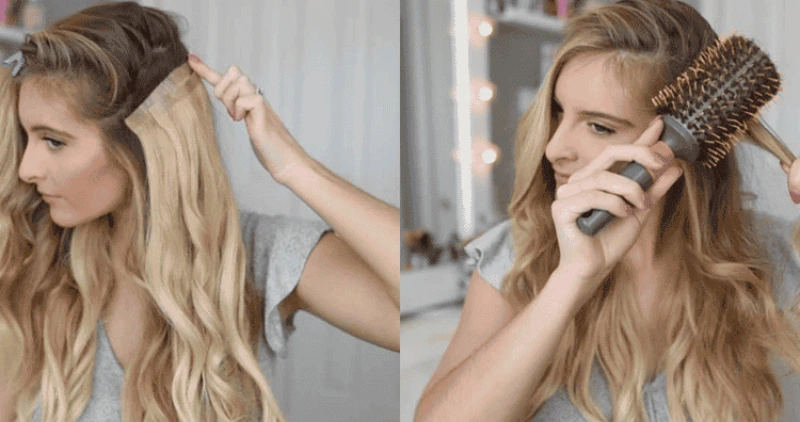
Prepare the following tools before you begin:
- A loop brush, extension brush, or wide-tooth comb
- A hanger or extension holder if you are styling the wefts off the head
- Sectioning clips
- A curling wand, curling iron, or straightener with adjustable heat
- A lightweight heat protectant made for human hair
- Pin-curl clips or bobby pins
- A light, flexible-hold hairspray
- A heat-resistant glove if you use a wand
Your extensions must be fully dry. Heat on wet or damp hair can cause avoidable damage. If you have just washed the set, let it air-dry flat or hang it in a well-ventilated place. Detangle from the ends upward while supporting the weft with your other hand.
Choose A Safe Heat Setting
Always follow the temperature limit supplied with the product. If there is no product-specific limit, begin around 250°F to 300°F (120°C to 150°C) and increase only if the hair needs it. Healthy human hair clip-ins usually curl within 300°F to 350°F (150°C to 180°C). Use less heat on light blonde, colored, fine, or heavily processed hair.
Do a strand test underneath one weft. Apply heat protectant, let it dry, curl the section for five to eight seconds, and check the hair after it cools. Stop if it feels rough, smells scorched, loses shine, or changes color. The goal is the lowest temperature that forms a clean curl—not the hottest setting your tool can reach.
How To Curl Clip-In Hair Extensions Before Installing Them?
This is the easiest method when you want even curls across every weft.
- Secure the wefts. Fasten them to an extension hanger or holder. Keep the clips closed so they do not catch the hair.
- Detangle gently. Brush from the ends toward the weft. Do not pull against the stitched or PU base.
- Apply heat protectant. Mist the mid-lengths and ends lightly. Let the product dry before using heat.
- Divide the hair into small sections. Use sections about 1 inch wide for defined curls and up to 2 inches wide for loose waves. Keep the section size consistent.
- Curl away from the weft base. Wrap the hair around the barrel without touching the clips, PU seam, or stitching. Hold for five to eight seconds, or follow the tool and product instructions.
- Let the curl cool in shape. Catch it in your palm and pin it loosely. Do not brush or stretch a warm curl.
- Repeat across each weft. Use the same direction for polished Hollywood waves. Alternate directions for softer, more casual movement.
- Install and blend. Once every curl is cool, clip in the wefts. Curl a few sections of your own hair with the extensions where needed.
If you need more help with placement, use Alpha Hair’s guide on how to secure clip-in hair extensions.
How To Curl Hair With Clip-In Extensions Already Installed?
Install the wefts on clean horizontal sections and check that every clip feels secure. Brush your hair and the extensions together, then divide the full head into manageable sections.
Take a small section that contains both your natural hair and extension hair. Apply heat protectant if you have not already done so, allow it to dry, and curl the two together. Keep tension gentle so you do not pull on the clips. Work from the bottom layers upward and leave enough natural hair at the crown to cover the wefts.
Curl the pieces around your face away from your face. Through the back, alternate directions for a relaxed finish or keep one direction for a smooth wave pattern. Let the curls cool, then separate them with your fingers.
If your natural hair is short or blunt, curling mixed sections is one of the best ways to hide the length change. See the step-by-step guide on how to blend clip-in extensions with short hair.
How To Curl Clip-In Hair Extensions With A Straightener?
A straightener creates soft bends and loose curls without changing tools.
- Choose a slim straightener with rounded edges and adjustable heat.
- Take a small, dry section and clamp it below the weft base.
- Turn the straightener half a rotation away from the face.
- Glide it slowly and smoothly through the length. Do not stop in one place.
- Catch the curl and let it cool before you release or brush it.
A slow glide makes a stronger curl; a faster glide makes a loose bend. If the ends come out straight, keep the tool rotating until the section has passed through the plates. Practice on a hidden test strand first, because a straightener places heat on both sides of the hair.
How To Create Heatless Curls With Clip-In Extensions?
Heatless curls with clip in extensions are useful for synthetic fibers, frequently styled sets, and pre-styling the night before.
For loose waves, lightly mist clean human hair extensions, divide them into two or three sections, braid them, and leave them until fully dry. Smaller braids create tighter texture.
For defined curls, wrap slightly damp sections around foam rollers or flexi rods. Keep the ends smooth, bend or secure each roller, and allow the hair to dry completely before removing it.
For large, bouncy curls, form dry pin curls. Roll each section around two fingers, secure it with a creaseless clip, and leave it for several hours or overnight. A small amount of setting lotion can help, but avoid heavy products that leave buildup.
Never store or wear clip-ins while they are wet. Damp wefts can develop odor, tangles, or a weakened base.
How To Choose The Right Curl Pattern?
The barrel size, section size, and curl direction shape the final look. Match those choices to your natural hair and the style your customer expects.
Loose Curls And Beach Waves
Use a 1.25- to 1.5-inch barrel and sections up to 2 inches wide. Curl away from the face at the front and alternate directions through the back. Leave the last inch of the ends out for a relaxed finish. After the curls cool, open them with your fingers or a wide-tooth comb.
If customers want this finish often, a ready-made wavy clip-in hair extension can reduce styling time and heat exposure.
Spiral Curls
Use a 0.5- to 1-inch wand and narrow sections. Wrap the hair flat around the barrel from top to bottom, without overlapping it. Let each curl cool in your hand. Separate with your fingers instead of a brush so the spiral stays defined.
Hollywood Waves
Use a 1- to 1.25-inch barrel and curl every section in the same direction. Pin each curl until it is completely cool. Release the pins, brush gently into one continuous wave, and shape the ridges with sectioning clips while a light hairspray sets.
How To Make Curls Last Without Drying Out The Hair?
Long-lasting curls are built during cooling, not by adding more heat.
- Start with clean, fully dry hair. Heavy conditioner, oil, or silicone buildup can make curls drop.
- Use smaller, even sections so heat reaches the hair consistently.
- Pin or cup every curl until it feels cool.
- Apply a light, flexible-hold spray after the curls cool. Keep it away from the clip base.
- Avoid heavy oils before curling. If the ends need shine, use one drop after styling.
- Store the set with the curls loosely rolled instead of brushing it straight after every wear.
For a fuller care routine, link customers to the best hair care products for human hair extensions.
Why Won’t My Clip-In Extensions Curl?Why Won’t My Clip-In Extensions Curl?
If your clip-in extensions will not hold a curl, check the cause before raising the temperature.
Product buildup: Wash the hair with an extension-safe shampoo and use conditioner mainly on the mid-lengths and ends. Rinse well and dry fully.
Sections are too large: Reduce the section size so the tool heats the hair evenly.
The curl was disturbed while warm: Pin it and wait until it is cool to the touch.
The hair is over-conditioned: Skip heavy masks, oils, and silicone-rich finishers before styling.
The temperature is too low for that sample: Increase it in small steps, staying within the supplier’s limit.
The hair is worn or heavily processed: Old, lightened, or repeatedly heated extensions may lose elasticity and feel dry. More heat will not restore them.
The fiber is synthetic or blended: Follow the label. Some fibers resist re-styling or require a method made specifically for that material.
Humidity is high: Use a lightweight anti-humidity product and allow more cooling time.
How To Care For Clip-In Extensions After Curling?
Remove clip-ins before sleeping, showering, or swimming. Open each clip, support the weft, and lift it out without pulling.
After wearing, separate the wefts and detangle from the ends upward. If you want to keep the curl, roll each weft loosely and place it in a breathable storage bag or extension box. Keep the clips closed and make sure the hair is completely dry before storage.
Wash only when the hair has visible buildup or no longer moves naturally. Use lukewarm water and a gentle routine. Do not scrub or bunch the wefts. Air-dry them flat, then restyle with the lowest effective heat.
A well-planned care card reduces avoidable returns. It should state the fiber, maximum temperature, heat-test instructions, washing method, and storage steps.
What B2B Buyers Should Specify When Sourcing Curl-Friendly Clip-Ins?
A sample that looks good out of the package is only the starting point. If you sell to salons or end customers, test how the hair behaves after washing and styling. Your specification should cover the points below.
Hair Type And Processing
Confirm whether the set is Remy human hair, non-Remy hair, synthetic fiber, or a blend. Ask how the hair was colored, textured, and coated. Heavy processing can make a sample look smooth at first but affect softness and curl performance after washing.
If curl versatility is a key selling point, compare Remy hair clip-in extensions with other grades under the same test conditions.
Heat Guidance And Care Materials
Ask the manufacturer for a tested maximum temperature, not a general statement that the hair “can be curled.” Put that limit on the packaging and care card in both Fahrenheit and Celsius. Include a strand-test warning and separate instructions for blonde, colored, or textured items.
Curl-Retention Sample Test
Test at least three pieces from the sample set.
- Photograph and weigh the clean, dry sample if you track product specifications.
- Wash it with your recommended products and air-dry it.
- Curl equal sections at the same temperature and hold time.
- Let every curl cool for the same period.
- Photograph the result after one hour, four hours, and one day.
- Check softness, shine, shedding, tangling, odor, color change, and curl drop.
- Repeat after several wash-and-style cycles.
Use the same written protocol for every supplier. A consistent test makes comparisons far more useful than styling each sample differently.
Weft, Clip, And Range Options
Check that the clips stay secure during styling and that the stitching or PU seam does not warp near normal heat. Test the widest weft as well as the smallest pieces because density can change how quickly a section curls.
Build the range around real customer use. Straight human hair offers the most restyling flexibility. Curly clip-in hair extensions and wavy options give customers a faster match with less heat. Seamless clip-in hair extensions can suit customers who want a flatter base.
Private Label And Retail Support
Your product page, insert card, and customer-service scripts should give the same heat and care guidance. This keeps expectations clear across wholesale, salon, and direct-to-consumer channels.
If you are building your own line, review Alpha Hair’s guidance on private label clip-in hair extensions and clip-in hair extensions for retail stores.
Curling Clip-In Extensions: Final Checklist
Before you start, confirm the following:
- You know the fiber and its maximum temperature.
- The extensions are clean, detangled, and fully dry.
- You completed a hidden strand test.
- Heat protectant is evenly applied and dry.
- Your sections match the curl size you want.
- The hot tool stays away from clips and weft bases.
- Every curl cools before you brush or separate it.
- Your own hair and the extensions share the same curl pattern.
- The finished set is removed and stored dry after wear.
Follow those steps and you can create loose curls, defined spirals, or polished waves without relying on excessive heat.
FAQ
How Do You Curl Clip-In Hair Extensions?
Detangle fully dry extensions, apply heat protectant, and let it dry. Curl small sections at the lowest effective temperature, keep the tool away from the weft base, and pin each curl until it is cool. Install the wefts and touch up a few mixed sections with your natural hair for a smooth blend.
What Temperature Should You Use To Curl Human Hair Clip-Ins?
Follow the product’s stated limit. If no specific guidance is available, begin around 250°F to 300°F (120°C to 150°C). Many healthy human hair clip-ins curl within 300°F to 350°F (150°C to 180°C). Use a lower setting for fine, blonde, colored, or heavily processed hair.
Can You Curl Synthetic Clip-In Extensions?
Only if the label or supplier confirms that the fiber is heat-resistant and gives a maximum temperature. If that information is missing, use foam rollers, flexi rods, braids, or pin curls instead. A hidden strand test is still necessary.
Can You Curl Clip-In Extensions With Straighteners?
Yes. Use a straightener with rounded edges and adjustable heat. Clamp a small section, rotate the tool half a turn, and glide it smoothly through the length. Let the curl cool before touching it.
Is It Better To Curl Clip-Ins Before Or After Installing Them?
Curling before installation gives you more control and saves time. Curling after installation blends your natural hair and the extensions more closely. For most clients, pre-curling the set and then touching up mixed sections gives the best balance.
How Often Can You Curl Clip-In Extensions?
There is no single schedule because hair quality, processing, temperature, and wear frequency differ. Use heat only when the style needs refreshing. Reuse the existing curl, choose heatless methods between washes, and stop when the hair starts to feel dry or rough.
How Do You Store Curled Clip-In Extensions?
Make sure the set is completely dry, detangle it gently, and roll the wefts loosely in the direction of the curl. Place them in a breathable extension bag or box with the clips closed. Do not sleep in the extensions or store them while damp.
Need Curl-Friendly Clip-Ins For Your Brand Or Salon?
Alpha Hair Extension manufactures human hair clip-ins for professional and private label programs. You can discuss hair grade, weft construction, colors, lengths, packaging, care cards, and sample testing before you place a bulk order.
Start by reviewing Alpha Hair’s clip-in human hair extensions or contact the team for a sample and quote.