
If you love the seamless look of keratin bonds but worry about breakage, you are asking the right question: do fusion extensions damage your hair?
The honest answer is that fusion extensions can cause damage, but damage is not inevitable. Most problems begin when the bonds are too heavy for the natural hair, placed incorrectly, worn past their safe service window, handled roughly, or removed at home. Healthy starting hair, careful weight matching, professional installation, and good aftercare all make a real difference.
This guide explains how damage happens, who should be cautious, which warning signs to watch for, and how to wear fusion hair extensions with less risk.
Key Takeaways
- Fusion extensions are not automatically damaging, but no semi-permanent extension method is completely risk-free.
- The main concern is repeated tension on the natural hair, not simply the fact that the bond contains keratin.
- Fine hair may be suitable for lightweight micro bonds, but fragile, actively shedding, or already damaged hair needs a more cautious plan.
- Pain, persistent tightness, redness, broken hairs, or thinning near the bonds are warning signs, not a normal adjustment period.
- Professional removal matters just as much as professional installation.
- The extension hair may be reusable or last through more than one service, but one set of bonds should not remain attached indefinitely.
What Are Fusion Hair Extensions?
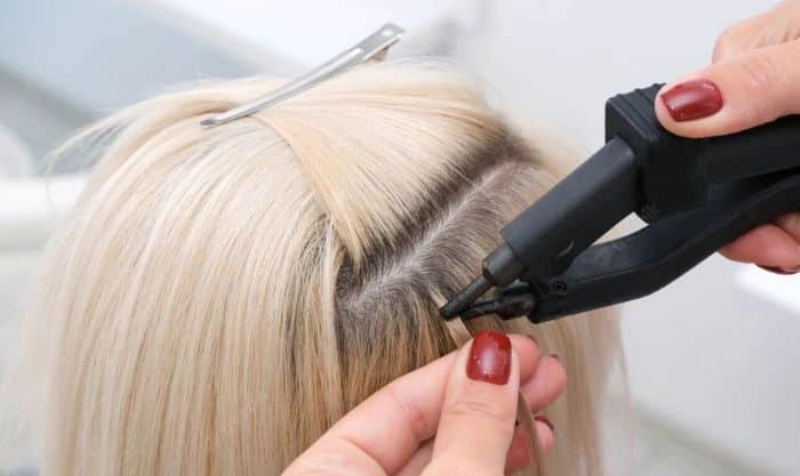
Fusion hair extensions are individual extension strands attached to small sections of natural hair. Because the stylist works strand by strand, the bonds can be placed around the head with more freedom than a full weft. The result can move naturally, blend discreetly, and allow flexible styling.
You may also hear fusion extensions called keratin bond extensions, pre-bonded extensions, K-tip extensions, U-tip extensions, or nail-tip extensions. The names vary by bond shape and application system, but all of them rely on carefully matching an extension strand to a section of natural hair.
Hot Fusion Extensions
Hot fusion uses a controlled heating tool to soften the pre-bonded tip. The stylist shapes the softened bond around the natural hair and lets it cool. The tool should touch the bond for only the time needed to form a clean attachment; it should not press against the scalp.
Cold Fusion Extensions
True cold fusion systems normally use ultrasonic energy to soften and form the bond without a conventional hot fusion iron. They can reduce direct heat exposure during fitting, but they still add weight and an attachment point to the natural hair. That means section size, bond weight, placement, daily care, and removal remain important.
Micro-ring and I-tip methods are sometimes casually grouped with cold fusion, although they use a bead rather than a fused keratin bond. If you are comparing methods, ask the stylist exactly which attachment system will be used.
Do Fusion Extensions Damage Your Hair?
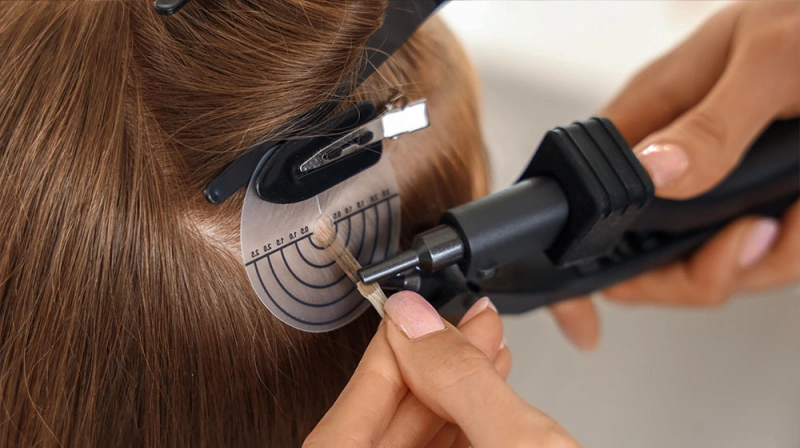
Fusion extensions should not be sold as “zero-damage.” A well-planned installation on healthy hair can be worn comfortably with minimal visible breakage, but a poorly planned installation can lead to snapping, matting, scalp irritation, or traction alopecia.
Keratin is a protein found naturally in hair, but that fact alone does not make a keratin bond harmless. The bond is still carrying an extension strand. Your natural hair must be strong enough to support that weight as it grows away from the scalp.
The safest answer is conditional: fusion extensions are less likely to damage your hair when the natural section and extension strand are balanced, the bonds move freely, the service schedule is respected, and removal is gentle.
1. Too Much Weight or Tension
Each bond needs enough healthy natural hair to support it. If a heavy extension strand is attached to a section that is too small, the natural hair carries more load than it should. Too many bonds around the hairline or other delicate areas can create the same problem.
The American Academy of Dermatology warns that repeated pulling from extensions can cause breakage and traction alopecia. Early traction hair loss may improve when the pulling stops. Long-standing follicle damage can become permanent.
2. Poor Bond Placement
A bond placed too close to the scalp may feel tight, poke the skin, or stop the natural hair from moving normally. A bond placed on a messy or crossed section can tug in several directions. Both problems create daily stress every time you brush, sleep, exercise, or tie your hair up.
Clean sectioning matters. The bond should sit away from the scalp, move naturally, and match the direction in which the hair grows.
3. Excessive Heat During Application
Hot fusion uses heat, so the stylist must control the temperature, contact time, and placement. Holding the tool on the bond for too long or touching the natural hair unnecessarily can weaken the hair shaft. Correctly used professional tools localize the heat at the bond instead of repeatedly passing over the full length of the natural hair.
Heat is only one part of the risk. Even a perfectly formed bond can become damaging if it is too heavy or poorly maintained.
4. Overwear, Grow-Out, and Matting
As your hair grows, the bond moves farther from the scalp. Naturally shed hairs can remain trapped inside the attachment until removal. Without regular separation and brushing, neighboring bonds may tangle together and form a mat near the roots.
The longer a badly tangled or overgrown bond remains in place, the harder it becomes to remove without pulling. A secure bond is not a reason to keep wearing an installation beyond the schedule set by your stylist.
5. Rough Daily Care
Brushing from the roots with force, sleeping with wet hair, rubbing the bonds with a towel, applying oil directly to the attachment, or repeatedly catching bonds with hot tools can weaken the installation. Tangling and slippage then create more friction and pulling.
Daily care does not need to be complicated, but it does need to be consistent.
6. Incorrect Removal
Many of the worst fusion extension stories begin at removal. Pulling, peeling, or sliding out a bond before it has been fully broken down can take natural hair with it. Cutting near a bond is even riskier because it is difficult to see which hairs belong to the extension and which belong to the client.
A trained stylist uses the correct bond remover and removal tool, works through each attachment patiently, and detangles the shed hair without yanking. Never judge the installation only by how it looked on day one; safe removal is part of the service.
7. Scalp Sensitivity or Irritation
Some people react to an adhesive, remover, product buildup, or constant contact near the scalp. Itching that continues, redness, burning, sores, or swelling should not be ignored. Ask for an ingredient review or patch test if you have a history of skin sensitivity, and speak with a dermatologist if symptoms persist.
Who Is a Good Candidate for Fusion Extensions?
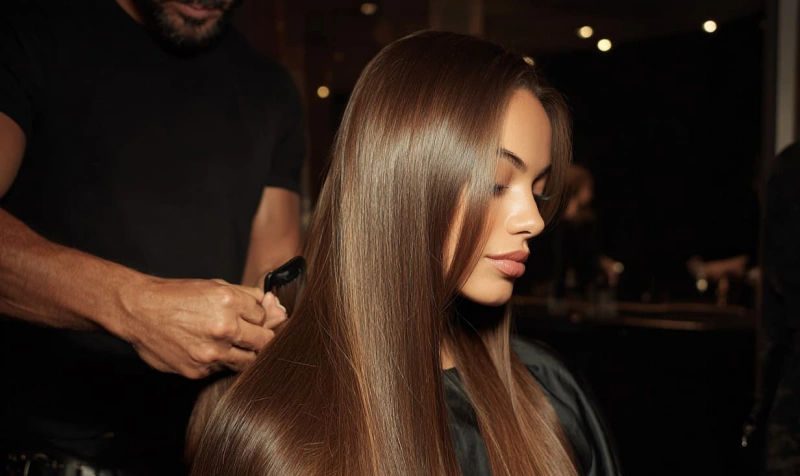
Fusion extensions are often best suited to healthy hair with enough density to support individual bonds. Medium to thick hair usually gives a stylist more room to distribute the weight. Straight, wavy, curly, colored, and uncolored hair can all be considered when the extension texture and bond plan are customized correctly.
You may need a different method, a partial installation, or a delay if you have:
- Active or unexplained hair shedding
- Very fragile, over-bleached, or heat-damaged hair
- Broken hair around the hairline or crown
- A painful, inflamed, or sensitive scalp
- Existing traction alopecia or patchy hair loss
- Hair that is too short to conceal and support the planned bonds
- A lifestyle that makes the required aftercare unrealistic
If you are seeing active hair loss, speak with a qualified medical professional before adding any semi-permanent extension. Extensions can improve the appearance of fullness, but they do not treat the cause of thinning.
Are Fusion Extensions Safe for Fine or Thin Hair?
Fine hair and thin hair are not the same. Fine hair describes the diameter of each strand; thin hair describes lower density. A person can have many fine strands, while another person may have coarse strands but low density.
Fine hair can sometimes support K-tip hair extensions when the stylist uses smaller, lighter bonds and fewer grams. Low-density, fragile, or actively thinning hair requires much more caution. The goal is not to hide every visible gap with more extension hair. It is to add only the amount the natural hair can safely support.
Ask the stylist to explain:
- The weight of each extension strand
- How much natural hair will support each bond
- Which areas will be left free of bonds
- How the perimeter and crown will be protected
- Whether a lighter method would distribute weight more effectively
You can also compare other permanent extension options for thin hair before committing to a full fusion installation.
How to Reduce the Risk Before Installation?
Start With an Honest Consultation
Your stylist should examine the scalp, hairline, density, breakage, chemical history, and normal styling habits. Bring up recent shedding, postpartum changes, bleach services, medication changes, or previous extension damage. A good consultation can end with “not yet” or “not this method.”
Match the Bond to the Hair
Bond weight, size, and placement should change across the head. Hair near the temples and nape is often finer than hair at the back. Using one strand size everywhere may overload delicate areas.
Choose Experienced Hands
Ask how often the stylist installs fusion extensions, which system they are trained in, and whether removal is included in the service plan. Look at healed grow-out and removal results, not only fresh before-and-after photos.
If you want to understand the process before booking, review how fusion extensions are applied. Use that information to ask better questions, not as a reason to attempt a DIY installation.
Use Extension Hair That Stays Manageable
High-quality, cuticle-aligned Remy hair does not remove the mechanical risk of an attachment, but it can reduce tangling through the lengths. Less tangling means less aggressive brushing and less daily pulling at the bonds.
From a manufacturer’s perspective, this distinction matters: premium hair cannot correct poor placement, and expert placement cannot make badly tangling hair pleasant to wear. You need both suitable hair and suitable technique.
Fusion Extension Aftercare That Protects Natural Hair
Follow the instructions for the exact bond system your stylist uses. These habits are a practical starting point:
- Brush gently every day. Support the hair near the roots with one hand, detangle the ends first, and work upward with an extension-safe brush.
- Keep bonds separated. Run clean fingers between the rows so neighboring attachments do not begin matting together.
- Wash without piling the hair up. Shampoo the scalp with gentle downward motions. Let the lather move through the lengths instead of scrubbing the bonds together.
- Keep conditioner and oil off the bonds. Apply them through the mid-lengths and ends unless your stylist gives different product instructions.
- Dry the attachment area fully. Damp roots and bonds are more likely to tangle. Never go to bed with wet fusion extensions.
- Protect the hair overnight. Use a loose braid or low ponytail and a silk or satin pillowcase to reduce friction.
- Use heat carefully. Apply heat protectant through the lengths and keep flat irons, curling irons, and concentrated dryer heat away from the bonds.
- Plan for swimming and workouts. Secure the hair loosely, rinse after salt water or chlorine, and dry the bond area after heavy sweating.
- Attend checkups. A stylist can find crossed hairs, matting, slippage, or stressed sections before they become a larger problem.
For a more detailed routine, see our guide on how to care for fusion hair extensions.
Warning Signs Your Fusion Extensions Are Damaging Your Hair
A new installation may feel unfamiliar, but it should not feel sharply painful or continue pulling on your scalp. Contact your stylist promptly if you notice:
- Pain, headaches, or persistent tightness
- Bonds that cannot move naturally with the hair
- Redness, swelling, burning, sores, or intense itching
- Short broken hairs around attachment points
- New thinning at the temples, hairline, part, or crown
- Several bonds tangled into one hard mat
- Excessive slipping accompanied by natural hair in the bond
- A sudden increase in shedding that continues
According to DermNet, hair extensions are one possible cause of traction alopecia. Early action matters. If you see patchy loss, a receding hairline, or ongoing scalp symptoms, remove the source of tension with professional help and consult a dermatologist.
Does Fusion Extension Removal Damage Hair?
Removal can damage hair when it is rushed. It should not involve forcing a dry, intact bond down the hair shaft.
A professional normally applies a remover formulated for the specific bond, gives it time to work, breaks the softened attachment with a removal tool, and slides away the extension without pulling. The stylist then separates and combs out accumulated shed hairs before washing and assessing the natural hair.
Your hair may look or feel lighter immediately after removal. Part of that change is simply the loss of the added extension volume. Some naturally shed hairs also stay held near the bonds until removal, so seeing hair in the comb does not automatically prove that the extensions pulled it out. Short snapped hairs, sparse patches, pain, or obvious density loss are different and deserve attention.
Hot Fusion vs. Cold Fusion: Which Is Less Damaging?
Cold fusion reduces the use of a conventional heated iron, which may sound safer. However, the attachment still carries weight and grows out with the natural hair. Hot fusion can also be worn successfully when the tool is controlled and the section is correctly balanced.
The better choice depends on:
- Hair density and strand strength
- Bond size and extension weight
- The stylist’s training with that system
- Scalp sensitivity
- Styling and maintenance habits
- The planned wear and removal schedule
Do not choose a method on the words “hot” or “cold” alone. A well-fitted hot fusion bond may be safer for one client than a poorly sized cold fusion bond, and the reverse can be true for another.
Fusion Hair Extensions: Pros and Cons
Pros
- Small, discreet attachment points
- Natural movement and flexible placement
- Easy access to the scalp for washing
- Custom color, length, and density placement
- No wide tape tabs or continuous weft track
- Long wear when maintained on schedule
Cons
- Several hours may be needed for a full installation
- Professional fitting and removal increase the total cost
- Daily detangling and bond separation are required
- Poor weight matching can cause breakage or traction
- Many pre-bonded strands need retipping before reuse
- Fusion may not suit actively thinning or severely damaged hair
For a broader buying decision, compare the full pros and cons of fusion hair extensions and typical fusion extension costs.
How Long Can You Wear Fusion Hair Extensions Safely?
Many keratin fusion installations are removed and replaced after about three to four months, but your safe wear time may be shorter. Hair growth rate, bond size, natural density, shedding, home care, and matting all affect the schedule.
Do not confuse installation wear time with extension hair lifespan. Quality human hair may be retipped and reused when its condition allows, so the hair itself can last longer than one installation. The original bonds still need timely professional removal.
Your stylist should give you a removal date at installation and adjust it if your hair grows quickly or the bonds begin tangling. Read more about how long fusion extensions last.
FAQ
Do fusion hair extensions ruin your hair?
They can if they create too much tension, remain matted or overgrown, or are removed incorrectly. On healthy hair, a properly balanced installation with professional maintenance is less likely to cause significant damage.
Are keratin bonds safer because hair contains keratin?
Not automatically. Keratin can form a small, flexible bond, but safety still depends on the weight of the extension, the amount of natural hair supporting it, placement, wear time, and removal. Read our related guide, do keratin hair extensions damage your hair?
Can fusion extensions cause bald spots?
Repeated pulling can contribute to traction alopecia and visible thinning, especially around delicate areas. Pain, broken hairs, or a widening thin patch should be addressed early by a stylist and, when needed, a dermatologist.
Can you wash your hair normally with fusion extensions?
You can wash your scalp and hair, but use gentle downward motions, avoid rubbing bonds together, keep conditioner and oils away from the attachments, and dry the root area fully. Follow the product instructions supplied by your stylist.
Should you take a break between installations?
Some clients can reinstall after a healthy-hair assessment; others benefit from a break or a lighter method. The decision should be based on the condition of the scalp and natural hair after removal, not on a fixed rule.
What is the least damaging type of hair extension?
There is no single permanent method that is safest for everyone. Temporary halo or occasional clip-in systems avoid a continuous bonded attachment, but even clips can cause stress when they are heavy or placed repeatedly in the same spot. The best option matches your hair density, condition, and routine.
Conclusion
So, do fusion extensions damage your hair? They can, but the damage usually comes from excessive tension, poor placement, over-wear, rough care, or unsafe removal rather than from one bond material alone.
Start with healthy hair, choose a trained fusion specialist, keep the strand weight realistic, and treat discomfort as useful information. When the installation is customized and the care schedule is respected, fusion extensions can deliver discreet length and volume while keeping the risk to your natural hair much lower.
Alpha Hair manufactures keratin hair extensions, K-tip, U-tip, flat-tip, and other pre-bonded options for salons, brands, retailers, and wholesalers. If you are sourcing fusion extensions, contact Alpha Hair to discuss hair quality, bond shapes, strand weights, colors, and private-label requirements.