
If you are comparing genius weft vs hand tied vs machine weft, the names can make the choice sound more complicated than it is. All three are weft hair extensions, but the seam is built differently. That one detail changes how flat the hair sits, whether your stylist can cut the track, how much density you get in each row, and how the extensions feel during daily wear.
Here is the short answer: choose genius weft when you want a thin, cuttable, low-profile track; choose hand-tied weft when you value light movement and layered color work; choose machine weft when you need high density, durability, and a more accessible price.
None is automatically best for every client. Your natural hair density, desired volume, installation method, budget, and maintenance habits should decide.
Key Takeaways
- Genius weft combines a very thin profile with cut-to-fit flexibility, making it a versatile option for fine-to-medium hair and customized rows.
- Hand-tied weft feels light and moves naturally, but you should not cut the track because it can unravel.
- Machine weft offers strong construction and more hair per track, although its thicker seam can be harder to conceal in fine hair.
- The weft label does not guarantee hair quality. Cuticle alignment, processing, stitching, shedding control, and color consistency still matter.
- A safe installation depends on correct weight and tension. Even the thinnest weft can cause discomfort if the row is overloaded or installed too tightly.
Genius Weft vs Hand Tied vs Machine Weft: Quick Comparison
| Feature | Genius Weft | Hand-Tied Weft | Machine Weft |
|---|---|---|---|
| Seam profile | Ultra-thin and flat | Thin and flexible | Thicker and more structured |
| Can you cut it? | Usually yes; confirm with a cut test | No; cutting may unravel the track | Yes, although some seams should be sealed |
| Return hair | Usually none | Usually present | Usually present |
| Density per track | Medium to high, depending on design | Lower and easy to layer | High |
| Best fit | Fine-to-medium hair, sensitive scalps, and custom rows | Fine-to-medium hair, natural movement, and dimensional color | Medium-to-thick hair, dramatic volume, and value-focused services |
| Main advantage | Thin and customizable | Lightweight movement | Density and durability |
| Main limitation | Quality and density vary by supplier | Cannot be freely cut | More bulk at the root |
| Typical price position | Premium | Premium | More budget-friendly |
This table gives you a starting point, not a prescription. A light row of machine weft may be safer than an overloaded row of genius weft. A well-made hand-tied track may outperform a poorly sealed “genius” track. You should compare actual samples and plan the installation around the client in your chair.
What Is a Genius Weft?
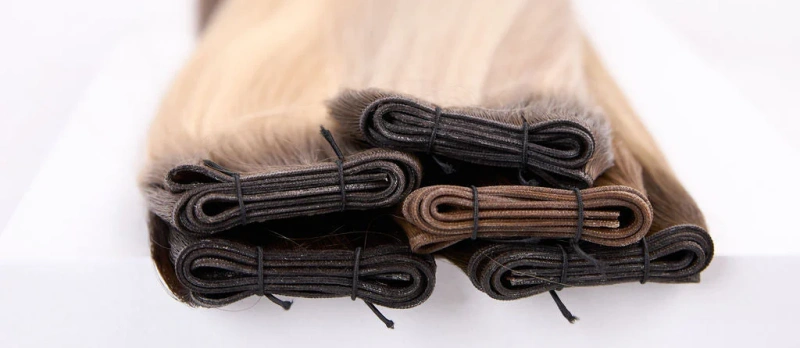
A genius weft is a modern, low-profile weft designed to give you the flat look of a hand-tied track with the cutting flexibility of a machine-made track. The seam is slim, soft, and flexible. Most genuine versions have no short return hair at the top, so you do not feel the prickly “mustache” that can irritate a sensitive scalp.
You can usually cut a genius weft to the exact width of each row without folding the excess track. This makes it easier for your stylist to follow the shape of your head and keep the installation neat around narrow sections.
Alpha’s genius weft specifications list a seam thickness of approximately 0.4–0.7 mm. Measurements differ among manufacturers, so do not assume every product sold under the same name has the same construction. Ask for a close-up seam photo, the weight per piece, and a sample you can cut and brush.
Pros of Genius Weft
- You get a flat seam that is easier to conceal under fine or medium-density hair.
- Your stylist can cut the track to fit the row instead of folding it.
- The no-return-hair design can feel smoother against a sensitive scalp.
- You can build volume without the bulky ridge associated with a traditional machine track.
- The weft works with common sew-in and beaded-row techniques.
Cons of Genius Weft
- You will usually pay more than you would for a standard machine weft.
- “Genius weft” is not a universal construction standard, so quality can vary widely.
- A very thin seam leaves less room for production errors; weak sealing may show up as shedding after cutting or washing.
- High-density versions can still be too heavy for fragile natural hair if the stylist overloads the row.
If you want to see why the seam behaves differently, Alpha’s guide to how genius weft extensions are made explains the raw-hair selection, seam construction, and finishing steps.
What Is a Hand-Tied Weft?
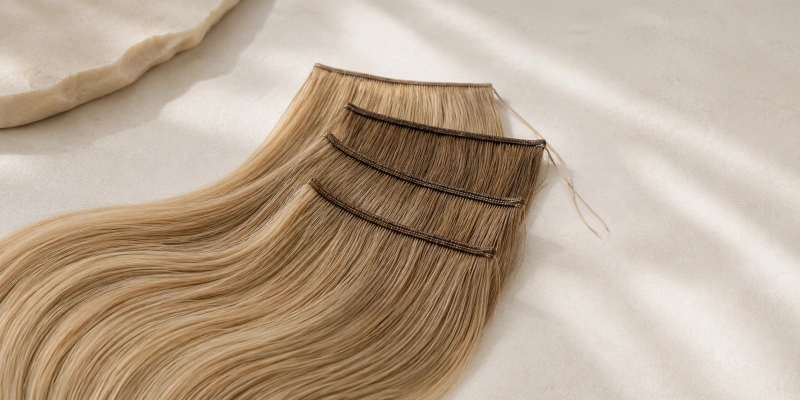
A hand-tied weft is made by tying small sections of hair onto a fine base by hand. The finished track is thin, flexible, and light. Because individual pieces tend to carry less hair than a dense machine weft, your stylist can layer several shades to create soft color dimension without building one solid block of color.
The trade-off is cuttability. You should not cut a hand-tied weft through the track. Once the knots are disturbed, the seam can unravel and shed. Your stylist must select the right pre-made width, layer full pieces, or carefully fold the track where appropriate.
Pros of Hand-Tied Weft
- The light construction creates natural movement.
- The thin track can blend well with fine-to-medium hair.
- Lower-density pieces make multi-shade layering and dimensional color easier.
- The flexible seam follows the head comfortably when installed with balanced tension.
- There is no glue or heat in common beaded-row and sew-in applications.
Cons of Hand-Tied Weft
- You cannot freely cut the seam to fit a short or curved row.
- Folding or stacking can add bulk if the widths do not match the head.
- The handwork and slower production process usually raise the product price.
- The knots need gentle handling during washing, brushing, removal, and reinstallation.
- Short return hairs may feel irritating for some clients.
For a deeper look at wear, installation, and upkeep, see Alpha’s guide to hand-tied weft extensions pros and cons.
What Is a Machine Weft?
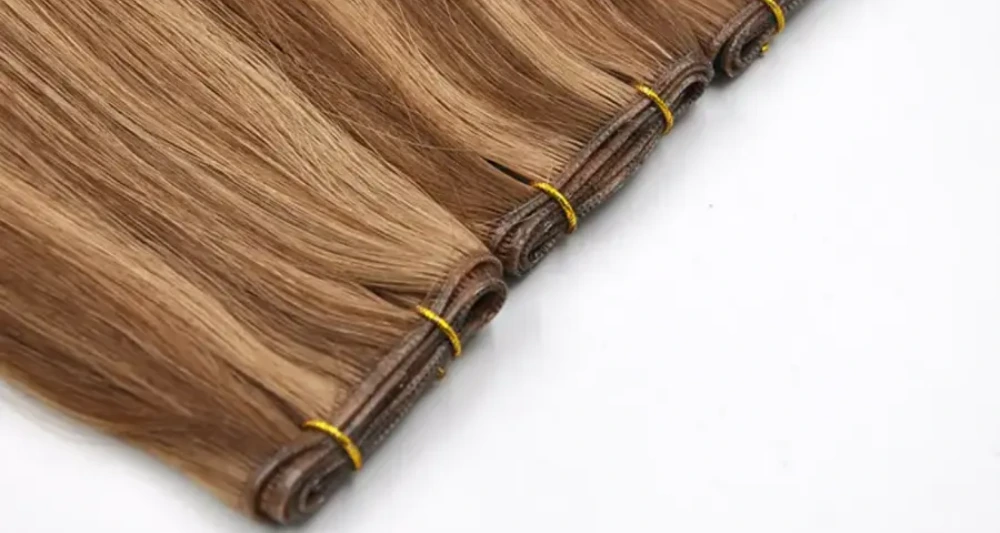
A machine weft is made by feeding extension hair through industrial sewing equipment to create a reinforced track. The seam is usually wider and thicker than genius or hand-tied wefts, but it also holds more hair. That density helps you create dramatic fullness with fewer pieces.
Machine weft is often treated as the basic option, yet the category covers a wide quality range. A carefully stitched track made with full-cuticle Remy hair can perform far better than a thin premium-looking weft made from overprocessed hair. If your natural hair is medium, thick, or coarse enough to conceal and support the seam, machine weft can be a practical, durable choice.
Pros of Machine Weft
- You get high density and strong volume from fewer tracks.
- The reinforced seam stands up well to repeated handling.
- Your stylist can cut the track; depending on the construction, the ends may need sealing.
- Production is efficient, which generally gives you a lower product cost.
- It suits thick hair and bold transformations where a fine track is not the first priority.
Cons of Machine Weft
- The thicker ridge may show under fine, thin, or very straight hair.
- More hair per track means more weight if the row is not planned carefully.
- A firm seam can feel less flexible against the head.
- Return hair may cause itching or matting near the root.
- The added bulk can limit very high placement or certain updos.
You can review Alpha’s machine weft extensions page for available product construction and customization options.
The Differences That Matter Most
1. Seam Thickness and Invisibility
If your priority is the flattest possible finish, genius weft usually leads, with hand-tied close behind. Machine weft has a more noticeable track. That does not mean it will always show. Thick natural hair can hide a machine seam easily, while sparse hair may reveal even a thin weft if the row is placed too high.
Look at the complete installation: seam thickness, number of stacked pieces, bead size, row placement, and the amount of natural hair left to cover the track. A thin product does not help if you stack too much hair onto one row.
2. Cutting and Customization
Genius weft gives you the simplest customization. Your stylist can cut the track to match the head shape without folding the extra length. Machine weft is also cuttable, although some constructions need adhesive at the cut edge to control shedding.
Hand-tied weft is different. Cutting through the knots can release the hair, so the stylist must work with complete pieces. This limitation matters most around temples, small heads, or uneven row widths.
Before you place a bulk order, cut a sample in several places, brush it firmly, wash it, dry it, and repeat the brushing test. A quality weft should not release excessive hair from the new edge.
3. Density, Weight, and Volume
Density and weight are related, but they are not the same as seam thickness. A genius track can be extremely thin and still carry substantial hair. A hand-tied piece can feel featherlight because it holds less hair across the same width. Machine weft normally carries the most hair per track.
If you want dramatic fullness on medium-to-thick natural hair, machine weft can deliver it efficiently. If you want flexible volume without a thick ridge, genius weft is often the better balance. If you want airy movement or several blended shades, hand-tied weft gives you more control through layering.
Always match total grams to the natural hair that supports them. Do not choose by the number of rows alone. Two overloaded rows can create more stress than three lighter, well-balanced rows.
4. Comfort and Scalp Sensitivity
Comfort depends on seam texture, return hair, track weight, bead placement, and tension. Genius weft often feels smooth because it has no return hair. Hand-tied feels light and flexible, but its short folded hairs may bother a sensitive scalp. Machine weft can feel firm or bulky when the track is dense.
Pain, persistent tightness, redness, or headaches are not normal “adjustment” symptoms. If you feel them, contact your stylist promptly. The row may need to be loosened, moved, or reduced in weight.
5. Durability and Shedding
Machine weft has the strongest reputation because its track is heavily reinforced. Genius weft can also be durable when the seam is evenly stitched and sealed. Hand-tied weft lasts well with careful handling, but the knotted edge is less forgiving if it is cut or pulled.
The hair itself often determines useful lifespan more than the weft name. Full-cuticle, correctly aligned Remy hair resists tangling better than heavily processed or mixed-cuticle hair. Before buying, inspect the stitching, run a shedding test, wash the sample, and compare color and length consistency.
Alpha’s weft extension quality-control checklist covers the checks you can use for samples and bulk orders.
6. Cost and Salon Value
Machine weft normally has the lowest product cost because production is faster and each track carries more hair. Hand-tied weft costs more because it requires skilled manual work. Genius weft sits in the premium range because the slim, cuttable seam needs more precise construction.
Do not compare pack prices without checking grams, usable width, hair quality, and expected reusability. A cheaper pack may require more pieces or produce more returns. A premium weft may reduce chair-time friction because your stylist can cut it to fit. Your real cost is the product plus installation time, maintenance, replacement, and the risk of client complaints.
Which Weft Is Best for Your Hair or Client?
Choose Genius Weft When:
- You have fine-to-medium hair and need a discreet track.
- You want a customized fit without folded seams.
- You have a sensitive scalp and prefer a no-return-hair design.
- You want more density than a light hand-tied piece without the bulk of a traditional machine seam.
- You are building a premium salon service that values flexible installation.
Choose Hand-Tied Weft When:
- You want light, natural movement.
- You plan to layer several shades for balayage, highlights, or dimensional color.
- Your stylist is experienced in fitting full-width pieces without cutting the seam.
- You prefer lower-density layers and do not mind a more delicate track.
- You can commit to gentle handling and regular move-up appointments.
Choose Machine Weft When:
- Your natural hair is medium-to-thick enough to conceal the track.
- You want high density or a dramatic transformation.
- Durability and cost efficiency matter more than the thinnest possible seam.
- You prefer fewer dense pieces rather than several light layers.
- Your salon or brand needs a dependable, volume-focused option at an accessible price.
If you serve several client types, you do not need to pick only one category. Many salons stock genius weft for low-profile installs, hand-tied weft for layered color, and machine weft for thick-hair volume. Advanced stylists may even combine weft types in one installation when the weight, seam heights, and colors work together.
How to Compare Weft Samples Before You Buy?
The product name on a label tells you less than a hands-on sample. Whether you are a stylist, salon owner, brand owner, or wholesaler, use the same basic test:
- Check the raw hair. Confirm cuticle alignment, texture, true length, and fullness at the ends.
- Measure the seam. Compare thickness, height, flexibility, and rough edges across several pieces.
- Weigh the sample. Record grams and usable width so you can compare density fairly.
- Test shedding. Brush before and after cutting, washing, drying, and heat styling.
- Check the color. Compare bundles under daylight and salon lighting for banding or unwanted undertones.
- Test the cut edge. Genius and machine wefts should remain stable when cut according to the supplier’s instructions.
- Wash and wear it. One dry sample cannot show how the hair behaves after products, water, heat, and friction.
- Confirm repeatability. Ask whether bulk orders will match the approved sample in seam, grams, shade, and hair grade.
This step protects your clients and your reputation. It also helps you compare suppliers on performance instead of marketing language.
Care and Maintenance for All Three Wefts
Your aftercare routine is similar whichever weft you choose:
- Brush gently from the ends upward while supporting the row with your other hand.
- Use sulfate-free, extension-safe products and keep heavy oils away from beads and attachment points.
- Dry the seam and roots fully before sleeping.
- Sleep with your hair in a loose braid or low ponytail on a silk pillowcase.
- Use heat protection and avoid pressing hot tools against the seam.
- Book move-up appointments on the schedule your stylist sets, often around six to eight weeks.
- Never cut, glue, tighten, or remove a professional weft at home.
Hand-tied seams need extra care because you do not want to disturb the knots. Machine tracks need thorough drying because the thicker seam can hold more moisture. Genius wefts dry quickly when the seam is slim, but you should still clean and dry the row carefully. For a full routine, follow Alpha’s weft extensions maintenance guide.
Final Verdict
In the genius weft vs hand tied vs machine weft comparison, genius weft is the most versatile all-rounder, hand-tied weft is the specialist for light movement and layered color, and machine weft is the practical choice for dense volume and value.
Your best option is the weft that your natural hair can safely support and your stylist can install well. Start with hair density, scalp sensitivity, target volume, and budget. Then inspect the actual product—not just its name. When construction quality, hair quality, and installation planning all line up, any of the three can deliver a natural, comfortable, reusable result.
If you are sourcing for a salon or private-label brand, request samples of Alpha’s genius weft, hand-tied weft, and machine weft in comparable lengths and shades. Testing them side by side is the clearest way to choose the right assortment for your clients.
FAQ
Is Genius Weft Better Than Hand-Tied Weft?
Genius weft is better when you need a track that is both thin and cuttable. Hand-tied weft may be better when you want very light pieces, natural movement, or several colors layered together. Your hair density and installation plan should decide.
Can You Cut Genius, Hand-Tied, and Machine Wefts?
You can usually cut genius weft without unraveling. You should not cut hand-tied weft through the knotted seam. You can cut machine weft, but some constructions need the new edge sealed. Always follow the supplier’s instructions and test a sample first.
Which Weft Is Best for Fine Hair?
Genius and hand-tied wefts are usually easier to conceal in fine hair because their seams are thin. The safest choice still depends on total grams, row placement, and tension. If your hair is actively shedding or very fragile, consult a qualified stylist before installing any weft.
Which Weft Gives the Most Volume?
Machine weft usually carries the most hair per track, so it creates strong volume efficiently. Genius weft can also provide substantial density with less seam bulk. Hand-tied weft generally builds volume through several lighter layers.
How Long Do Weft Hair Extensions Last?
The installation normally needs to be moved up every six to eight weeks as your natural hair grows. The hair can often be reused for several installations. Its total lifespan depends on the hair grade, chemical processing, home care, heat use, and how gently it is removed and reinstalled.
Which Weft Sheds the Least?
A well-made machine or genius weft generally resists shedding because the seam is reinforced. An uncut hand-tied weft can also perform well. Excessive shedding is usually a quality or handling problem, so test stitching, sealing, and hair retention before you buy.