
You may like your current length but still want your hair to look fuller through the sides, ends, or overall silhouette. In that case, the best hair extensions for volume are not simply the heaviest set or the longest option. The result depends on how well the extension method, hair weight, construction, and placement match your natural density.
A good volume plan starts with a simple question: where do you need more fullness? From there, you can decide how much hair to add, how low-profile the attachment needs to be, and whether you want a temporary or salon-installed method. If you also want extra length, the specification changes again because longer hair must still look balanced through the ends.
This guide compares hand-tied, machine, genius, tape-in, and clip-in hair extensions for volume, then shows you how density, grams, weft profile, rows, and placement work together. The goal is to help you choose a method logically rather than relying on one universal “best” extension.
Key Takeaways
- Volume is a system, not a single extension type. Natural hair density, desired fullness, construction, total hair weight, and placement all affect the result.
- More grams do not automatically mean better volume. The same total weight can look different at different lengths or in different weft constructions.
- Low profile and high fullness are different goals. A thin seam can reduce attachment bulk, while the hair below it creates visible fullness.
- Your natural density should set the limit. Fine hair usually needs a more conservative, well-distributed plan than dense hair.
- For salons and brands, specifications matter. Compare construction, weight, density, seam consistency, color, and finished fullness before approving a volume-focused SKU.
What Actually Creates Volume in Hair Extensions?
When hair extensions look full but still natural, several variables are working together. Focusing on only one—such as grams—can lead to a set that is too bulky at the attachment, too light through the ends, or simply wrong for the wearer’s density.
Hair Weight and Grams
Grams tell you how much extension hair is in a set, bundle, row, or pack. They do not tell you exactly how full the finished hairstyle will look. A shorter set and a much longer set can contain the same total weight, but the longer hair spreads that weight over more length. Construction, end density, and placement also change the visual result.
That is why there is no single correct gram target for every person. Start with natural hair density, the method, the target length, and the amount of fullness you want. For a deeper quantity framework, see how many grams of hair extensions you need.
Weft Profile, Seam Thickness, and Bulk
For weft methods, the top seam or profile affects how much physical bulk sits close to the scalp. A lower-profile construction can make concealment easier, especially when the goal is soft density rather than a dramatic transformation. A more substantial seam can support a concentrated, visibly full weft but may need more natural hair for coverage.
This is one reason two wefts with a similar total hair weight can feel and look different. The hair may be distributed across a thinner or thicker track, a wider or narrower section, or one versus several rows. The attachment profile and the fullness below the seam should be evaluated separately.
Row Placement and Distribution
Placement controls where the fullness appears. A stylist may use the available weight to reinforce the lower perimeter, balance the sides, support a blunt haircut, or create more overall density. Stacking more hair into one area can create concentrated fullness, while distributing it across suitable rows can create a softer transition.
The correct number of wefts or rows depends on the head, natural density, chosen construction, and result you are building. If you need the quantity question in more detail, use Alpha’s guide to how many weft extensions you need instead of applying a fixed row count to every client.
Hair Density and Blending
Your natural hair has to conceal the attachment and visually blend into the extension hair. Fine hair usually benefits from lighter, lower-profile, and carefully distributed options. Medium-density hair gives you more flexibility. Dense hair can often support more concentrated fullness, but the extension still needs to match the haircut, texture, and target shape.
Blending is not only about color. The finished length, texture, and end density should make the natural hair and extensions read as one shape. If the wearer has fragile or breaking hair, a professional should assess whether additional weight is appropriate before installation.
Best Hair Extension Methods for Volume
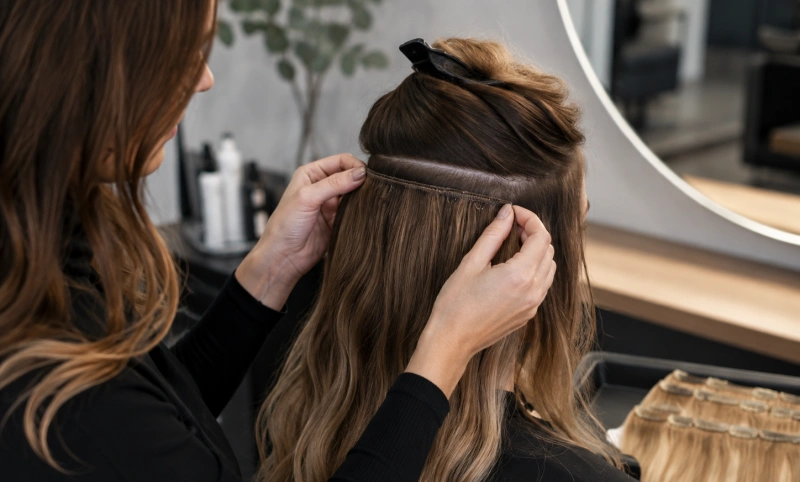
The best hair extensions for volume depend on how permanent you want the result to be, how much attachment bulk the natural hair can conceal, and where the extra density is needed. The methods below create different volume profiles, so compare the structure rather than choosing by name alone.
Hand-Tied Weft Extensions
Hand-tied weft extensions are useful when you want distributed, natural-looking fullness with a relatively low-profile seam. They can work well for fine-to-medium density when the row and total weight are planned conservatively.
The main consideration is construction handling. Cutting, folding, stitching, and sealing rules should follow the specific weft design rather than a generic instruction. This page does not repeat the full installation mechanics; see how hand-tied extensions work if you need that process, or the dedicated hand-tied weft pros and cons guide for a deeper trade-off analysis.
Machine Weft Extensions
Machine weft extensions generally create a more concentrated, substantial fullness profile. The seam is typically more noticeable than a very slim weft construction, so they are often easier to conceal in medium-to-dense natural hair or in placements with enough coverage.
They are a strong option when the visual goal is clear body through the lengths and ends. The trade-off is that seam/profile bulk has to be considered alongside the amount of hair being added.
Genius Weft Extensions
Genius weft extensions are designed around a slim, flexible weft profile and can be useful when you want even distribution with less attachment bulk. They suit volume plans where customization of the installed width and a discreet seam are priorities.
Exact cutting and handling rules should follow the selected product construction. For brands and salons, seam consistency is especially important because a thin profile only works as intended when the construction is stable from sample to bulk production.
Tape-In Extensions
Tape-in hair extensions add hair in flat panels, so the volume is distributed across multiple attachment points instead of concentrated in one weft row. That makes tape-ins a practical choice for fine-to-medium hair when a low-profile, salon-installed result is the priority.
Placement and panel weight still matter. Too much hair in the wrong area can be harder to conceal, while thoughtful distribution can add fullness without making the attachment area feel visually heavy. Tape-in wear also comes with its own adhesive and move-up maintenance, which should be considered separately from the volume result.
Clip-In Extensions
Clip-in human hair extensions are the most flexible option when you want temporary, adjustable volume. You can add a small amount of fullness for a style or use a fuller set when you want a more noticeable change, then remove the hair after wear.
Because the clips and wefts are removable, clip-ins are useful for customers who do not want a salon maintenance cycle. The trade-off is daily application and removal, plus the need to distribute the pieces so the clips stay concealed.
Comparison: Which Extension Creates the Right Type of Fullness?
Use this table as a starting point. It describes the relative volume profile of each method rather than prescribing one fixed product specification for every wearer.
| Method | Volume Profile | Relative Bulk | Good Starting Point | Main Trade-Off |
| Hand-Tied Weft | Distributed, natural fullness | Low | Fine-to-medium hair; discreet row-based volume | Construction and cutting rules are method-specific |
| Machine Weft | Concentrated, substantial fullness | Higher | Medium-to-dense hair; stronger body through lengths | Seam/profile may be more apparent |
| Genius Weft | Slim, even, customizable distribution | Low | When a thin weft profile and width customization matter | Requires stable seam and manufacturing consistency |
| Tape-In | Distributed panel-based fullness | Low | Fine-to-medium hair; flat attachment profile | Adhesive maintenance and periodic move-ups |
| Clip-In | Temporary, adjustable fullness | Variable | Occasional wear, retail use, no salon commitment | Daily placement and removal |
If you are researching a specific Alpha product construction rather than comparing methods, see volume weft extensions. Keeping that product intent separate helps this page stay focused on the broader volume decision.
How Much Hair Do You Need for Volume?
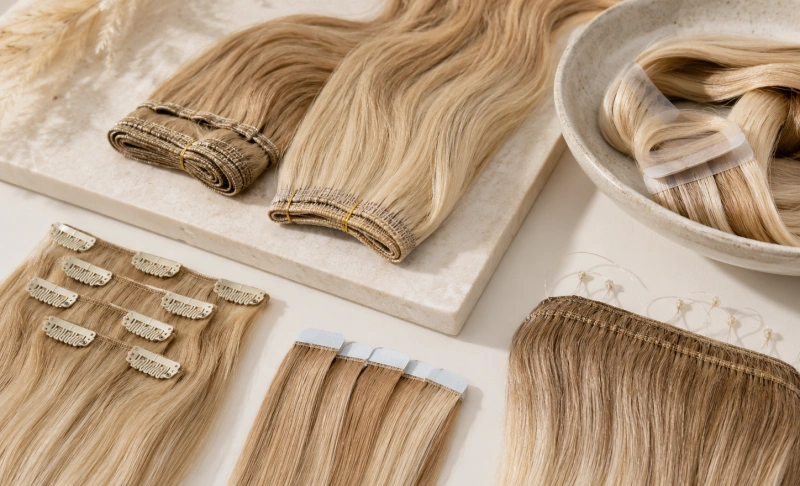
You do not need to start with a universal gram chart. Start with the result you are trying to create, then work backward into the specification. A useful decision order is:
- Assess natural hair density. How much attachment and added weight can the hair realistically conceal and support?
- Define the desired fullness. Are you filling the sides, strengthening the perimeter, increasing overall density, or building both length and volume?
- Confirm the target length. The same total weight looks different when it is distributed through a shorter or longer finished length.
- Choose the construction. Decide whether the client needs a low-profile weft, a more substantial weft, distributed tape panels, or removable clip-ins.
- Plan rows and placement. Distribute the selected weight where it creates the required shape without unnecessary bulk.
Simple rule: Grams are a specification, not the finished result. Use grams together with density, length, construction, and placement.
Best Extensions for Fine, Medium, and Thick Hair
Hair density changes what “best” means. Instead of ranking one method for everyone, match the extension profile to the amount of natural hair available for coverage and support.
| Natural Hair | Volume Priority | Methods to Compare | What to Watch |
| Fine | Low profile, conservative weight, distributed fullness | Hand-tied, genius, tape-in, carefully selected clip-in | Attachment visibility, excess weight, over-stacking |
| Medium | Balance concealment, fullness, and maintenance | Hand-tied, machine, genius, tape-in, clip-in | Match method to desired fullness and maintenance |
| Thick / Dense | Stronger body and enough added hair to blend with natural density | Machine weft, hand-tied, genius, tape-in, or clip-in depending on goal | Under-specifying the hair can make the extension disappear into dense natural hair |
Fine hair deserves extra attention because “fine” describes strand diameter and may or may not mean low density. For a more focused discussion of weft suitability, see are weft extensions good for thin hair? The detailed hand-tied use case also belongs on Alpha’s hand-tied extensions for thin hair guide rather than being duplicated here.
Adding Volume Without Excess Bulk
If your goal is fullness rather than a visibly heavier installation, think about where bulk comes from. The attachment profile, how many layers are stacked together, and where the hair is concentrated all affect how the set feels and looks near the scalp.
- Choose the profile for the coverage available. Fine natural hair usually needs a more discreet attachment than dense hair.
- Distribute rather than overload. More hair in one small area can create unnecessary concentration without improving the overall shape.
- Match the extension length to the goal. If you mainly want fullness, a length close to the existing haircut can make blending simpler.
- Check the perimeter and ends. Volume should make the haircut look intentionally fuller, not leave a visible weight line or thin tail.
- Use texture and color as part of blending. A good structural plan can still look obvious when the extension texture or shade does not integrate with the natural hair.
Volume vs. Length: How the Goal Changes the Specification
Search results often treat “length and volume” as one benefit, but they are different specification problems. Volume focuses on density and shape. Length focuses on adding inches while keeping enough density through the new ends. If you want both, you need to plan the length change and the supporting fullness together.
| Goal | Main Priority | Specification Focus | Common Mistake |
| Volume only | More density with little change in length | Profile, total hair weight, distribution, perimeter fullness | Choosing extra length when the real need is density |
| Length first | Add noticeable inches without thin-looking ends | Finished length, enough total density, blending into the natural haircut | Adding length without enough supporting fullness |
| Length + volume | Create a balanced transformation | Length, construction, weight, rows, placement, and end density together | Using one standard set for every starting density |
A useful consultation question is: “If the hair stayed roughly this length but looked noticeably fuller, would that solve the problem?” If the answer is yes, build a volume specification first. If the client wants a visible length change, make sure the new length is supported by enough density to look balanced.
For Salons and Brands: How to Specify Volume-Focused Extensions
A salon or hair-extension brand needs more than a consumer method name. To build a repeatable volume-focused product, write the specification around the result you want customers to achieve.
- Define the target wearer. Fine, medium, or dense natural hair? Temporary retail use or professional installation?
- Choose the construction and attachment profile. For wefts, compare the seam/profile and how the hair is distributed below it.
- Set length and net hair weight together. Do not approve weight without checking how full the ends look at the finished length.
- Specify density and finish. Confirm top-to-end distribution, texture, blending needs, and the level of fullness expected in the final hairstyle.
- Confirm color matching. A volume product must disappear visually into the wearer’s natural shade and dimension.
- Build quality checks around repeatability. Review weight consistency, seam consistency, shedding at the construction, density/end fullness, color match, and labeling against the approved sample.
For a deeper manufacturing checklist, use Alpha’s weft extension quality-control guide. Keep exact tolerances, widths, gram weights, and other numerical specifications tied to the approved Alpha SKU or buyer brief instead of publishing generic “industry standard” numbers.
Alpha has manufactured hair extensions since 1990 and produces 100% full-cuticle Remy human hair extensions. For brands, salon groups, and new entrants, the practical next step is to compare samples at the same target length and use case, then approve the construction, weight, color, and packaging as one complete product specification.
Need a specific weft profile or weight? Compare Alpha’s hand-tied weft, machine weft, and genius weft options. For sourcing support, review Alpha’s OEM/ODM services or private-label hair extensions.
FAQ
Which hair extensions are best for adding volume without much length?
There is no single best method for everyone. Hand-tied or genius wefts can create distributed row-based fullness, tape-ins create flat panel-based fullness, and clip-ins give temporary adjustable volume. Start with natural density, desired fullness, attachment profile, and maintenance preference.
How many grams of hair extensions do I need for volume?
There is no universal gram target. The right amount depends on natural hair density, the extension method, finished length, construction, and the amount of fullness you want. A shorter volume piece, a long set, and a salon weft should not share one fixed gram rule.
For the dedicated calculation guide, see How Many Grams of Hair Extensions Do I Need?
Are hand-tied extensions better for volume than machine wefts?
They create different volume profiles. Hand-tied wefts are useful for distributed fullness with a lower-profile seam, while machine wefts can create more concentrated, substantial fullness with a more noticeable profile. The better choice depends on natural density, concealment, and the desired result.
What hair extensions add volume with the least bulk?
Low-profile constructions such as slim wefts or tape-in panels can reduce attachment bulk, but the finished result still depends on the total hair weight and how it is distributed. “Thin attachment” and “low total weight” are not the same thing.
Can fine or thin hair wear weft extensions for volume?
Sometimes, yes, when the natural hair is healthy enough to support the selected method and the weight is planned conservatively. Fine hair usually needs careful concealment and distribution. If the hair is fragile or breaking, a stylist should assess suitability before adding weight.
Is one row enough for volume?
It can be for some clients and goals, but there is no fixed answer. One row may create moderate fullness on one head and be insufficient or too concentrated on another. Natural density, head shape, weft construction, total weight, and placement determine the row plan.
For weft quantity planning, see How Many Weft Extensions Do I Need?
What is the difference between adding volume and adding length with extensions?
Volume is mainly a density and shape problem; length adds inches and usually needs enough supporting hair to keep the new ends from looking thin. If you want both, specify the target length and fullness together rather than treating them as separate afterthoughts.
What should salons or brands check when sourcing extensions for volume?
Check the target wearer, method, seam/profile, length, net hair weight, density distribution, texture, color match, and quality consistency. Approve samples against the finished look you want, then record the complete specification for repeat orders.
Choose Fullness First, Then Choose the Extension
Hair extensions for length and volume work best when you define the result before you choose the method. If fullness is the priority, assess natural density, decide where the hair needs more body, then match the construction, grams, rows, and placement to that goal. If length is also important, add enough supporting density to keep the new silhouette balanced.
For consumers, that approach makes the consultation clearer. For stylists and brands, it turns “volume” into a specification you can compare, sample, and repeat—not just a marketing claim.