
Tape-in extensions can stay smooth, secure, and easy to blend for weeks, but the result depends on what you do between salon visits. If you are learning how to care for tape in extensions, focus on three things: protect the adhesive, prevent tangles, and replace the moisture that extension hair cannot receive from your scalp.
The short version is simple: wait before your first wash, keep oils and conditioner away from the tape tabs, brush gently from the ends upward, dry the attachment area after every wash, and never sleep with wet hair. Follow your stylist’s product and maintenance advice as well, because the tape system, your scalp, and your lifestyle all affect the routine you need.
Key Takeaways
- Wait 24–48 hours after installation before washing, or follow the setting time given by your stylist and tape supplier.
- Wash in an upright position with a gentle, extension-friendly shampoo. Apply conditioner only from the mid-lengths to the ends.
- Brush two or three times a day with an extension brush, starting at the ends while supporting the roots.
- Keep oils, masks, serums, and heavy leave-ins away from the adhesive tabs.
- Dry the tape area completely after washing, swimming, or a sweaty workout.
- Sleep with completely dry hair in a loose braid or low ponytail.
- Keep hot tools away from the tape and use heat protectant on the lengths.
- Book professional maintenance in about 6–8 weeks, or on the schedule your stylist recommends.
Why Tape-In Extension Care Is Different?
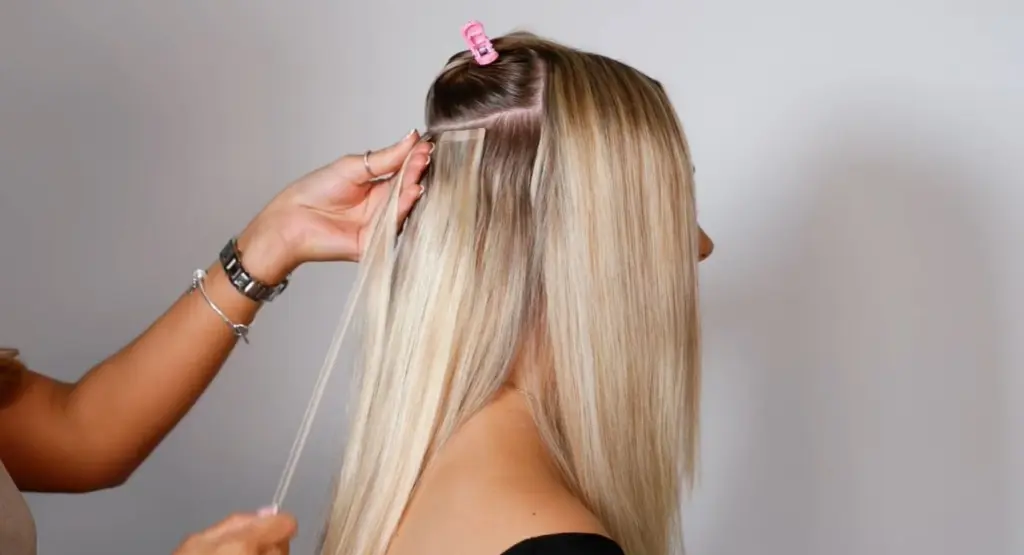
Tape-in extensions are attached in flat panels. In a classic installation, a fine section of your natural hair sits between two adhesive tabs. Other designs, including seamless, PU, invisible, and mini tape-ins, use different tab constructions, but they all have two separate care needs.
First, the adhesive must stay clean, dry, and free from slippery product residue. Oil, conditioner, masks, sunscreen, and some styling products can migrate toward the tabs and shorten the hold. Direct heat and repeated pulling can also weaken the attachment.
Second, the extension hair needs moisture through your care products. Unlike your growing hair, it does not receive natural scalp oils along the full length. The goal is therefore not to avoid conditioning. You simply need to keep moisturizing products below the tabs.
Good care protects your natural hair too. As your hair grows, the panels move farther from the scalp and become easier to twist or snag. Regular brushing and timely move-ups help prevent matting between the tabs and reduce unnecessary tension.
If you are still choosing a method, review the different types of tape-in hair extensions before deciding which tab size and construction suit your hair.
The First 48 Hours After Installation
Your first care decisions can affect the entire wear cycle. Most professional tape systems need about 24–48 hours to set, although the exact time depends on the adhesive. Always use the instructions given by your stylist or tape supplier.
During this setting period:
- Keep your hair and scalp dry.
- Skip swimming, saunas, and high-sweat workouts.
- Avoid oils, sprays, dry shampoo, and conditioner near the roots.
- Do not repeatedly touch, lift, or squeeze the tabs.
- Avoid tight ponytails, buns, or clips that pull the panels in a new direction.
- Keep hot tools away from the attachment points.
You can wear your hair down or secure it in a low, loose style. Before bed, make sure it is dry, detangle the lengths, and make a loose braid. If a tab feels uncomfortable, pinches, or pulls when you move your hair, contact your stylist. Do not wait for the discomfort to become irritation.
How to Wash Tape-In Extensions?
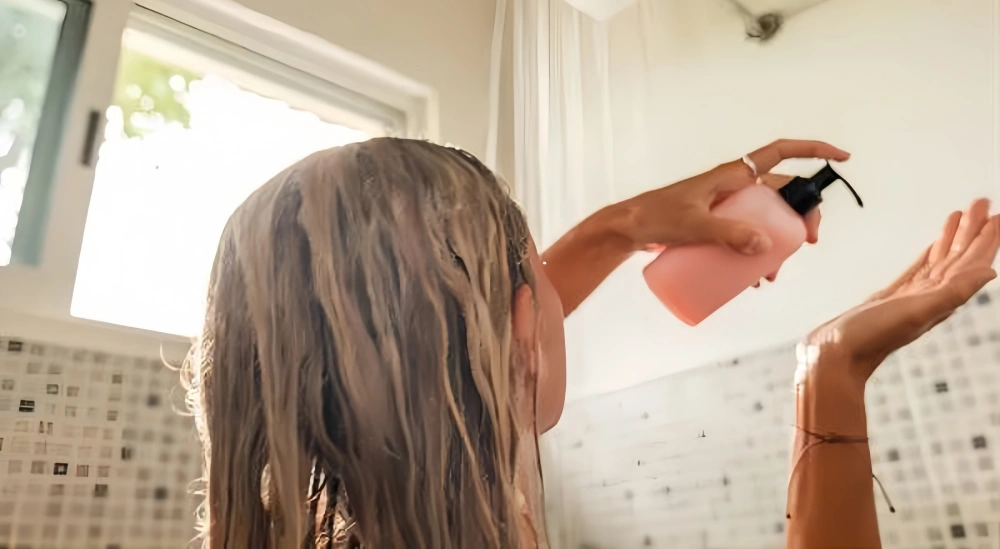
You do not need to be afraid of washing tape-in extensions. A clean scalp is important, and excessive oil or product buildup can be just as troublesome as overwashing. Many wearers wash two or three times a week, but your ideal schedule depends on your scalp, activity level, and stylist’s advice.
1. Detangle Before You Get in the Shower
Brush the ends first, then work upward in small sections. Hold the hair above the area you are brushing so the tool does not pull against the tabs. Separate the rows gently with your fingers and check for small tangles near the roots.
2. Keep Your Head Upright
Wash in the shower with the water flowing from roots to ends. Do not flip your hair upside down or pile the lengths on top of your head. Both movements can twist the panels and create tangles at the roots.
Use lukewarm rather than very hot water. Saturate the hair carefully and allow the water to flow between the rows.
3. Clean the Scalp Without Scrubbing the Tabs
Emulsify a small amount of gentle shampoo in your hands. Apply it to your scalp and work between the rows with your fingertips. Use light, controlled movements instead of scratching with your nails or rubbing the tabs against each other.
Let the lather run through the lengths. If your scalp is oily or you use dry shampoo, a second gentle cleanse is usually better than one aggressive scrub. Rinse thoroughly; residue trapped around the rows can cause itching, dullness, and buildup.
4. Condition From the Mid-Lengths Down
Keep conditioner, masks, oils, and rich treatments away from the adhesive. Apply them from about ear level to the ends, concentrating on the driest areas. Follow the product’s timing instructions, then rinse until the hair feels clean and light.
A weekly mask can help dry or frequently styled lengths, but more product is not always better. Heavy residue can make the hair look stringy and may travel upward toward the tape.
5. Blot and Dry the Tape Area
Gently squeeze out excess water and blot with a microfiber towel. Do not rub, twist, or wrap the hair into a tight towel turban.
Dry the attachment area after every wash. Use your dryer on a comfortable low-to-medium heat setting and direct the airflow downward. You may air-dry part of the lengths if your stylist approves, but do not leave the roots and tabs damp for hours. Make sure your hair is completely dry before bed.
How to Brush and Detangle Tape-In Extensions?
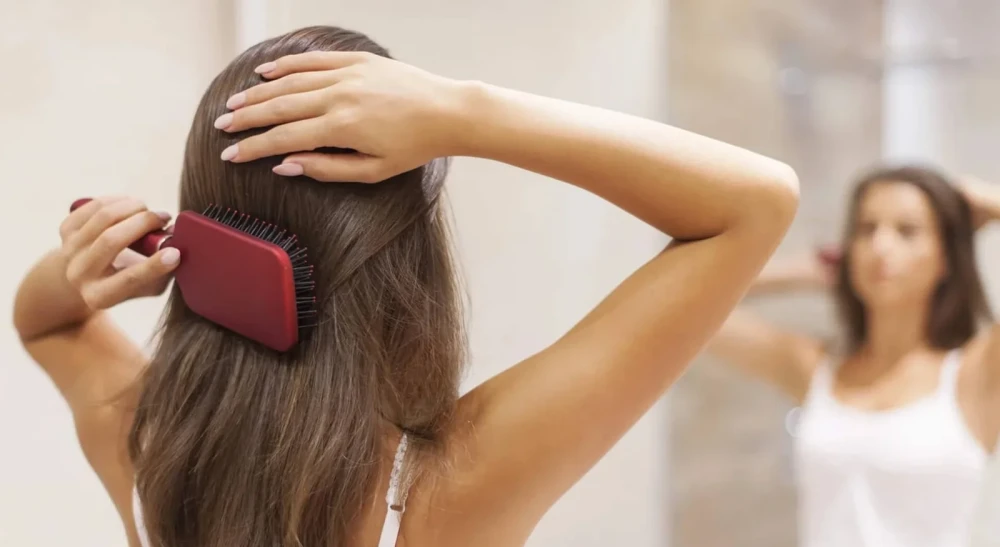
Brushing prevents the small knots that can turn into matting, especially as the tabs grow away from the scalp. For most wearers, brushing in the morning, before bed, and before washing is enough.
Use a loop brush, flexible detangling brush, or extension-friendly soft-bristle brush recommended by your stylist. Then follow this method:
- Divide your hair into manageable sections.
- Hold one section around the mid-lengths or just below the tabs.
- Detangle the last few inches first.
- Move upward a little at a time.
- Brush the lengths and gently pass over or between the rows only if your brush is designed to do so.
- Use your fingers to separate the rows and check the root area.
Do not drag a regular brush forcefully across the top edge of a tape tab. If you find a stubborn knot close to the scalp, stop pulling. Support the panel and loosen the knot with your fingers, or ask your stylist for help.
Wet hair is more vulnerable to stretching and breakage. If you must detangle it, blot first, use the correct brush, and work slowly with the roots supported.
The Best Products for Tape-In Extension Care
The right products clean the scalp without leaving the extension hair rough or coating the adhesive. Product labels are only a starting point, so prioritize formulas approved by your extension brand or stylist.
Products to Use
- A gentle, extension-friendly shampoo
- A lightweight conditioner for the mid-lengths and ends
- A hydrating mask used below the tabs
- A lightweight heat protectant applied to the lengths
- A small amount of serum or oil on dry ends only
- An extension-friendly detangling brush
- Dry shampoo used sparingly and not sprayed directly onto the tabs
Sulfate-free shampoo is a common recommendation because strong cleansers can leave processed extension hair dry. However, “sulfate-free” does not automatically mean residue-free or tape-safe. Your stylist’s tested product list is more useful than a single front-label claim.
The same nuance applies to silicones. Some formulas can cause buildup, but not every silicone behaves the same way. The practical rule is to avoid slippery or heavy products at the attachment area and use a cleanser that removes buildup without stripping the lengths.
For specific product categories and selection tips, see Alpha’s guide to the best hair care products for tape-in extensions.
Products to Keep Away From the Tabs
- Hair oils and oil-based scalp treatments
- Conditioner and deep masks
- Leave-in creams and heavy serums
- Wax, pomade, and sticky texture products
- Sunscreen, face cream, and body lotion transferred from your hands
- Remover or solvent unless a trained professional is removing the extensions
You can still use moisture on the lengths. Apply a small amount below ear level, then wash or wipe your hands before touching the top of your hair.
How to Style Tape-In Extensions Without Loosening Them?
High-quality tape-in human hair extensions can be curled, straightened, and blow-dried, but the adhesive should never sit between hot plates or touch a curling barrel.
Before heat styling, dry your hair completely and apply a lightweight heat protectant from the mid-lengths down. Use the lowest temperature that gives you the result you need. Work in small sections, keep the tool moving, and stay below the tape tabs.
Avoid repeatedly forcing the panels into a high or very tight style. A low ponytail, loose braid, or relaxed bun usually creates less tension. If a hairstyle makes a tab pull, change the placement instead of trying to tolerate it.
When using hairspray or texture spray, shield the root area and apply lightly. Frequent product buildup makes washing harder and can contribute to irritation or slippage.
How to Sleep With Tape-In Extensions?
Never go to bed with wet or damp extensions. Moist hair is more likely to tangle, and movement against the pillow can twist the grown-out panels.
Your nighttime routine should take only a few minutes:
- Make sure the roots, tabs, and lengths are completely dry.
- Brush from the ends upward while supporting the roots.
- Separate the rows with your fingers.
- Secure the hair in a loose braid or low ponytail with a soft scrunchie.
- Sleep on a silk or satin pillowcase if you want to reduce friction.
Avoid a tight topknot or high ponytail that changes the direction of the panels for hours. A bonnet can also help, provided it is roomy, breathable, and does not rub or compress the tabs.
Exercise, Swimming, and Humid Weather
Exercise
Before exercising, brush your hair and place it in a loose braid or low ponytail. After a sweaty workout, release the style so moisture is not trapped at the roots. Dry the scalp and tape area promptly. If you exercise often, ask your stylist whether you need a different wash or move-up schedule.
Swimming
Chlorine, salt water, repeated saturation, and tangling can shorten wear time and dry the extension hair. The safest option is to keep the tape area out of the water and use a swim cap when practical.
If you do swim:
- Detangle before entering the water.
- Secure the lengths in a braid; do not leave the hair loose.
- Avoid applying oil or conditioner near the tabs as a “barrier.”
- Rinse with fresh water as soon as possible.
- Shampoo and condition as directed by your stylist.
- Dry the roots and tape area completely.
Do not leave wet extensions tied in a bun after swimming.
Humidity, Sunscreen, and Travel
Humidity and sweat can increase moisture at the roots, while sunscreen and skin care can transfer to tabs near the hairline. Wash your hands after applying oily products, and keep creams away from the perimeter attachments.
For travel, pack your regular brush, a soft scrunchie, and small bottles of the products you already know work. Switching to an untested hotel shampoo or rich mask can create a problem at the worst time.
How to Prevent Tape-In Extensions From Slipping?
One loose panel does not necessarily mean the hair is poor quality. Slippage can result from installation, an oily or coated application surface, washing too soon, product residue, direct heat, heavy sweating, or repeated tension.
To reduce the risk:
- Follow the initial no-wash period.
- Keep oils and conditioner below the tabs.
- Rinse shampoo and styling residue thoroughly.
- Dry the attachment area after it gets wet.
- Support the roots while brushing.
- Avoid tight styles and direct heat.
- Keep your move-up appointments.
If a tab slips, do not peel it apart, add household glue, apply replacement tape over residue, or clamp it with a flat iron. These shortcuts can pull your natural hair, contaminate the adhesive, and make professional removal harder.
Instead, stop using product near the panel, secure the loose extension so it does not tangle, and contact your stylist. If several tabs slip soon after installation, your stylist can check the preparation, section size, placement, and adhesive compatibility.
When to Book Maintenance or Removal?
Most tape-in installations need a professional move-up after about 6–8 weeks. Your appointment may be earlier if your hair grows quickly, your scalp is oily, you exercise or swim frequently, or the panels become visible.
A move-up is different from replacing the extension hair. During maintenance, a trained stylist removes the panels with the correct solvent, cleans away adhesive residue, checks your natural hair and scalp, applies new tape, and reinstalls usable hair. The same quality extension hair may be reused for several applications, but its total lifespan depends on the hair quality, processing, home care, and styling habits.
Book help sooner if you notice:
- Persistent pain, itching, redness, or sores
- Matted hair between or above the tabs
- Several loose or sticky panels
- A tab folding, twisting, or hanging from only a few natural hairs
- Unusual shedding or breakage
- An odor or residue that remains after careful washing
Do not pull or peel tape-ins out at home. Correct remover, controlled tension, and complete residue cleanup are essential for protecting your natural hair.
A Simple Tape-In Extension Care Schedule
Every Morning
- Separate the rows with your fingers.
- Brush the ends and work upward.
- Check that no tab is folded or pulling.
After Exercise
- Release wet or sweaty styles.
- Dry the scalp and attachment area.
- Detangle once the hair is ready to brush.
On Wash Day
- Detangle before showering.
- Shampoo the scalp gently in an upright position.
- Condition from the mid-lengths to the ends.
- Rinse thoroughly, blot, and dry the tape area.
Before Bed
- Make sure the hair is completely dry.
- Brush and check the root area.
- Make a loose braid or low ponytail.
Every 6–8 Weeks
- Attend your professional maintenance appointment, or follow the schedule set by your stylist.
Frequently Asked Questions
How often should you wash tape-in extensions?
Many wearers wash two or three times a week, but you should clean your scalp when it needs it. The better rule is to wash gently, rinse completely, and avoid leaving oil or dry-shampoo buildup around the tabs.
Can you use conditioner on tape-in extensions?
Yes. Apply conditioner from the mid-lengths to the ends and keep it off the tape tabs. Extension hair needs moisture, but conditioner at the adhesive can contribute to slippage.
Can you let tape-in extensions air-dry?
You may air-dry part of the lengths if your stylist approves, but dry the roots and tape area promptly. Do not leave the attachment points damp for hours, and never sleep with wet extensions.
Can you use oil on tape-in extensions?
Use a very small amount on dry ends if needed, keeping it well below the tabs. Do not apply oil to the scalp or adhesive area unless a professional is using an approved remover during removal.
Can you use purple shampoo on tape-in extensions?
Only when your stylist or extension supplier approves it. Purple shampoo can be drying or stain very light and porous extension hair. Dilute or limit the contact time as directed, keep it away from the tabs, and test a hidden section first.
Can you swim with tape-in extensions?
You can, but frequent exposure to chlorine, salt water, and prolonged moisture may dry the hair and shorten the adhesive wear cycle. Secure the hair, use a swim cap when possible, rinse immediately, and dry the tabs completely.
What should you do if one tape-in extension comes loose?
Secure the loose panel and contact your stylist. Do not use a flat iron, household glue, or an unapproved adhesive to attach it again. The tab and natural hair need to be cleaned and reapplied correctly.
How long do tape-in extensions last?
The installation commonly needs moving up in about 6–8 weeks. The extension hair itself may be reused for multiple applications if it remains in good condition. Do not confuse one wear cycle with the total life of the hair.
Final Tape-In Extension Care Checklist
Learning how to care for tape in extensions is mostly about consistency. Keep the adhesive clean, dry, cool, and free from oily residue. Keep the lengths conditioned and detangled. Then let your stylist handle slipping, removal, and reapplication.
Before you leave the house—or go to bed—remember the essentials:
- Brush gently and support the roots.
- Keep conditioner and oil below the tabs.
- Dry every attachment point.
- Avoid direct heat and tight styles.
- Never sleep with wet hair.
- Book maintenance before the grown-out panels begin to twist or mat.
If you are a salon, distributor, or hair brand building a tape-in range, reliable aftercare starts with consistent hair, tab construction, and adhesive performance. Alpha Hair Extension manufactures classic, seamless, PU, invisible, and mini tape-in extensions with OEM and private-label options for professional markets.