
Yes, you can dye some hair extensions, but not every set should be colored. Conventional hair dye is suitable only for verified 100% human hair, and even then the result depends on the hair’s previous processing and porosity. Toning or going darker is usually more predictable than bleaching or trying to lift the hair.
Before you color a full set, confirm the fiber, check what processing it has already received, protect the attachment, and test the exact formula on one hidden piece. If you first need to compare materials, read our guide to which hair extensions can handle dye.
Key Takeaways
- Use ordinary hair color only on verified 100% human hair extensions.
- Choose the smallest effective color change. Depositing color is safer than lifting it.
- Test the exact formula, timing, rinse, and conditioning routine on one hidden piece.
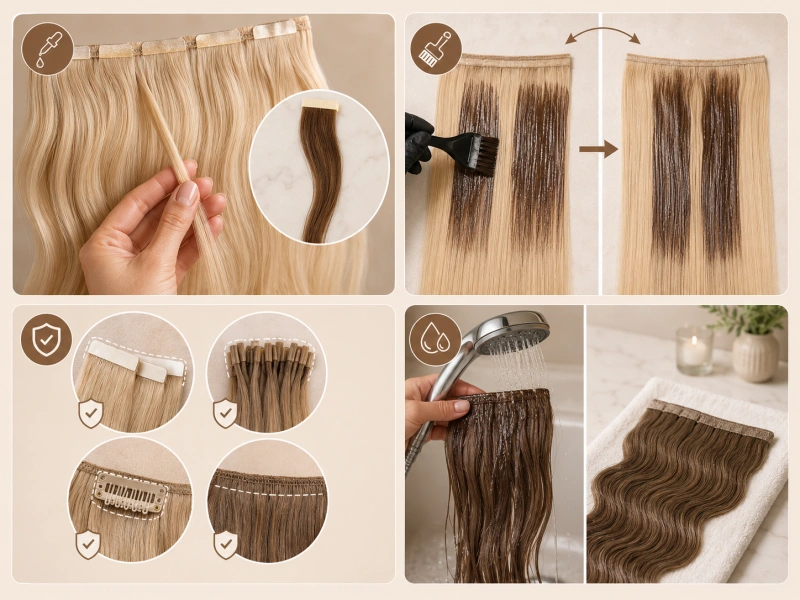
- Color removable extensions off the head and keep chemicals away from tapes, bonds, rings, clips, thread, and weft seams.
- Stop if the hair becomes gummy, brittle, rough, or unusually tangled.
Before You Start: Can Your Extensions Be Dyed?
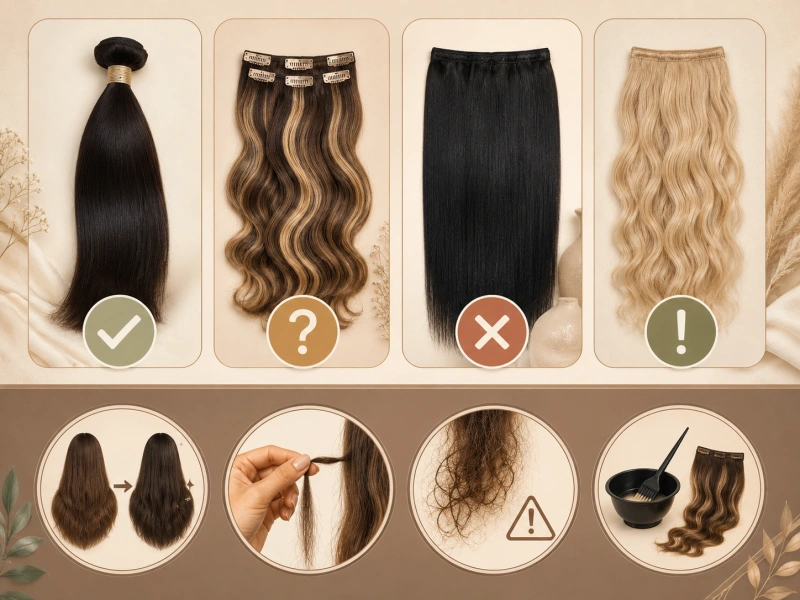
“Human hair” is only the first check. Two sets made from human hair can absorb the same formula differently because their starting color, previous lightening, porosity, and cuticle condition are not identical. Use the table below as a screening tool, then confirm the supplier’s instructions.
| Extension type | Can it be dyed? | Best direction | Risk |
|---|---|---|---|
| Virgin human hair | Usually | Tone or dye darker after testing | Moderate |
| Processed Remy human hair | Sometimes | Small, deposit-only adjustment | Moderate to high |
| Synthetic fiber | Not with regular hair dye | Use only a product approved for that fiber | High |
| Unknown material or history | No, until confirmed | Ask the supplier and test first | High |
Do not color hair that already snaps during gentle brushing, mats after washing, feels gummy when wet, or has been lightened repeatedly. Replacing the set is often safer than trying to correct damaged hair.
Choose a Realistic Color Goal
Go darker
A darker shade is usually the most manageable option because it adds pigment instead of removing it. Porous ends may take color faster, so judge the strand test only after it is fully dry.
Correct the tone
A toner or deposit-only formula can reduce unwanted warmth or add a cooler or warmer cast. It cannot safely turn dark extensions blonde.
Add a vivid shade
Start with extensions already light enough for the target color. Blonde and pre-lightened hair can grab fashion pigments quickly, so test for staining and uneven uptake.
Lighten the hair
Bleaching is the highest-risk option. Many finished shades have already been lightened during manufacturing. Buy a lighter base shade or use an extension-experienced colorist instead of treating bleach as a routine DIY step.
If your goal is simply a closer blend, first learn how to match your hair color to extensions. Choosing a better starting shade may remove the need for chemical processing.
What You Need?
- The chosen color and the exact developer specified by that color system, if required
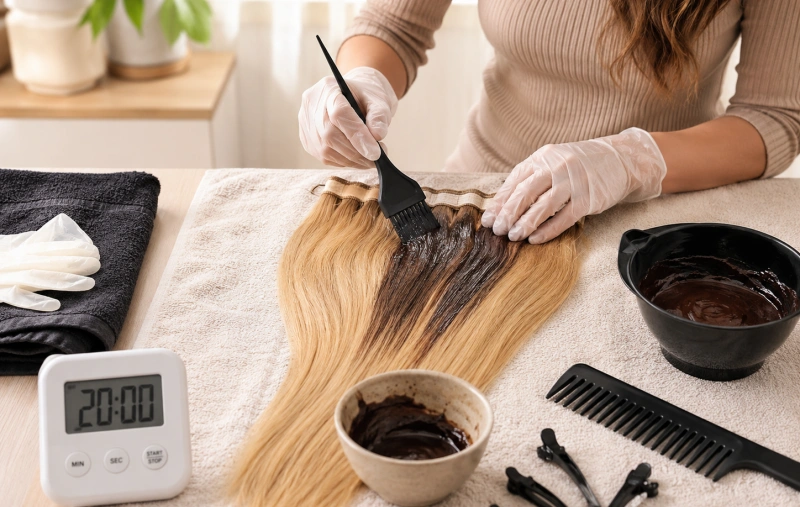
- A non-metal bowl, tint brush, gloves, old towel, and wipe-clean surface
- Sectioning clips and a wide-tooth comb or extension-safe brush
- A timer
- Gentle shampoo for removing buildup when necessary
- A moisturizing, color-safe conditioner for the rinse stage
Read the color manufacturer’s safety and allergy instructions. Work in a ventilated area, wear gloves, and never use a formula that is not intended for human hair.
How to Dye Hair Extensions: Step by Step
1. Confirm the fiber, history, and target shade
Check the label and ask the supplier whether the hair is human or synthetic and whether it has already been lightened, colored, permed, or otherwise chemically processed. Define the smallest change that will reach the target shade.
2. Detangle and clean only when needed
Support the attachment and detangle from the ends upward. If hairspray, oil, or styling residue is present, wash with a gentle shampoo and rinse thoroughly. Skip heavy conditioner before coloring because it can leave a film. Dry the hair completely unless the color directions specifically require damp hair.
3. Run a complete strand test
Use one hidden weft, a small bundle, or several strands. Apply the exact formula with the same saturation, timing, rinse, conditioner, and drying method planned for the full set. When the test is dry, check shade, undertone, softness, tangling, shedding, breakage, and the condition of the attachment.
4. Mix exactly as directed
Measure the color accurately and follow the stated mixing ratio. Do not increase developer strength or extend processing time to force a lighter result. If the strand test fails, change the plan instead of making the chemistry harsher.
5. Arrange thin, controlled sections
Lay removable pieces flat and separate the hair into manageable sections. Keep tapes, bonds, clips, rings, wire, thread, and seams visible so you can avoid them. A thick bundle is difficult to saturate and often develops dry pockets.
6. Apply color to both sides
Brush color through each section while staying clear of the attachment. Turn the piece over and repeat. Use enough product for complete saturation, but do not scrub, twist, or aggressively comb wet, chemically treated hair.
7. Time the process consistently
Start the timer according to the product directions and the pattern established in the strand test. Keep section size, saturation, and timing consistent from piece to piece. Leaving dye on longer will not correct missed areas and may increase dryness.
8. Rinse, condition, and dry gently
Rinse in the direction of the cuticle with cool to lukewarm water until the water runs clear and no residue remains near the attachment. Apply conditioner through the mid-lengths and ends as directed. Blot rather than rub or wring, then lay the pieces flat or hang them securely to air-dry.
Alpha Hair processing note: Finished extensions may already have been lightened or colored during manufacturing. Further chemical processing can change softness, usable life, color consistency, and attachment strength, and it may affect warranty eligibility. Test a sample and confirm the order specification before coloring a full set or bulk order.
Should You Dye Extensions Before or After Installation?
Before installation is usually safer. You can see every section, rinse thoroughly, and keep color away from the scalp and attachment. Do not attempt to color installed extensions as a routine DIY service. A professional must isolate the client’s natural hair and protect every bond, tape, ring, or seam.
How to Prevent Patchy Color?
- Start from one consistent shade; dye cannot create the same finish on black, brown, blonde, and highlighted bases.
- Use enough product for the length and density of the set.
- Work in thin sections and check the inner layers before timing.
- Repeat the same application order, saturation, timing, water temperature, and conditioning method.
- Watch porous ends. If the strand test shows they grab too dark, ask a colorist to adjust the formula or application order.
- Judge the dry result in daylight and consistent indoor light, not from a phone screen alone.
What If the Color Goes Wrong?
Too dark
Let the hair dry and reassess before doing anything else. Do not immediately bleach, strip, or recolor it. Aggressive correction can turn one color problem into breakage and uneven porosity.
Too warm or brassy
Identify whether the unwanted tone is yellow, orange, or red, then test a toner designed for that starting level. Strong purple, blue, or ash pigment can stain porous blonde hair.
Patchy
Check for missed sections, buildup, mixed porosity, an inconsistent starting shade, or insufficient product. Do not automatically recolor the whole set; correctly colored areas may become too dark.
Dry, tangled, or weak
Stop chemical processing. Rinse away residue, condition gently, reduce heat, and check for breakage. Retire pieces that mat when wet or snap under light tension.
Protect the Attachment for Each Extension Method
The dye affects the hair fiber, but the installation method determines what must stay dry and chemical-free. Use the relevant method guide for details:
- Keratin extension dyeing guide: keep color and remover away from the bond.
- Micro-loop coloring precautions: protect the ring and avoid the installed root area.
- Hand-tied extension dyeing guide: do not saturate thread, knots, or the top seam.
- Halo extension color guide: remove the piece and protect the wire and attachment points.
Aftercare for Dyed Hair Extensions
- Wash only when needed with a color-safe, extension-compatible cleanser.
- Condition the mid-lengths and ends; keep rich masks and oils away from attachments.
- Use cool to lukewarm water and direct the flow downward.
- Air-dry removable pieces when practical. If heat is needed, use protectant and the lowest effective setting.
- Brush from the ends upward while supporting the top of the weft or attachment.
- Store removable pieces clean, dry, detangled, and away from direct sunlight.
- Avoid repeated chemical services; each one adds wear.
For the complete routine, follow our hair extension washing guide.
A Manufacturer’s View: Record the Strand Test
A finished extension shade may pass through sorting, lightening, coloring, washing, drying, and attachment assembly before it reaches the client. That history changes porosity and color uptake. It is why “100% human hair” does not guarantee that two products will react identically to the same formula.
For salon and private-label work, keep an approved sample and record the original shade, batch or lot, formula, mixing ratio, timing, rinse, conditioner, and dry result. Evaluate softness, tangling, shedding, breakage, attachment condition, and shade under consistent lighting. Review Alpha Hair’s hair extension quality-control process and compare starting shades on the Alpha Hair color chart.
Frequently Asked Questions
Can you dye hair extensions?
It depends on the material and processing history. Verified human hair extensions can often be toned or dyed darker after a successful strand test. Synthetic extensions should not be colored with ordinary human-hair dye, and previously processed human hair should not be routinely bleached at home.
Can you dye synthetic hair extensions?
Do not use ordinary oxidative or permanent hair dye. Synthetic fibers do not absorb color like human hair and may stain, frizz, weaken, or distort. Use only a temporary or specialty product explicitly approved for that exact fiber.
Can you use box dye on hair extensions?
It may color some human hair extensions, but it gives less control over developer strength and formula. A professional semi- or demi-permanent system chosen for the starting shade is more predictable. Whatever product you use, follow its directions and test the exact mixture first.
Can you bleach hair extensions?
Bleaching is high risk, even on human hair. Many extensions have already been lightened during manufacturing, so another lift can cause dryness, tangling, breakage, or an uneven result. Choose a lighter starting shade or consult an extension-experienced colorist.
Can you dye hair extensions darker?
Usually, yes. Going darker adds pigment instead of removing it, so it is more predictable than lightening. Porous ends can absorb too much and turn darker than the upper lengths, which is why a dry strand-test result matters.
How many times can you dye hair extensions?
There is no safe universal number. The answer depends on the original processing, formula, condition, and aftercare. Treat every additional service as added wear. Stop if the hair feels rough, tangles when wet, stretches abnormally, or breaks during gentle handling.
Why did the extensions take color differently from natural hair?
Your natural hair and extensions may differ in starting color, porosity, previous processing, and surface condition. Extensions also no longer receive scalp oils. Match the formula by testing the extension itself rather than assuming your usual formula will produce the same result.
Final Advice
The safest way to dye hair extensions is to make the smallest effective change with the most control: verify the fiber, choose a deposit-focused formula, test one hidden piece, work in thin sections, and protect every attachment. If the goal requires major lightening or correction, a better starting shade or a professional colorist is the safer investment.
For salon ranges, private-label programs, or bulk orders, contact Alpha Hair to request a physical sample and discuss a custom shade before production.