
Wholesale Tape-In Weft Hair Extensions for Salons & Brands
Build a faster-install extension line around a wider, flatter attachment. Alpha hair extension manufactures tape-in weft hair extensions for brands, salon groups, distributors and online sellers using full-cuticle Remy human hair.
We can develop the panel width, weight, color direction, texture, tape format and packaging against an approved sample—so the product you reorder follows the same agreed specification.
- Full-cuticle Remy human hair
- Custom panel width, weight, length, color and texture
- Single- or double-sided installation formats, subject to sample approval
- OEM labels, inserts, bags and boxes
- Sample review before bulk production
Planning a new tape-weft line? Send your target market, preferred length, pack weight, colors, estimated quantity and packaging brief. We will recommend a practical sampling plan before quoting bulk production.

What Is a Tape-In Weft?
A tape-in weft combines a longer, continuous hair panel with an adhesive attachment area. It covers more width per section than standard tape-in hair extensions, which use multiple smaller tabs. The result is a useful middle ground: the flat profile and quick application of tape, with the broader coverage buyers associate with weft hair extensions.
For a stylist, fewer placement points can simplify sectioning and reduce application time. For a brand, the wider format creates a clearly differentiated SKU—provided the panel dimensions, weight distribution, edge construction and replacement tape are specified before production.
Tape-In Weft Construction: The Details Buyers Should Approve
The words “tape weft” can describe different products across the market. A reliable purchase order should define the construction rather than rely on the name alone. Confirm these points on the physical sample:
| Specification | Available direction |
|---|---|
| Panel width | Fixed-width or cut-to-size |
| Attachment area | Base width, thickness, flexibility and finish |
| Weight distribution | Grams per panel and consistency from end to end |
| Edge treatment | Whether a cut edge needs sealing |
| Tape format | Compatible single-sided, double-sided or replacement tape |
| Hair specification | Length, texture, color direction and thickness profile |
| Pack structure | Panels per pack, total pack weight and labeling |
These details affect how the panel sits, how easily it can be customized during an appointment and whether the same SKU can be reproduced accurately on a later order.
Tape-In Weft Options for Different Salon Services
long weft tape in extensions
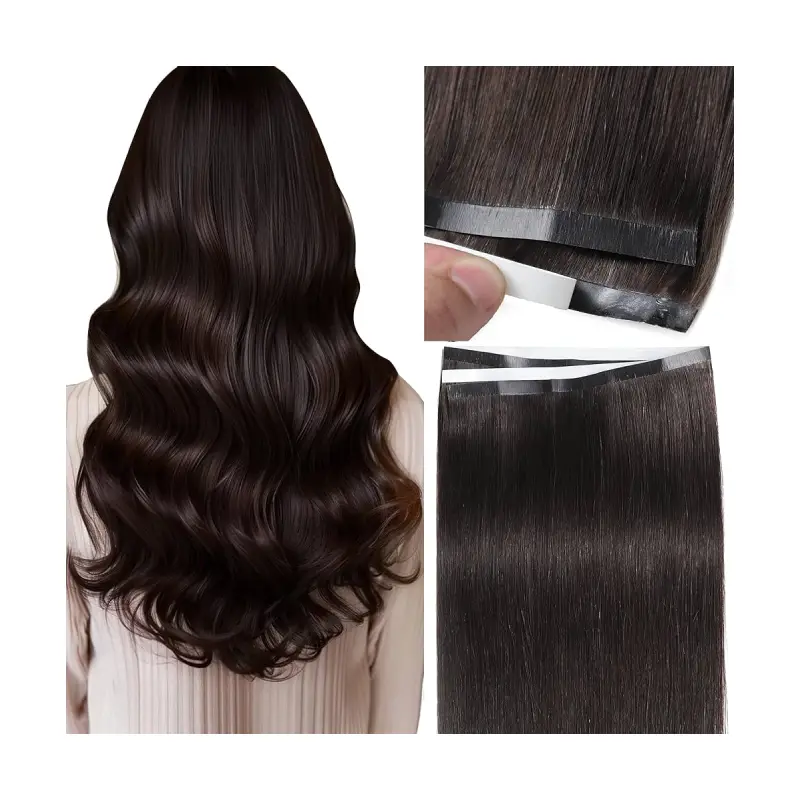
A longer continuous panel gives broad coverage with fewer sections. It is a strong option for medium-to-thick hair and volume services where installation efficiency matters. During sampling, approve the usable width, grams per panel and whether the weft may be cut without loosening the hair at the edge.
invisible tape weft hair extensions
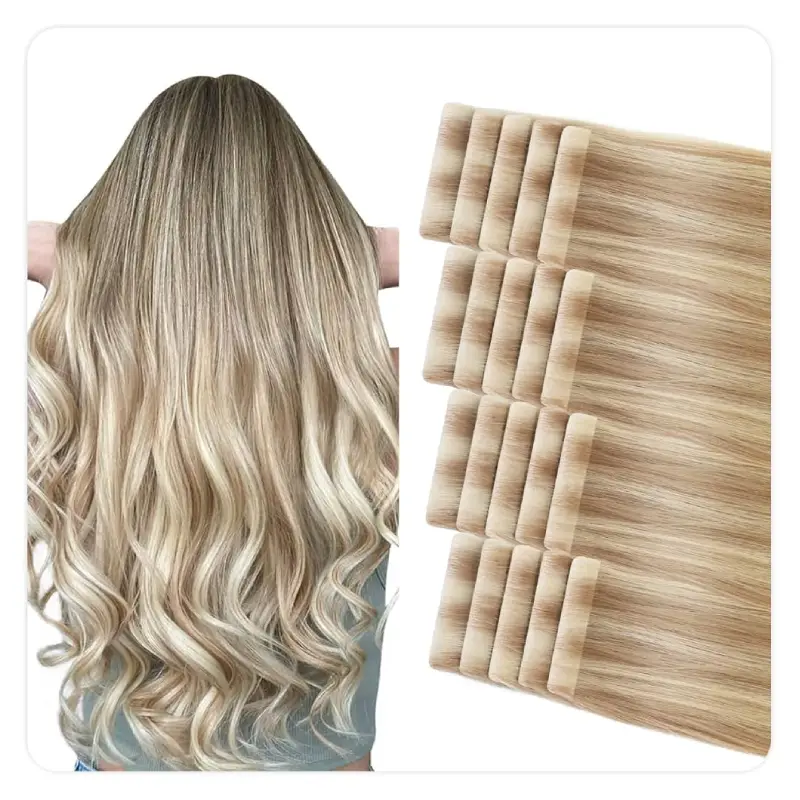
An invisible tape-weft option uses a low-visibility attachment finish for a softer transition near the scalp. If your collection is built around smaller injected tabs for fine hair, compare our dedicated invisible tape-in extensions instead. For a wider PU-style base, review skin weft hair extensions. This keeps each method matched to the right product brief rather than treating the names as interchangeable.
single weft tape in hair extensions
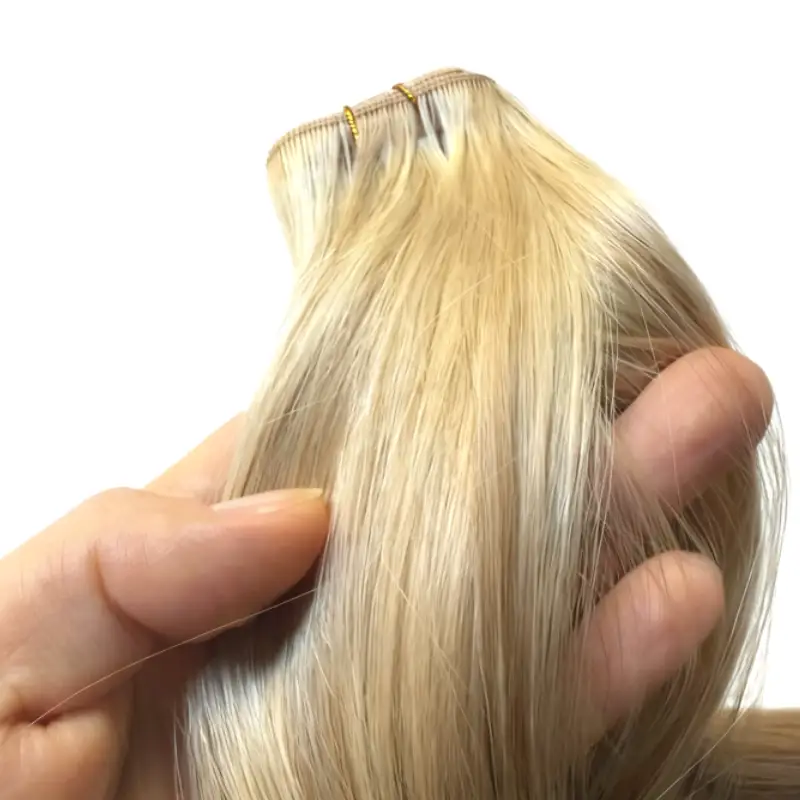
A single-sided setup can reduce the amount of extension hair used in selected areas. It may suit finer sections or detail work, but panel weight and placement must be chosen by a trained stylist. Confirm tape compatibility and removal performance on the approved sample before adding the claim to your packaging.
Wholesale Specifications to Confirm Before Quotation
| Specification | What to confirm |
|---|---|
| Hair material | Full-cuticle Remy human hair |
| Panel construction | Long, fixed-width or approved cut-to-size format |
| Length and texture | Based on the approved sample and production availability |
| Panel width and base width | Recorded in the signed specification sheet |
| Weight | Grams per panel and total grams per pack |
| Tape | Installation side, replacement format and remover compatibility |
| Colors | Standard shades or physical-reference matching via the hair extension color chart workflow |
| Packaging | Labels, inserts, bags or boxes, subject to artwork and quantity |
| MOQ and lead time | Confirmed after product, color and packaging requirements are fixed |
Which Method Fits Your Client and Service Menu?
| Buyer need | Best starting point | Why |
|---|---|---|
| Faster coverage on medium-to-thick hair | Tape-in weft | Wider panels and fewer placement points |
| Precise placement around the hairline | Standard or invisible tape-in tabs | Smaller pieces give the stylist more placement control |
| Adhesive-free, high-volume service | Beaded or sewn weft | The row is secured without tape |
| Low-visibility PU attachment | Invisible tape or skin weft | The base is designed to blend close to the scalp |
For a fuller method comparison, read tape-in versus sew-in extensions. A trained stylist should always assess density, scalp condition, placement and tension before installation.
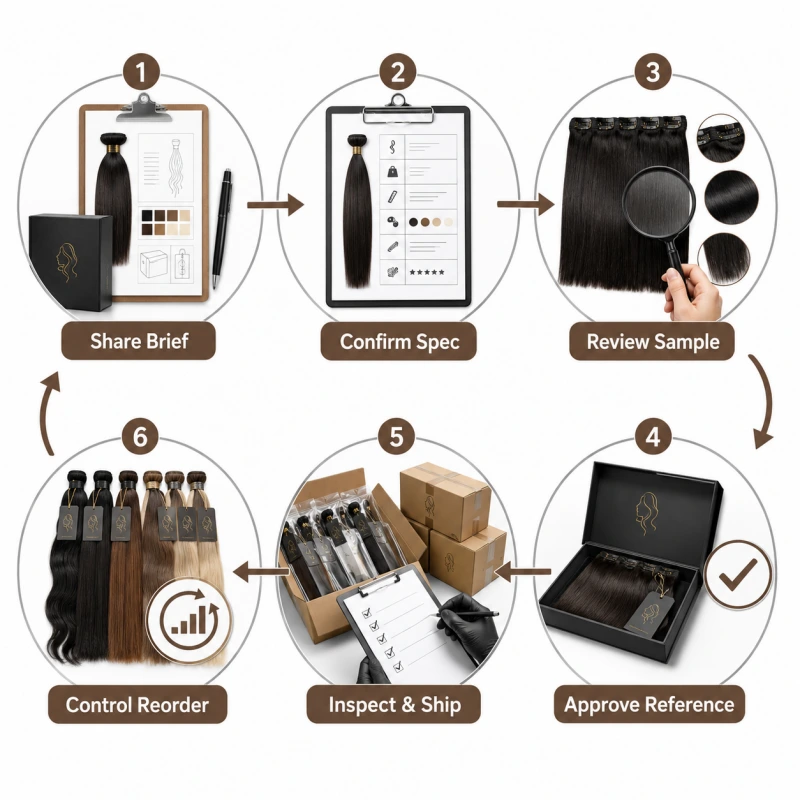
From Product Brief to Approved Bulk Order
Share the commercial brief. Tell us the market, target price, lengths, colors, texture, pack weight, projected quantity and packaging plan.
Confirm the development specification. We align the proposed panel, base, tape, hair and pack format.
Review the sample. Check color, feel, dimensions, weight, edge finish, tape application, removal and finished salon result.
Approve the reference. Record the accepted product and packaging details before bulk production.
Inspect and ship. Production is checked against the approved reference, with final packing and quantity confirmation.
Control the reorder. Use the same approved specification and note any requested change as a new revision.
Factory QC for Repeatable Tape-Weft Orders
Soft hair is only one part of a repeatable product. The finished tape-weft also needs consistent dimensions, weight, color, attachment construction and packing. Before shipment, the relevant checks should be recorded against the approved sample and purchase order.
- Hair direction, finish and shedding check
- Panel width, base width and weight check
- Color comparison under consistent lighting
- Tape placement and bond/peel check using the agreed test method
- Wash-and-comb check for the approved hair specification
- Edge and cut-to-size check where applicable
- Label, pack weight, quantity and carton check
OEM and Private-Label Support
Once the hair and tape-weft construction are approved, we can coordinate color naming, labels, inserts and selected packaging formats. Keep the specification sheet as the product source of truth; artwork should follow the confirmed length, weight, care and installation statements. See Alpha’s private-label hair extensions service for the wider packaging workflow.
Installation, Move-Up and Aftercare
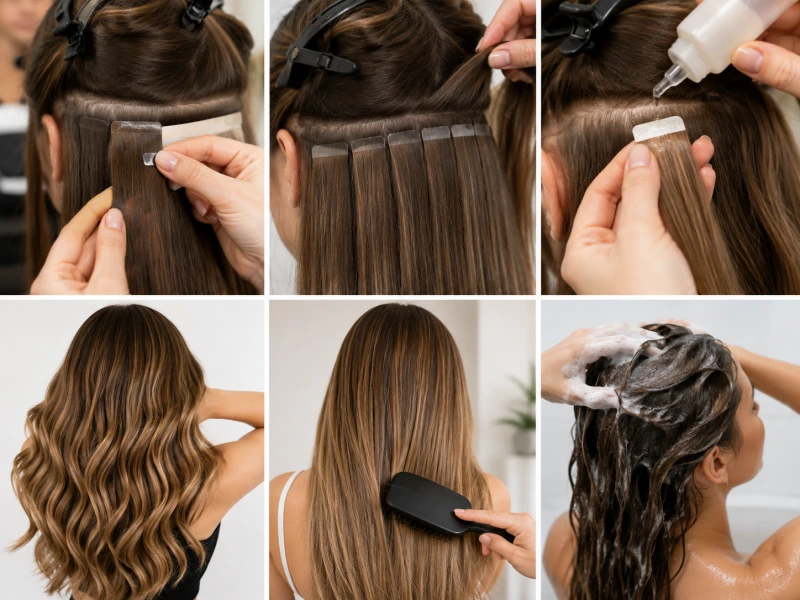
Professional installation is recommended. The stylist should work on clean, product-free hair, keep oils and conditioners away from the attachment, and use the compatible remover rather than pulling the panel. Move-up timing depends on hair growth, scalp oil, the tape system and home care.
For product guidance after installation, use the dedicated guide to tape-in extension care products instead of relying on a one-size-fits-all routine.
Tape-In Weft Hair Extensions FAQ
How are tape-in wefts different from regular tape-ins?
Regular tape-ins use many smaller tabs for precise placement. A tape-in weft uses a longer panel, so it can cover more width with fewer attachment points. The best choice depends on the client’s density, the service design and the stylist’s training.
Can a tape-in weft be cut to size?
Only if the approved construction is designed for cutting. Some panels need a sealed edge or are supplied in fixed widths. Test and record the cutting method on the sample before publishing a cut-to-size claim.
How many tape-in wefts are needed for a full head?
There is no responsible universal number. The answer depends on panel width and weight, the client’s density, head size, desired length and the amount of volume being added. Quote in grams and panels after a stylist consultation.
Can the hair be removed and re-taped?
It may be reused when the hair and panel remain in good condition and the correct removal, cleaning and replacement-tape process is followed. Reuse should be confirmed through product testing and professional handling, not promised as a fixed number for every wearer.
What should I send for a wholesale quotation?
Send your target market, preferred construction, length, texture, shade list, grams per panel or pack, estimated quantity, packaging format and any physical reference sample or color ring. The clearer the brief, the more useful the first sample will be.
Develop Your Tape-In Weft Sample
Tell us what your salon clients or retail buyers need. Alpha will review the proposed construction, hair specification, colors, pack format and sampling route before bulk production.