
Good weft extensions maintenance comes down to four habits: detangle gently, wash without stressing the attachment points, dry the base completely, and protect the hair from friction and excess heat. Installed weft hair extensions also need professional checks as your natural hair grows.
For salons, distributors and hair brands, care starts even earlier with correct storage, batch handling and pre-distribution inspection.
Key Takeaways
- Support the weft row with one hand while brushing from the ends upward; never drag a brush through the attachment area.
- Wash according to scalp, lifestyle and installer guidance, using extension-safe products and gentle downward motions. For the full technique, see how to wash hair extensions.
- Dry the scalp and weft base fully after every wash. If you prefer partial air-drying, follow the precautions in Alpha’s air-drying guide.
- Go to bed only when the hair is fully dry, then use a loose braid or low ponytail and a silk or satin pillowcase.
- Book move-ups or installation checks on the schedule recommended for your method and natural growth; six to eight weeks is common, but not universal.
Weft Extensions Maintenance Checklist
| Timing | What to do | Why it matters |
| Every day | Brush in sections; support each row; separate the natural hair around installed rows; keep heavy product off attachment points. | Reduces tangling, trapped shedding, buildup and unnecessary tension. |
| Before bed | Make sure the hair is dry, detangle gently, and secure it in a loose braid or low ponytail. | Limits friction, matting and pulling overnight. |
| On wash day | Detangle first; cleanse downward; condition mid-lengths to ends; rinse well; dry the base completely. | Protects the row while removing sweat, oil and product buildup. |
| Before heat styling | Apply heat protectant to lengths and ends; keep hot tools away from the seam, thread, beads or bonds. | Helps reduce dryness and structural stress. |
| As advised by installer | Return for a check, move-up, tightening or refit—often around 6–8 weeks for installed wefts. | Prevents grown-out rows from becoming visible, loose, matted or uncomfortable. |
Do’s and Don’ts for Weft Hair Extensions Care
Top Do’s for Extension Health
- Brush gently from the ends upward while holding the weft row to reduce pulling.
- Detangle before washing, keep the hair flowing downward, and rinse thoroughly.
- Apply conditioner, masks and lightweight leave-ins mainly from the mid-lengths to the ends.
- Use heat protectant and the lowest effective temperature for the hair texture and tool.
- Follow the installer’s maintenance schedule and ask for help if a row feels loose, tight or uncomfortable.
Key Don’ts to Prevent Damage
- Don’t brush aggressively across the seam, beads, thread or attachment points.
- Don’t scrub in circles, pile wet hair on top of the head, or twist it in a towel.
- Don’t saturate attachment points with heavy oils, masks or conditioner unless your installer says the method allows it.
- Don’t sleep with damp hair or leave the weft base wet after washing.
- Don’t ignore slipping, persistent tenderness, matting, unusual shedding or a visible grown-out row.
How to Brush and Detangle Weft Hair Extensions?
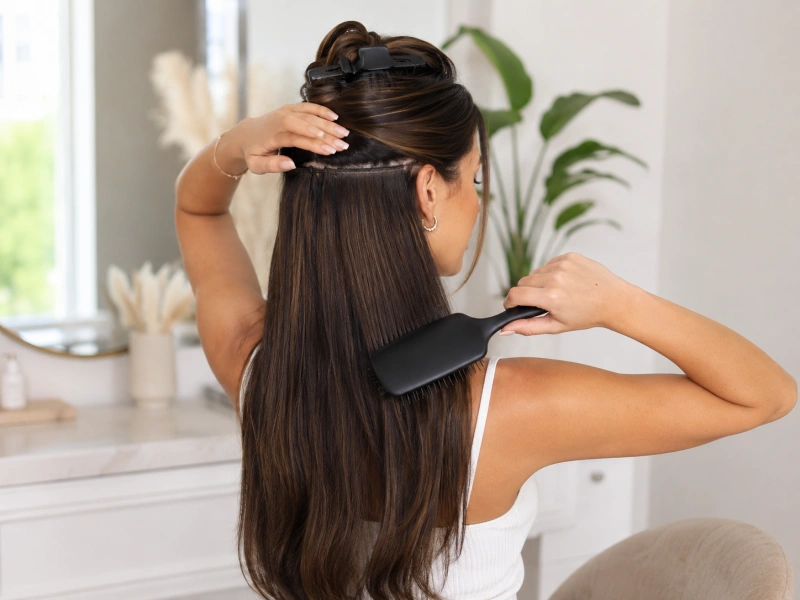
Brushing is one of the most important parts of daily weft hair extensions care, but the goal is control—not speed. Divide the hair into manageable sections. Hold the row or the hair just above it with one hand, then use an extension brush, loop brush or wide-tooth comb on the lengths. Start at the ends and work upward in short, gentle passes.
Once the lengths are smooth, carefully separate the natural hair between rows with your fingers. This is especially useful for installed or beaded wefts because naturally shed hairs can remain caught near the attachment until the next maintenance visit. Do not force a knot through the row. If matting sits close to the scalp or seam, let a trained stylist handle it.
Wet-hair ruleExtensions are more vulnerable when saturated. Detangle before washing and avoid aggressive brushing while the hair is soaking wet. If wet detangling is appropriate for the texture, work slowly with slip on the lengths while supporting the row.
How to Wash and Condition Weft Extensions?
Washing weft hair extensions should clean the scalp and lengths without roughing up the seam or leaving residue around the attachment points. Stand upright in the shower so the hair falls in its natural direction. Avoid flipping the hair upside down or bunching it into a pile.
- Detangle the hair and separate the rows before the shower.
- Wet the scalp and lengths with lukewarm water.
- Work shampoo through the scalp with your fingertips using small, controlled motions. Smooth the lather down the lengths rather than scrubbing them together.
- Rinse until the water runs clean and no product remains between rows.
- Apply conditioner from the mid-lengths to the ends. Keep it off beads, bonds and the weft base unless your installer or product instructions say otherwise.
- Rinse well, squeeze out water gently, and blot with a microfiber towel—never rub or twist.
How Often Should You Wash Weft Extensions?
There is no single safe schedule for everyone. Wash when your scalp, sweat level and product buildup require it, while avoiding unnecessary overwashing. Many wearers fall somewhere between once and a few times per week, but active lifestyles, oily scalps, textured hair, installation methods and stylist instructions can change that.
If the base stays oily, itchy or coated, waiting longer is not better; if the lengths feel dry, reduce unnecessary cleansing and review your products.
What Shampoo and Conditioner Should You Use?
Choose a gentle, extension-compatible shampoo and a lightweight conditioner that suits the hair texture and color. The formula should cleanse without leaving heavy residue around the installation. Apply richer moisture to the lengths rather than the attachment area. Alpha’s guide to the best shampoo for hair extensions explains the selection criteria in more detail.
How to Dry and Heat-Style Weft Hair Extensions?
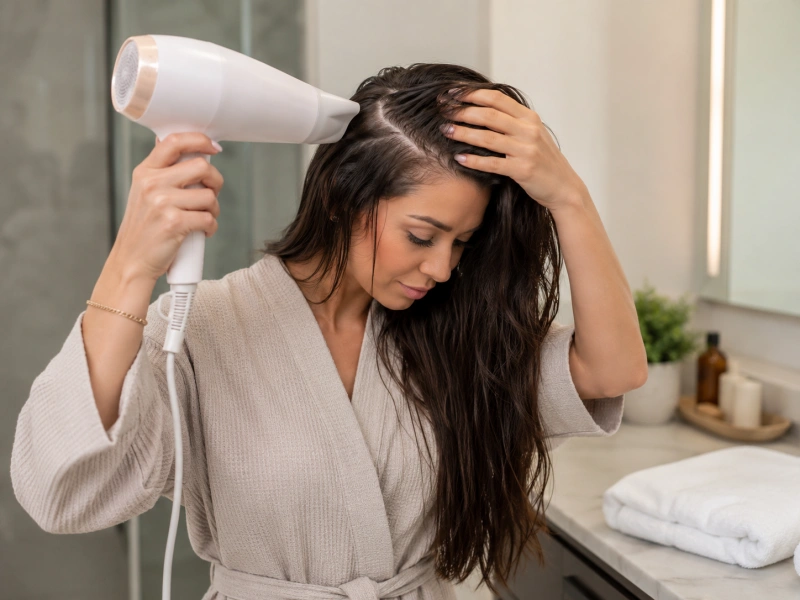
After washing, squeeze out excess water and blot the hair. Detangle the lengths carefully, then dry the scalp and weft base first on a low or medium airflow setting. Direct airflow down the hair shaft and keep the dryer moving. Once the base is dry, finish the lengths with the lowest effective heat for the texture.
Partial air-drying can reduce heat exposure on the lengths, but the attachment area should not remain wet for hours. Never sleep, tie up or package damp wefts. Before curling or straightening, apply heat protectant to the lengths and ends, then keep hot tools away from seams, thread, beads and bonded points.
A universal temperature limit is unreliable because tools and hair processing vary; use the lowest setting that achieves the result.
How to Sleep with Weft Hair Extensions?
Nighttime care is simple: brush gently, confirm the scalp and rows are fully dry, and secure the hair in a loose braid or low ponytail with a soft scrunchie. A silk or satin pillowcase can reduce friction. Avoid tight, high styles that pull on the rows. For method-by-method nighttime advice, read how to sleep with hair extensions.
Professional Weft Maintenance and Move-Ups
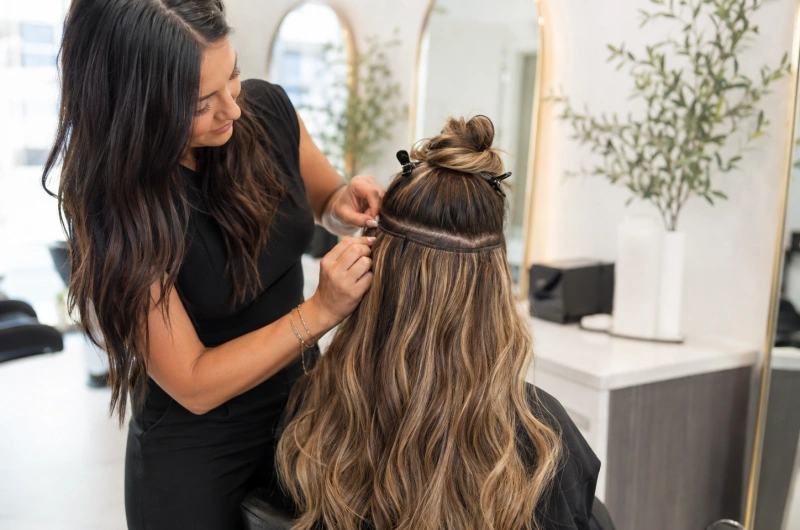
As your natural hair grows, an installed row moves farther from the scalp. That changes how the weight sits and can leave room for tangling above the row. A professional maintenance appointment may include separating trapped shedding, checking tension and placement, cleaning the scalp, moving up or refitting the row, and replacing loose thread or beads.
A six-to-eight-week interval is common for many installed wefts, but it is not a rule for every method or client. Follow the schedule given by the stylist who installed your hair. Book earlier if the row is slipping, showing, pulling, becoming difficult to brush around, or causing persistent discomfort. Do not tighten, cut out or re-sew an installed row at home unless you are trained to do so.
Products and Tools for Weft Extension Care
You do not need a crowded shelf. A practical routine usually includes an extension-friendly brush or loop brush, a wide-tooth comb, gentle shampoo, lightweight conditioner, heat protectant, microfiber towel and a silk or satin sleep surface. A small amount of lightweight leave-in or serum can help dry ends, but keep it away from attachment points and stop if it causes buildup.
Choose products by performance and installation compatibility, not by a long ingredient wish list. If you need a broader product comparison, use Alpha’s guide to hair extension care products. For general routines that apply beyond wefts, see the hair extension care guide.
For Salons and Hair Brands: B2B Storage, Handling and Pre-Distribution QC
For salons, distributors and private-label hair brands, maintenance starts before installation. Inventory can lose softness, develop tangles or place stress on the stitching when it is stored in humid conditions, repeatedly compressed, packed before fully dry, or handled by pulling the hair instead of supporting the weft base.
Warehouse Storage and Inventory Handling
- Store clean, fully dry wefts in a cool, dry, ventilated area away from direct sunlight, dust and heat sources.
- Keep bundles aligned and supported. Store them flat or on suitable hangers so the seam is not sharply folded or crushed.
- Handle each bundle by supporting the weft base and lengths together. Avoid lifting a packed bundle by a small section of hair.
- Limit unnecessary opening, folding and repacking. Repeated compression and friction can change how the hair presents before sale.
- Record batch, shade, length, texture and receipt date so older stock can be rotated first.
Batch Inspection and Sample Washing Before Distribution
Inspect incoming batches under consistent lighting. Check the shade and texture against the approved sample, then review stitching, seam width, hair direction, odor, visible shedding and tangling. A controlled sample wash can reveal how a representative bundle behaves after cleansing, but it should be a documented QC step—not an unstructured wash of saleable inventory.
Support the seam throughout the test, use the same water quality and approved products each time, keep conditioner away from the stitching, and document the result after the sample is completely dry. If a batch behaves differently from the specification, quarantine it and investigate before distribution. Connect the process to your wider hair extension quality standard.
Drying, Packing and Shipping
Never pack a washed or conditioned sample until the seam and lengths are completely dry. Align the hair in one direction, protect the seam from hard folds, and use packaging that limits movement without crushing the bundle. Add internal supports where needed for longer wefts. Before changing to vacuum packing or another high-compression format, validate it with the product and logistics teams for the specific weft construction.
For customer-facing orders, include a concise care card covering detangling, washing, drying, heat and professional maintenance. Clear instructions reduce avoidable complaints and help salon partners give clients consistent aftercare.
FIFO Rotation and Long-Term Storage
Use first-in, first-out rotation so older approved inventory ships before newer stock. Schedule periodic checks for humidity exposure, odor, packaging damage, shade identification and seam distortion. Repack only when necessary, and never return a damp inspection sample to sellable stock. Long-term storage should preserve the product specification, not simply keep the bundle out of sight.
Care Differences by Weft Type
The daily fundamentals are similar, but construction and installation change where you need to be most careful:
- Hand-tied wefts: Avoid cutting the seam unless the product is explicitly designed for it, and do not pull at the hand-tied edge. Use the dedicated hand-tied extension care guide for more detail.
- Genius Weft: Its thin, flexible edge still needs gentle brushing and complete drying around the row. Follow the Genius Weft aftercare guide rather than repeating the full routine here.
- Butterfly Weft: Protect the lightweight base from rough handling, excess tension and prolonged moisture. See Butterfly Weft care for construction-specific advice.
- Machine wefts: The seam is durable but can be bulkier, so keep it clean, dry and free from product buildup. Any cutting or sealing should follow supplier and installer instructions.
- Beaded or sewn-in rows: Support the row while brushing, keep heavy products off the attachment area, and monitor natural growth so the row can be moved up on time.
Troubleshooting Common Weft Extension Problems
| Problem | Check first | What to do |
| Tangling or matting | Dryness, residue, friction, missed detangling, trapped shedding near rows. | Detangle in sections, review products and nighttime routine, and ask a stylist to handle scalp-level matting. |
| Dry or rough lengths | Overwashing, high heat, mineral exposure, insufficient conditioning on lengths. | Use gentler cleansing, controlled heat and lightweight moisture from mid-lengths to ends. |
| Shedding | Normal release versus loose stitching, aggressive brushing or product damage. | Support the seam, reduce pulling and have unusual shedding inspected. Do not attempt to reseal blindly. |
| Slipping or visible rows | Natural growth, oily or coated attachment area, loose beads or thread. | Book a professional check or move-up; keep heavy product off the attachment area. |
| Tenderness or pulling | Excess tension, a twisted row, matting, delayed maintenance. | Contact the installer promptly. Persistent pain is not a normal maintenance issue to ignore. |
For a deeper diagnosis, see why hair extensions tangle.
FAQ
How often should I wash my weft hair extensions?
Wash according to scalp oil, sweat, buildup, texture and your installer’s advice rather than following one rigid number. Many people wash installed wefts about once to a few times per week. The important points are gentle cleansing, thorough rinsing and complete drying at the base.
Can I let weft hair extensions air-dry?
You can partially air-dry the lengths when the texture and routine allow it, but do not leave the scalp and attachment area wet for a long period. Blot first, separate the rows, and dry the base with controlled airflow. Never sleep with damp extensions.
How do I blow-dry weft hair extensions?
Blot instead of rubbing, then dry the scalp and weft base first with low or medium airflow. Point the dryer downward, keep it moving and support the row while handling the hair. Finish the lengths with the lowest effective heat and apply heat protectant before hot styling.
How should I sleep with weft hair extensions?
Make sure the hair is fully dry and detangled. Wear it in a loose braid or low ponytail with a soft scrunchie, and use a silk or satin pillowcase to reduce friction. Avoid tight styles that pull on the rows.
How often do weft extensions need a move-up?
Many installed weft methods are checked or moved up around every six to eight weeks, but growth rate, placement and installation technique can change the schedule. Follow your installer’s plan and return sooner if the row slips, pulls, shows or becomes difficult to manage.
How long do weft extensions last?
Lifespan depends on hair quality, processing, wear frequency, installation, heat, products and aftercare. Because the topic has its own search intent, use Alpha’s detailed guide to how long weft extensions last instead of relying on a universal promise.
When should I contact my stylist?
Ask for help when you notice persistent tenderness, matting close to the scalp, a loose or twisted row, unusual shedding, visible attachments or a sudden change in comfort. Early correction is usually easier than waiting for the next planned appointment.
Keep the Routine Simple and Consistent
The best weft extensions maintenance routine is the one you can follow consistently: support the row, detangle gently, clean without rough handling, dry the base completely, limit unnecessary heat and return for professional maintenance on time. Those habits protect the appearance of the extensions and help keep the installation comfortable.
Need weft extensions for a salon range, wholesale program or private-label collection? Explore Alpha’s weft extensions and OEM and private-label hair extension manufacturing options, then request a quote for the construction, color range, lengths and packaging your market needs.