
If you are wondering how to care for keratin hair extensions, the routine is easier than it looks: protect the bonds, keep the extension hair moisturized without coating the attachment area, brush gently, dry the roots and bonds thoroughly, and follow your stylist’s maintenance schedule.
The same core principles also apply to many keratin hair extensions, K-tip and heat-fusion systems because the attachment depends on small keratin bonds that need to stay clean, dry and free from unnecessary tension.
The details matter, though. Products that are perfectly fine on your mid-lengths can cause slippage if they are worked into the bond area. Rough brushing can create matting around natural shed hairs. Going to bed with damp roots can turn a small tangle into a compact knot around several bonds.
This guide brings those habits into one practical aftercare routine. It focuses on the decisions you make every day, while Alpha’s dedicated washing, brushing, sleeping, styling and troubleshooting guides provide extra detail when you need a step-by-step answer.
Key Takeaways
- Follow your stylist or bond manufacturer’s first-wash instructions; many professional aftercare protocols recommend waiting about 24–48 hours after installation.
- Brush at least twice a day with an extension-safe brush, supporting the hair above the bonds and working from the ends upward.
- Use a gentle extension-safe shampoo. Keep conditioner, masks, oils and heavy leave-ins on the mid-lengths and ends rather than on the keratin bonds.
- After washing, dry the bond area completely before sleeping or tying the hair up for long periods.
- Keep flat irons, curling irons and concentrated high heat away from the bond itself.
- Separate individual bonds gently with your fingers so naturally shed hairs do not mat together at the root area.
- Book professional checks based on your stylist’s schedule and contact them early if you notice repeated slippage, matting, discomfort or unusual extension loss.
Keratin Bond Hair Extensions Aftercare: The First 48 Hours
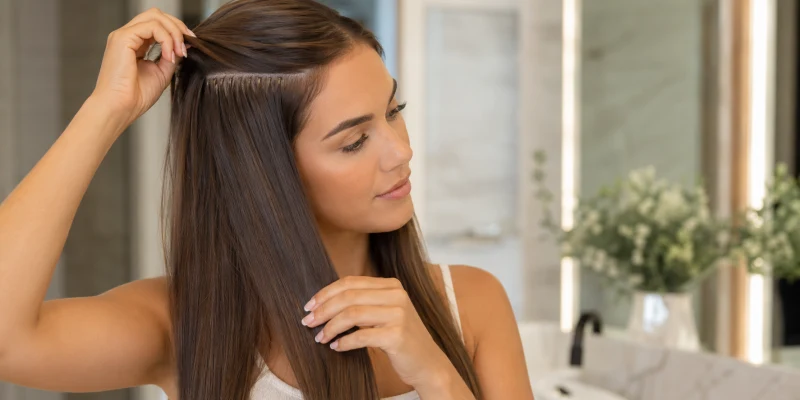
Your aftercare starts as soon as the installation is finished. Different keratin formulations and application systems can have different post-install instructions, so your stylist’s guidance should always come first. Many salons advise clients to avoid the first shampoo for roughly 24–48 hours, especially when their specific bond system benefits from a settling period.
During that early window, keep the routine simple:
- Avoid washing, swimming, saunas and steam unless your stylist says the system is ready for water exposure.
- Skip heavy oils, scalp serums and conditioning products around the bonds.
- Avoid tight ponytails or styles that pull freshly installed strands in one direction.
- Brush gently and support the attachment area rather than dragging a brush through it.
- Before bed, make sure the hair is dry and secure the lengths loosely to reduce friction.
Tip: Do not treat “48 hours” as a universal chemical rule for every keratin system. Use the aftercare timing provided by the stylist and the bond manufacturer that were actually used for your installation.
Daily Care for Keratin Hair Extensions
The best keratin hair extensions care routine is built around a few small habits you repeat every day. Those habits protect both the extension hair and your natural hair as it grows out around each bond.
Brush gently from the ends upward
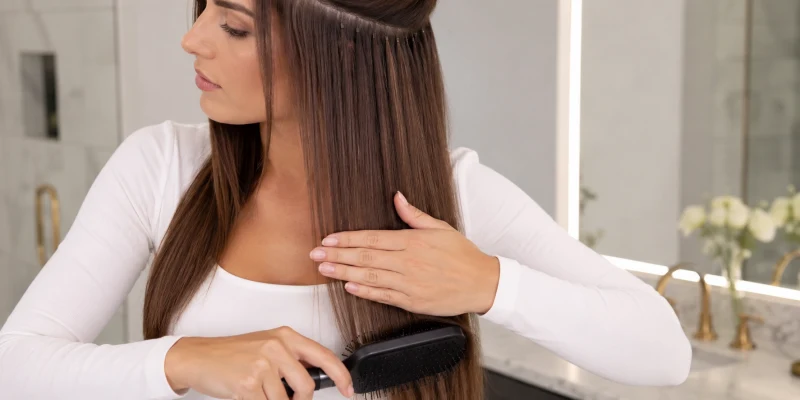
Brush your extensions at least morning and evening, and again if the hair has been exposed to wind, a workout or heavy styling. Use a soft-bristle, loop or other extension-safe brush that can move through the hair without catching the bond. Hold the hair above the area you are brushing, start at the ends and work upward in small sections. For a more detailed technique, see how to brush keratin hair extensions.
Avoid aggressive downward strokes starting at the scalp. A bond that is repeatedly pulled can place unnecessary tension on the natural hair even if the extension strand itself still looks secure.
Separate the bonds with your fingers
Natural hair continues to shed while you wear extensions. Some of those shed hairs remain trapped above or around the bonds until removal. Once a day, gently run your fingers through the root area and separate bonds that are beginning to sit together. This simple habit helps prevent several bonds from becoming connected by shed hairs and forming a mat as the hair grows.
Do not pick, twist or roll the bonds constantly. The goal is to keep individual attachments separated, not to manipulate them throughout the day.
Keep tension low
Loose braids, low ponytails and soft updos are generally kinder to keratin bonds than very tight, high styles. If a hairstyle makes the attachment points feel sore or pulls the same area for hours, loosen it. Persistent tenderness is a reason to ask your stylist to check the placement rather than simply “getting used to it.”
How to Wash Keratin Hair Extensions Without Stressing the Bonds?
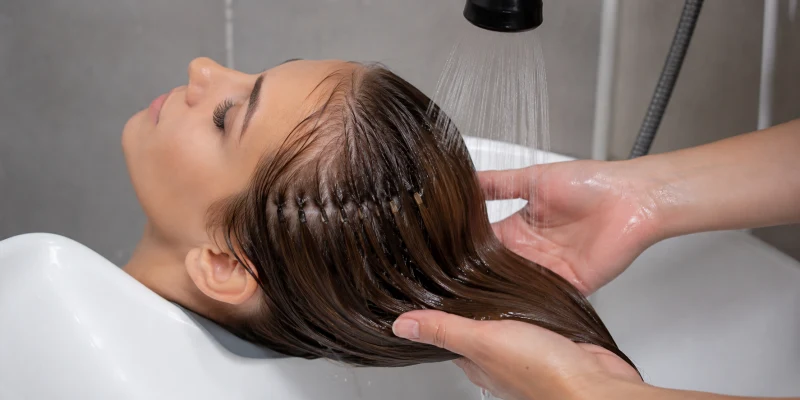
Washing is important because the scalp still needs to be cleansed, but extension hair does not receive scalp oils in the same way as your natural lengths. The goal is a clean scalp and soft hair without scrubbing, coating or tangling the attachments.
How often should you wash?
There is no single wash frequency that fits every scalp. Many extension wearers do well with about two or three washes per week, while someone with an oily scalp, frequent workouts or product buildup may need a different schedule. Washing only once a week is not automatically “better” if the scalp is uncomfortable or dirty.
Ask your stylist to help you balance scalp cleanliness with the moisture needs of the extension hair.
Choose shampoo for the scalp, conditioner for the lengths
Use a gentle, extension-safe shampoo and massage the scalp with your fingertips instead of scratching with your nails. Many stylists prefer sulfate-free formulas because they are often less stripping, but compatibility with your actual bond system matters more than a single marketing label. Rinse thoroughly so residue does not sit around the attachments.
Apply conditioner, masks, oils and rich leave-ins from the mid-lengths to the ends. Keep them off the keratin bonds unless the bond manufacturer specifically allows that product. Extension hair benefits from moisture; the bond area benefits from staying clean and light.
For the full shower sequence, product placement and drying order, use Alpha’s step-by-step keratin extension washing guide.
Tip: Wash with your head upright when possible and let water flow downward through the hair. Avoid piling long extensions on top of the scalp and rubbing them together like a short haircut.
Dry the Bond Area Completely
After washing, squeeze out water gently and blot the hair with a soft towel. Do not rub the lengths back and forth. Your first drying priority is the root and bond area because leaving attachments damp for hours encourages tangling around the roots and makes the hair harder to manage.
Use controlled airflow and moderate heat, moving the dryer instead of holding it in one hot spot. You can let the lengths partially air-dry if that suits your routine, but do not leave the attachment area wet and then go to bed.
If blow-drying is part of your regular routine, Alpha’s guide to blow-drying keratin hair extensions covers the process in more detail.
Heat Styling and Product Placement
Keratin extension hair can usually be curled, straightened and blow-dried much like human hair, but the attachment point needs different treatment. Apply heat protectant to the lengths, use the lowest effective temperature for your hair texture and keep flat irons or curling irons away from the keratin bond itself.
Avoid assuming one maximum temperature is safe for every extension. Color history, hair quality, previous processing and the type of Remy hair all affect heat tolerance. Start lower and increase only when necessary.
For styling products, think in zones: lightweight protectants and finishing products can be used through the lengths when appropriate, while oils, heavy serums, masks and waxy products should stay away from the bonds. This is more useful than simply labeling every product “safe” or “unsafe.”
For hairstyles and hot-tool technique, see how to style keratin bond hair extensions.
Nighttime Care: Protect the Hair Before You Sleep
Nighttime is when friction and loose movement can turn small tangles into bigger ones. Before bed, brush the extensions gently, make sure the roots and bonds are completely dry, then secure the lengths in a loose braid or low ponytail with a soft tie. A silk or satin pillowcase or bonnet can further reduce friction.
The most important rule is simple: do not sleep with wet or damp keratin extensions. If you wash your hair at night, allow enough time to dry the attachment area before going to bed.
For braid options, sleep accessories and troubleshooting, read Alpha’s dedicated guide on how to sleep with keratin hair extensions.
Exercise, Swimming and Vacation Care
You do not have to stop exercising because you wear keratin bonds. Before a workout, secure long hair in a loose braid or low ponytail so it does not rub against clothing or become knotted. After heavy sweating, let the roots dry and cleanse the scalp when needed rather than allowing repeated buildup around the attachments.
Swimming needs more planning because chlorine, salt water, sun and friction can all leave extension hair dry or tangled. A swim cap gives the best physical protection. If you do get the extensions wet, keep the hair controlled, rinse with fresh water afterward and dry the bonds thoroughly.
If your stylist recommends a leave-in barrier, apply it only to the mid-lengths and ends so it does not coat the attachment points.
For a full pre-swim and post-swim routine, use Alpha’s guide: Can You Swim With Keratin Bond Hair Extensions?
Coloring and Chemical Services
Color changes are best handled by a stylist who understands both the extension hair and the bond placement. Strong developers, lighteners, smoothing solutions and other chemical services can behave differently on extension hair than on natural hair, especially when the extension hair has already been colored during manufacturing.
Tell your colorist that you are wearing keratin bonds before any service. Keep lightener and other strong chemical mixtures off the attachment points unless a trained professional is intentionally working with a compatible system. Avoid experimenting with box dye or aggressive at-home chemical treatments while the extensions are installed.
If color is your main question, see Can You Dye Keratin Hair Extensions? for the dedicated topic.
Keratin Hair Extension Maintenance: When to See Your Stylist
At-home aftercare protects the installation, but it does not replace professional checks. As your natural hair grows, every bond moves farther from the scalp and naturally shed hairs collect above the attachment. Many stylists schedule a check around the 6–8 week range, but your correct timing depends on growth rate, hair density, bond size, installation method and how the extensions are behaving.
A maintenance check is not the same as a “move-up” for every method. Traditional keratin fusion bonds are often worn until professional removal rather than repeatedly moved like tape or some weft systems. Your stylist may inspect the bonds, separate any matting, trim the ends, replace a lost strand when appropriate and plan the eventual removal.
Book an earlier appointment if you notice these signs
- Several bonds slipping or dropping within a short period.
- Matting or crossed hairs forming close to the scalp.
- A bond that feels cracked, unusually soft or distorted.
- Persistent pulling, soreness, redness or scalp discomfort.
- Heavy buildup that you cannot cleanse safely at home.
- Unusual extension loss compared with your normal wear pattern.
If slipping or shedding is becoming a pattern, Alpha has a separate troubleshooting guide on why keratin hair extensions may be falling out. If you are concerned about natural-hair stress, see Do Keratin Hair Extensions Damage Your Hair?
Wear Time Is Not the Same as the Lifespan of the Extension Hair
This distinction prevents one of the most common pieces of confusing aftercare advice. The wear time of one installation is the period the bonds remain attached before professional removal becomes necessary. The lifespan of the extension hair is a separate question: some keratin hair may be suitable for retipping or rebonding and reuse, while other hair, tips or salon systems are intended for one installation.
That is why a statement such as “keratin extensions last two years” can be misleading if it does not explain whether it refers to a single installation or to hair that is reused across more than one service. Your stylist and supplier should define both numbers separately.
For a focused explanation of wear time, read How Long Do Keratin Hair Extensions Last? If you want to know whether a specific set can be used again, see Can You Reuse Keratin Hair Extensions?. When the installation reaches the end of its wear period, use Alpha’s keratin extension removal guide as a reference and have the bonds removed professionally.
Do Aftercare Rules Change for Fusion, K-Tip and Pre-Bonded Extensions?
The names overlap, which is one reason care information can become repetitive online. K-tip extensions are commonly a type of keratin-bond extension, and “fusion hair extensions” is often used for strand-by-strand systems in which a keratin-based tip is softened and formed around a small section of natural hair. “Pre-bonded” can also describe strands that arrive with an attachment tip already formed.
When the attachment is a keratin bond, the core aftercare is similar: keep the bond area clean, avoid heavy oils and conditioners on the attachment, separate bonds, control tension, dry the roots after washing and keep concentrated heat away from the bond.
However, not every product marketed as “bonded” uses the same attachment chemistry, and not every cold-fusion system is a bead method. Ultrasonic cold-fusion systems can also work with keratin bonds without using the same thermal application process as hot fusion. Always match aftercare to the actual system your stylist installed.
If you are comparing the application methods themselves, use Alpha’s Cold Fusion vs. Hot Fusion Hair Extensions guide for the differences in application, tools and bond formation.
Common Keratin Extension Care Mistakes to Avoid
| Mistake | Better habit |
| Putting oil or conditioner directly on the bonds | Hydrate the lengths, but keep rich products away from the attachment area unless specifically approved for that bond system. |
| Brushing from the scalp downward with force | Support the hair and detangle from the ends upward so knots are not dragged into the bonds. |
| Leaving the roots damp overnight | Dry the bond area fully before sleeping to reduce matting and root tangles. |
| Using hot tools on the bond | Style the hair, not the keratin attachment. Keep irons and concentrated heat below the bond line. |
| Ignoring bonded strands that start sticking together | Finger-separate attachments gently before shed hairs create a larger mat. |
| Waiting too long when there is discomfort or repeated slippage | A stylist can identify placement, buildup or bond problems before they become harder to correct. |
| Trying DIY removal | Professional removal is designed to release the bond without unnecessary pulling on natural hair. |
A Simple Weekly Keratin Extension Care Routine
| When | What to do |
| Every morning | Check for tangles, brush gently, and make sure the bonds feel separated and comfortable. |
| Every evening | Brush again, finger-separate bonds, confirm the roots are dry, and secure the lengths loosely for sleep. |
| On wash days | Detangle first, cleanse the scalp gently, condition only the mid-lengths and ends, rinse thoroughly, then dry the attachment area. |
| After workouts | Control tangles, dry sweaty roots, and wash when scalp buildup requires it. |
| After swimming | Rinse with fresh water, gently detangle, condition the lengths as appropriate, and dry bonds completely. |
| Every few weeks | Check whether grow-out, matting, slippage or discomfort means you should move your salon appointment earlier. |
Conclusion
Learning how to care for keratin hair extensions comes down to consistency rather than a complicated product shelf. Keep the bonds clean and dry, keep oils and conditioner on the lengths, brush without pulling, protect the hair at night, and use professional maintenance before small problems become large ones.
The same care framework can support keratin bond, K-tip and many fusion extension systems, but the exact first-wash timing, bond chemistry, wear period and reuse options should come from the stylist and manufacturer responsible for your specific installation.
Alpha has manufactured full-cuticle Remy hair extensions since 1990 and supports brands, salon chains and professional buyers with OEM/ODM solutions. For clients and stylists alike, consistent aftercare helps high-quality extension hair stay smoother, more manageable and easier to maintain throughout the wear period.
FAQ
What is the best shampoo for keratin hair extensions?
Choose a gentle, extension-safe shampoo that cleans the scalp without leaving heavy residue around the bonds. Many stylists prefer sulfate-free formulas, but the best choice is one that is compatible with the keratin system used by your stylist. Avoid judging a product by one ingredient claim alone.
How often should I wash keratin bond hair extensions?
Many wearers wash about two or three times a week, but scalp type, workouts and product use can change the schedule. The scalp should stay clean and comfortable, while the extension lengths should not be over-cleansed. Use the dedicated washing guide for the full method.
Can I put oil on keratin hair extensions?
Yes, oil can be used sparingly on dry mid-lengths and ends if it suits the extension hair. Keep oil away from the keratin bonds because repeated coating at the attachment can contribute to slippage in many systems.
Can I swim with keratin bond extensions?
Yes, but protect the hair from tangling and prolonged chlorine or salt exposure. A swim cap is the simplest protection. Rinse after swimming and dry the bond area thoroughly.
Can I sleep with keratin hair extensions?
Yes. Brush first, make sure the hair is completely dry, and secure the lengths in a loose braid or low ponytail. A silk or satin pillowcase or bonnet can help reduce friction.
How often do keratin hair extensions need maintenance?
A professional check is often scheduled around every 6–8 weeks, but the right interval depends on hair growth, density, placement and the bond system. Keratin bonds are not always “moved up” the way tape or weft extensions are; many are worn until professional removal.
Why are my keratin bonds slipping or falling out?
A few lost strands can occur during normal wear, but repeated slippage can be linked to product on the bonds, tension, installation factors, hair condition or aftercare. If several extensions are dropping, ask your stylist to inspect the pattern rather than trying to rebond them at home.
Can I remove keratin extensions at home?
Professional removal is the safer choice because the bond needs to be released without pulling or breaking the natural hair. If it is time for removal, book a stylist who is trained in the system you are wearing.