
The short answer: halo extensions are usually one of the lower-tension ways to add length and volume because the main weft rests on a wire instead of being bonded to individual strands. But “lower risk” does not mean “impossible to damage hair.”
A halo that is too tight, too heavy, worn with gripping clips, or left on after it becomes uncomfortable can still create pressure, friction, tangling, or breakage.
If you are new to the design, start with what halo extensions are. This guide stays focused on one question: how to tell whether a halo is safe for your own hair and scalp.
Key Takeaways
- A clip-free halo does not attach to individual hairs, so it normally creates less direct root tension than bonded, beaded, taped, sewn-in, or clip-based methods.
- The main avoidable risks are an overly tight wire, excessive weight, uneven placement, rough removal, friction, and optional clips used repeatedly in the same area.
- Pain, a headache, burning, scalp tenderness, persistent itching, broken hairs, or increasing shedding are stop signs—not part of a normal adjustment period.
- Fine or thinning hair needs a lighter, lower-density piece and enough natural coverage to hide the wire without teasing fragile roots.
- Hair quality affects tangling and wearability, but Remy hair alone does not make a halo safe. Fit, base construction, total weight, and how you wear it matter more for natural-hair risk.
Do Halo Extensions Damage Hair? The Honest Answer
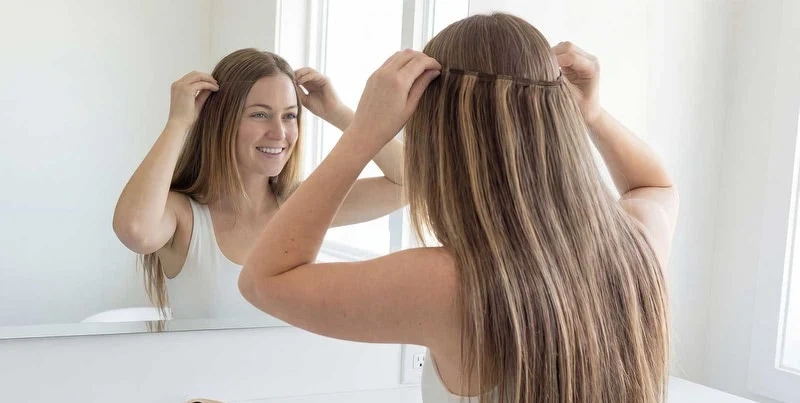
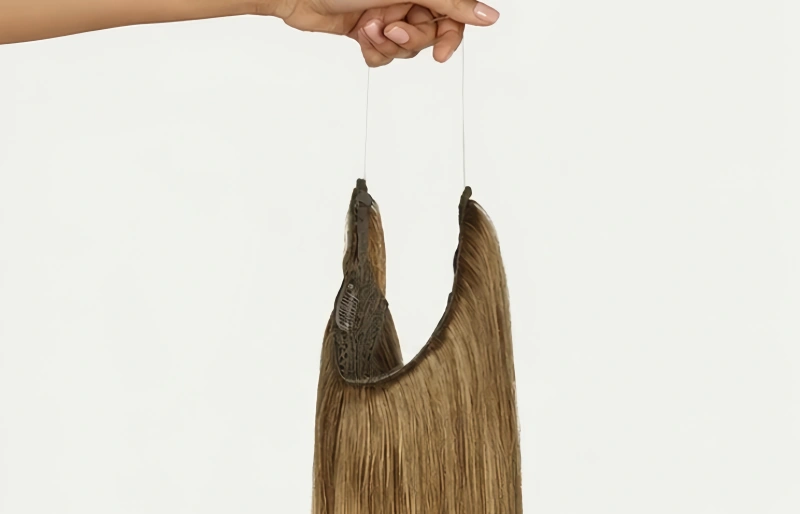
A well-fitted, clip-free halo should not pull on small sections of your natural hair. Its wire carries the weft around the head, while your own hair is brushed over the top to conceal it. Because there is no adhesive, heat bond, bead, braid, or sewn attachment at the roots, the usual traction pathway is reduced.
That construction is why halos are often described as a gentle temporary method. You can see the placement mechanics in how halo hair extensions work. The important qualification is that the wire and the weft still have weight and still touch the scalp and hair. If the fit is wrong, the pressure can become concentrated instead of comfortably distributed.
A better claim than “zero damage” is this: halo extensions have a low damage potential when they are lightweight, correctly sized, clip-free, removed before sleep, and taken off as soon as you feel discomfort.
Why Halos Usually Put Less Stress on Natural Hair?
- No strand-by-strand attachment: the weft is not hanging from a small group of natural hairs.
- No adhesive or solvent removal: there is no tape residue to pull through fragile strands.
- No braided foundation: the scalp does not need to support a tight braid or sewn row.
- Daily removability: you can take the piece off in seconds instead of carrying the load around the clock.
- Broader load distribution: a properly adjusted wire spreads the load around the head rather than concentrating it at multiple attachment points.
Those advantages depend on the halo being used as designed. If you add clips, tighten the wire to stop slipping, choose far more hair than your density can visually support, or wear the piece through activities that make it move, the risk profile changes.
When Can Halo Extensions Damage Your Hair?
The Wire Is Too Tight
A tight fit can feel secure at first, but security should not come from pressure. If the wire digs in, leaves a deep mark, causes a headache, or makes one area tender, loosen or resize it. The back of the weft should sit securely under the occipital curve without the front wire cutting into the scalp.
The Halo Is Too Heavy for Your Hair Density
More grams do not automatically mean a better result. A high-density weft can feel heavy, create a bulky ledge, and require more teasing or tighter adjustment to stay hidden. For fine hair, a lighter piece that matches the natural density is often safer and more believable than the fullest option available.
Optional Clips Carry Too Much of the Load
Some halos include small clips for extra hold. Once those clips are closed onto the same sections day after day, the method is no longer completely attachment-free. Repeated pinching, sliding, or removal can break fragile hairs and concentrate tension.
Use clips only when they are truly needed, position them on healthy hair, and change the placement rather than gripping the same spot every time.
Movement Creates Friction or Snagging
A loose halo can shift while you walk, dance, bend, or wear glasses. A rough wire join, stiff seam, tangled weft, or exposed fastener can rub the same area repeatedly. The answer is not always to tighten the wire; it may be to change the size, base shape, weight, or construction.
You Wear It Through Sleep, Showering, or High-Impact Activity
Halos are removable accessories, not sleep-in installations. Sleeping, swimming, showering, or intense exercise can make the weft move, mat with natural hair, or catch during removal. Take it off before bed and before activities in which the piece cannot remain stable and dry.
Removal Is Rushed
If natural hair has wrapped around the wire or optional clips, pulling the halo straight off can snap strands. Find the wire, open every clip, separate any caught hairs, and lift the piece away slowly. Detangle your natural hair only after the halo is fully removed.
Can Halo Extensions Cause Hair Loss?
A clip-free halo is less likely to cause traction-related hair loss than a method attached directly to the roots, but no wearable hair system deserves an absolute guarantee. Hair can still break from friction or snagging, and repeated pressure or gripping clips can stress vulnerable areas.
The American Academy of Dermatology warns that repeated pulling from tight hairstyles and extensions can cause traction alopecia and may become permanent if the tension continues. That guidance is not halo-specific, but the safety principle is directly relevant: pain and persistent tension are reasons to stop, not sensations to tolerate.
It also helps to separate two problems that people often call “hair loss”:
- Breakage: shorter snapped hairs, frizz, or pieces coming away during removal. This points to rubbing, snagging, clips, heat, or rough handling.
- Shedding from the root: full-length hairs with a bulb, widening sparse areas, or a changing hairline. Normal shedding can collect under any extension, but a visible increase or localized thinning needs professional evaluation.
Stop wearing the halo and speak with a dermatologist or qualified hair-loss professional if you notice a new bald patch, persistent scalp pain, sores, inflammation, or rapidly increasing shedding. Do not use an extension to conceal an unexplained scalp or hair-loss condition before it has been assessed.
Are Halo Extensions Good for Thin or Fine Hair?
They can be, because a true clip-free halo does not ask fine strands to hold individual bonds or rows. The challenge is usually not attachment; it is choosing enough hair to add volume without overwhelming the natural density or showing the wire.
For thin or fine hair, look for these four features:
- Lower density and appropriate weight: choose the lightest piece that achieves the intended result.
- A flexible, smooth base: it should follow the head shape without a hard ridge or rough edge.
- A truly adjustable wire: it should sit securely without digging in or depending on clips.
- A realistic length and texture match: very long or very dense hair is harder to blend and may tempt you to tease or tighten the fit.
If your goal is product selection rather than risk diagnosis, use our guide to the best halo hair extensions. For a broader decision view, see the pros and cons of halo hair extensions.
The 60-Second Halo Fit and Safety Test
- Place the halo without teasing your roots. The wire should rest about one to three inches behind the hairline, depending on your head shape and the product design.
- Check the pressure. You should feel the piece, but not a sharp line, pinching, burning, or a developing headache.
- Move naturally. Turn your head, look down, smile, and gently shake your head. The halo should stay in position without needing an aggressively tight wire.
- Check the back. The weft should lie flat below the occipital curve rather than bunching, flipping, or pulling upward.
- Check coverage. Your natural hair should conceal the wire and base without heavy backcombing or tension at the crown.
- Recheck after 30 to 60 minutes on the first wear. Remove the halo if discomfort grows, then adjust the size or reduce the weight before trying again.
A good fit feels stable, not tight. If you must choose between visible movement and painful pressure, the piece is not the right configuration for you.
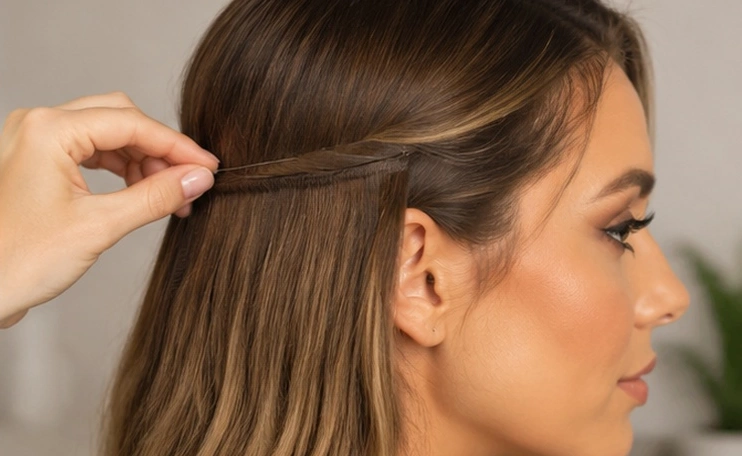
Halo vs Other Extensions: Where the Damage Risk Comes From
This is a risk-pathway snapshot, not a full buying comparison. Installation quality, total weight, maintenance, removal, hair condition, and wear frequency can change the outcome for every method.
| Method | Where the load sits | Main avoidable risk | Daily removal? |
| Clip-free halo | Wire around the head | Tight fit, excess weight, friction | Yes |
| Clip-in | Hair held inside clips | Repeated clipping, tugging, rough removal | Yes |
| Tape-in | Natural hair between adhesive tabs | Poor placement, matting, delayed maintenance or removal | No |
| Bonded / bead | Small groups of natural hair | Concentrated weight, tension, improper removal | No |
| Sew-in / weft | Braids or beaded row | Tight foundation, excess row weight, matting | No |
For feature-by-feature selection, read halo vs clip-in hair extensions or halo vs tape-in extensions. For the site-wide overview, see how different hair extension methods can affect natural hair.
A Manufacturer’s View: What Makes a Halo Safer?
Natural-hair safety cannot be judged by a label such as “human hair” or “Remy” alone. From a product-development and quality-control perspective, the following specifications deserve equal attention:
- Declared weight and density options: salons and buyers need enough information to match the piece to fine, medium, or thick natural hair.
- Balanced weft construction: hair and stitching should be distributed evenly so one side does not pull or twist.
- Smooth wire joins and base edges: rough knots, exposed ends, hard seams, or sharp hardware can create pressure and friction.
- Useful adjustment range: the wire should accommodate different head shapes without requiring excessive tension.
- Optional, removable clips: extra grip should be a choice, not a hidden requirement for ordinary wear.
- Consistent cuticle direction and low tangling: better hair alignment does not remove pressure risk, but it can reduce matting and rough detangling during repeated wear.
Alpha has manufactured hair extensions since 1990, and this distinction matters in product review: hair extension quality should be evaluated through construction and quality control as well as softness. If you are comparing fiber claims, our guide to full-cuticle Remy, Remy, and non-Remy hair explains what those terms do—and do not—tell you.
How to Prevent Hair Damage From Halo Extensions?
- Start lighter. Add only the density your natural hair can blend and your scalp can comfortably support.
- Adjust for stability without pressure. Do not treat a headache or deep wire mark as proof of a secure fit.
- Use optional clips sparingly, on healthy sections, and rotate their position.
- Remove the halo before sleeping, showering, swimming, or high-impact exercise.
- Separate caught hairs before lifting the wire or opening the piece away from your head.
- Give your scalp a break. There is no benefit to continuing through tenderness or irritation.
- Reduce heat and aggressive teasing on the natural hair used to conceal the halo.
- If your hair is actively shedding, your scalp is inflamed, or you have unexplained thinning, pause extensions and seek professional advice.
Warning Signs That Mean You Should Remove the Halo
- A headache, pinching, burning, or increasing scalp tenderness
- A deep wire mark that remains after removal
- Redness, sores, persistent itching, or inflammation
- Short broken hairs concentrated where clips or the wire sit
- More shedding than usual or a new sparse area
- A weft that shifts unless the wire is painfully tight
Do not “wear through” these signs. Remove the piece, inspect the fit and hardware, and change the weight or configuration before wearing it again. Persistent symptoms call for a dermatologist, not another adjustment.
FAQ
Are halo extensions bad for your hair?
Usually not when the halo is clip-free, lightweight, fitted correctly, and removed daily. They can still contribute to pressure, friction, tangling, or breakage if the wire is too tight, the piece is too heavy, or clips repeatedly grip the same hair.
Can you wear halo extensions every day?
Some people can wear a well-fitted lightweight halo regularly, but daily wear is not automatically safe for every scalp or hair density. Build wear time gradually, remove it before bed, and take rest days or reduce wear if you notice tenderness, marks, breakage, or increased shedding.
Why does my halo hair extension wire hurt?
The most likely causes are excessive tension, the wrong wire size, a heavy weft, uneven placement, or a rough join pressing on one point. Loosen the wire first. If the piece then slips, you may need a different size, shape, base, or weight rather than a tighter adjustment.
Can halo extensions cause bald spots?
A correctly fitted clip-free halo is less likely to create the localized pulling associated with bald spots. However, repeated gripping from optional clips, persistent pressure, or wearing the piece despite pain can stress vulnerable areas. Stop immediately if you see localized thinning and seek a professional assessment.
Do halo extensions work on very thin hair?
They may work if there is enough natural hair to cover the wire and base without heavy teasing. Choose a light, low-density weft and a realistic length. If the crown is too sparse to conceal the base—or if thinning is active—a topper, wig, or professional hair-loss solution may be more appropriate.
Are halo extensions safer than clip-ins or tape-ins?
A true clip-free halo normally places less direct tension on individual strands because it does not clamp or bond to them. That does not make every halo safer for every person. A poor fit or excessive weight can still cause discomfort, while well-selected and professionally managed methods can perform safely for suitable candidates.
Do Remy halo extensions prevent damage?
Remy hair can improve alignment, softness, and resistance to tangling when the cuticles remain in one direction. It does not determine whether the wire is too tight or the piece is too heavy. Natural-hair safety depends first on fit, load, hardware, wearing habits, and gentle removal.
Final Verdict
Halo extensions are generally a lower-risk temporary extension method, not a zero-risk product. A clip-free design avoids many attachment-related causes of damage, but the result still depends on fit, weight, construction, wear time, and your starting hair and scalp condition.
Choose the lightest realistic density, keep the wire comfortable, remove the piece before sleep and strenuous activity, and act on warning signs early. If the halo needs pain, tightness, aggressive teasing, or repeated clips to stay in place, it is not the right setup for your hair.
For salon, brand, retail, or wholesale programs, Alpha provides OEM and private-label hair extension manufacturing with customizable color, texture, length, density, base construction, packaging, and quality-control requirements. Contact our team to develop a halo range matched to your market rather than relying on one universal weight or fit.