
Hair extensions do not automatically ruin your hair. They can, however, cause breakage, thinning, scalp discomfort, or hair loss when the added hair is too heavy, the attachment is too tight, maintenance is delayed, or removal is rushed.
The safest result comes from matching the method and weight to the condition of your natural hair, keeping tension low, and treating maintenance as part of the service – not an optional extra. This guide explains where damage really comes from, what early warning signs look like, and how to lower the risk before, during, and after wear.
Quick answer: If you are asking, “Do extensions damage your hair?”, the honest answer is that they can, but damage is not inevitable. Risk rises when weight, tension, placement, aftercare, or removal is wrong for the person wearing them. Pain, persistent tenderness, visible pulling, and new thinning are signs to act on – not symptoms to “get used to.”
Can Hair Extensions Damage Natural Hair?
Yes, hair extensions can damage natural hair, but “damage” can mean different things. Hair-shaft breakage happens when strands snap from friction, tangling, heat, chemical stress, or repeated pulling. Shedding becomes more noticeable when naturally released hairs remain trapped in an attachment until maintenance or removal. Follicle stress is more serious: repeated or prolonged tension can contribute to traction alopecia.
The American Academy of Dermatology advises that tight styles and heavy extensions can pull on the hair and that ongoing tension may lead to hair loss. If follicles are damaged, that loss can become permanent. This is why a comfortable installation and early response to warning signs matter more than any blanket claim that one method is “damage free.”
It is also important to separate the attachment method from the way it is used. A technically sound method can still cause trouble if it is applied to weak hair, overloaded, placed too close to the scalp, left in too long, or removed without care. The same method may work well for one client and be unsuitable for another.
What Actually Causes Extension Damage?
Most extension problems are not caused by a single material or tool. They develop when several small risk factors add up. From a manufacturer’s point of view, every attachment creates a load-bearing point. The extension weight, attachment size, and section of natural hair supporting it must work together. When too much added hair hangs from too little natural hair, the stress is concentrated instead of distributed.
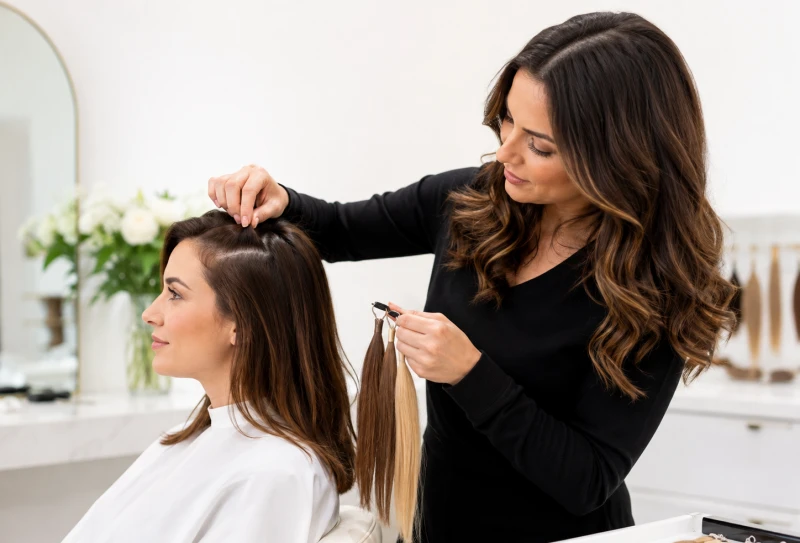
Too much weight on too little natural hair
Heavy bundles, bonds, tapes, or wefts can place unnecessary force on fine or sparse sections. More volume is not always better. A responsible plan starts with the density and strength of the natural hair, then chooses an amount the hair can comfortably support.
Excessive tension or poor placement
Attachments placed too close to the scalp may pull whenever the client turns, sleeps, brushes, or ties the hair up. Sections that are too small, uneven, or crossed can also create hot spots. A fresh installation may feel unfamiliar, but it should not produce ongoing pain, headaches, or a tight, pinching sensation.
A method that does not suit the hair condition
Fine, fragile, actively shedding, or heavily processed hair usually needs a more conservative approach. The “least damaging” choice is not a universal product name; it is the lightest, lowest-tension option that fits the client’s density, scalp condition, lifestyle, and ability to attend maintenance appointments.
Delayed maintenance and matting
As natural hair grows and sheds, attachment points move away from the scalp. Without timely maintenance, neighboring pieces can twist together and form mats. The extra tangling makes brushing and removal harder, which increases the chance of breakage.
Heat, chemicals, and rough daily handling
Extensions do not make natural hair immune to heat or chemical damage. Repeated high heat, aggressive brushing, bleaching, and product buildup can weaken the exposed hair and make tangling worse. Oils or conditioners placed directly on certain bonds or adhesives may also shorten wear and encourage slipping, so aftercare must match the attachment type.
Incorrect or rushed removal
Picking at bonds, pulling apart tapes, forcing beads, or cutting near attachment points can remove healthy hair along with the extensions. Professional removal is not just a convenience. It is one of the most important steps for protecting the natural hair and assessing its condition before a reinstall.
Damage Risk by Extension Type
Every method has a different attachment profile, but none is automatically safe or harmful. Use this table as a short screening guide. For method-specific detail, follow the linked safety article rather than relying on a generic rule.
| Method | How it attaches | Main risk to manage | Best safeguard |
| Clip-in | Clips opened and closed for temporary wear | Repeated placement in the same weak section; sleeping in the set | Rotate placement, remove before sleep, and read whether clip-in extensions are bad for your hair. |
| Tape-in | Paired adhesive tabs sandwich a thin section | Tabs that are too heavy, too close, or pulled apart during removal | Keep sections even and use trained removal; see whether tape-in extensions are bad for your hair. |
| Keratin / K-tip | Individual bonds softened and formed around natural hair | Oversized bonds, excess heat, or bonds picked apart at home | Use controlled bond size and professional removal; see whether K-tips damage your hair. |
| Micro-link / I-tip | Strands held with small beads or rings | Beads that are too tight, sections that are too small, or overdue move-ups | Choose the correct bead and section size; see whether microlink extensions damage hair. |
| Weft / hand-tied | A weft is attached along a beaded or braided foundation | Uneven row tension, heavy wefts, or tight stitching | Balance the row and weft weight; see whether hand-tied extensions are bad for your hair. |
| Halo | A removable wire rests around the head | Friction or pressure from poor sizing; wearing it during sleep or exercise | Fit the wire correctly and remove it for sleep; see whether halo extensions damage hair. |
Not sure which family to compare first? Review the main hair extension methods page, then ask a qualified stylist to assess your hair in person. Online comparisons cannot measure density, elasticity, scalp health, or the amount of weight your hair can support.
Warning Signs You Should Not Ignore
Healthy extension wear should feel secure, not painful. Contact your stylist promptly if you notice any of the following:
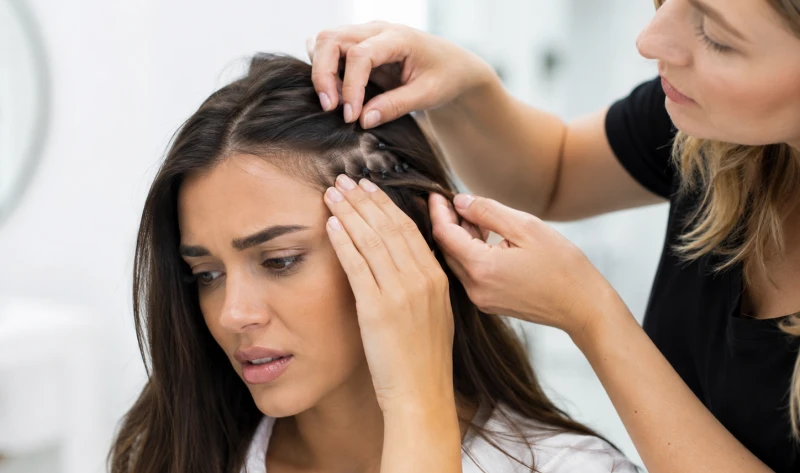
- Persistent pain, headaches, pinching, or a tight feeling that does not settle.
- Redness, bumps, itching, burning, or sore areas around attachment points.
- Visible pulling at the roots, especially around the hairline or temples.
- Short broken hairs, sudden thinning, or small sparse patches near attachments.
- Attachments twisting together, severe tangling, or matting close to the scalp.
- Bonds, tapes, beads, or rows slipping in a way that places uneven stress on nearby hair.
Do not try to solve pain by waiting until the next routine appointment. An early adjustment or removal is usually simpler than correcting a problem after weeks of continued tension. If hair loss, scalp pain, inflammation, or bald patches persist, speak with a dermatologist or other qualified medical professional.
Who Is at Higher Risk?
Extensions are not the right choice for every head of hair at every moment. Extra caution is sensible when the natural hair or scalp is already under stress.
- Fine or low-density hair that offers fewer strands to support each attachment.
- Hair with active breakage, unusual shedding, thinning, or a receding hairline.
- Recently bleached, relaxed, permed, or otherwise heavily processed hair.
- A sensitive, inflamed, itchy, or painful scalp.
- A lifestyle or schedule that makes regular maintenance and careful daily detangling unlikely.
- A history of discomfort or thinning from tight braids, ponytails, weaves, or previous extensions.
A stylist can evaluate the visible condition of the hair, but they cannot diagnose a medical cause of hair loss. When shedding or scalp symptoms are unexplained, get medical guidance before adding more weight or tension.
How to Prevent Hair Extension Damage?
Good results depend on the whole wear cycle: consultation, product selection, installation, home care, maintenance, and removal. Skipping one stage can undo the work done in the others.
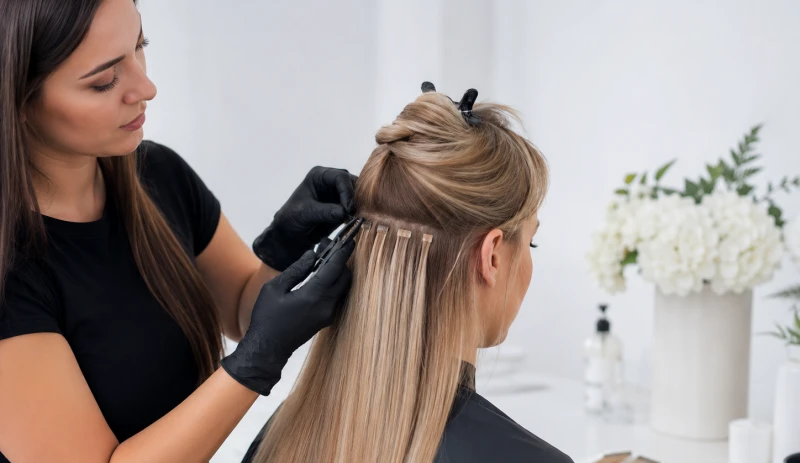
- Start with an honest hair and scalp assessment. Tell the stylist about recent chemical services, breakage, shedding, sensitivity, medications, and previous extension problems. Postpone the service if the hair or scalp needs time to recover.
- Match extension weight to natural hair density. Ask for the lightest amount that can achieve the goal. Fine perimeter areas should not carry the same load as stronger interior sections. More attachment points are not automatically better if each section is overloaded.
- Choose a trained installer and insist on comfort. The partings should be clean, the sections balanced, and the attachments secure without pulling. Speak up during the service. Persistent pain is not proof that the installation will last longer.
- Follow the maintenance schedule for the method. Move-ups and removals should be planned before the attachments grow out, twist, or mat. Put the next appointment on the calendar when the set is installed.
- Wash and detangle gently. Support the attachment area with one hand while brushing, work from the ends upward, and separate bonds or rows as instructed. Clean the scalp without scrubbing or piling the hair into a knot. Rinse thoroughly and dry attachment areas as your stylist recommends.
- Reduce avoidable friction and heat. Do not sleep with wet hair. Use a loose braid or other low-tension bedtime style, keep hot tools away from bonds and adhesives, and use only the temperature and products recommended for the hair and attachment type.
- Use professional removal and allow recovery time when needed. Never pull, pick, or cut out extensions. After removal, assess the natural hair before reinstalling. If the scalp is sore or the hair is breaking, pause and address the cause rather than covering it with a new set.
Product consistency also matters. Clean attachment construction, predictable weight, aligned hair, and repeatable quality checks help stylists plan accurately, but they do not replace correct application. Alpha Hair’s overview of hair extension quality control explains what manufacturers can control before a product reaches the salon.
What to Do If You Notice Damage?
First, reduce the source of tension. Avoid tight ponytails, heavy styling, and repeated brushing over a painful area. Contact the installer and arrange an assessment rather than trying to remove the attachments yourself.
A stylist may recommend adjusting, moving up, or removing part or all of the set. Once the extensions are out, detangle gently and give the natural hair a break if it feels weak. Focus on low-tension styling and simple care while you watch for improvement.
Seek medical advice when you see bald patches, ongoing shedding, scalp inflammation, wounds, or pain that does not improve after the tension is removed. Early assessment is especially important around the hairline, where repeated pulling can be easy to overlook until density has changed.
FAQ
Are hair extensions bad for your hair?
Not by definition. Well-matched extensions can be worn without obvious damage, but the result depends on natural hair condition, weight, placement, maintenance, daily handling, and removal. A method that works for healthy medium-density hair may be too demanding for fragile or sparse hair.
Can hair extensions cause hair loss?
They can contribute to hair loss when attachments or styles create repeated tension. This is commonly discussed as traction alopecia. Pain, tenderness, visible pulling, and thinning should be addressed early. A dermatologist can evaluate ongoing or unexplained hair loss.
What are the least damaging hair extensions?
There is no single least-damaging method for everyone. Temporary, lightweight options may reduce continuous tension because they are removed regularly, but poor fit or repeated placement can still cause breakage. For long-wear methods, the safest choice is the one correctly sized and placed for your hair by a trained professional.
Are there truly damage-free hair extensions?
No method can guarantee a damage-free result for every person. Even a lightweight or temporary set can cause trouble if it fits poorly, repeatedly pulls on the same section, or is removed roughly. Treat “damage free” as a goal supported by good decisions, not as an unconditional product promise.
Will hair grow back after extension damage?
Hair-shaft breakage can improve as new hair grows and damaging habits stop. Hair loss caused by prolonged tension may not always fully recover if follicles have been injured. Because the outcome depends on the cause and duration, do not wait to seek professional or medical advice when thinning persists.
Should new hair extensions hurt?
No. A slight awareness of new attachments can be normal, but ongoing pain, headaches, pinching, burning, or sleep disruption are not signs of a better installation. Contact the stylist for an adjustment.
Do you need a break between extension sets?
Not everyone needs the same schedule. The decision should be based on the method, condition of the natural hair and scalp, and what is seen during maintenance or removal. If there is tenderness, breakage, matting, or thinning, take a break and identify the cause before reinstalling.
Final Thoughts
So, do hair extensions ruin your hair? They can cause problems when the service ignores hair condition, weight, tension, maintenance, or safe removal. They do not have to be damaging when the method is carefully matched to the client and the full wear cycle is managed responsibly.
Choose a qualified stylist, ask how the added weight will be distributed, and treat discomfort as useful information. The best extension plan is not the one that promises “damage free” results. It is the one that sets realistic expectations, protects the natural hair, and changes course quickly when warning signs appear.