Hair Extension Manufacturing Process for Global Hair Brands
Since 1990 • 100% Full Cuticle Remy • MOQ From 500g • 5 Tons/Month Capacity • QC Before Shipment • OEM/ODM Private Label
For a hair brand, a good-looking sample is only the beginning. The real test is whether the same color, weight, texture and attachment can be produced again across a full order. Alpha has manufactured hair extensions and wigs since 1990, with a focus on 100% full-cuticle Remy hair for lighter-tone markets. Our OEM/ODM process is built around approved specifications, practical checkpoints and clear communication from sampling through shipment.
If you are building a new range, changing suppliers or adding a new method, send us your target product, shade map, length, weight and packaging brief. We will help turn it into a workable sample and production plan.
From Raw Hair Selection to Finished Hair Extensions
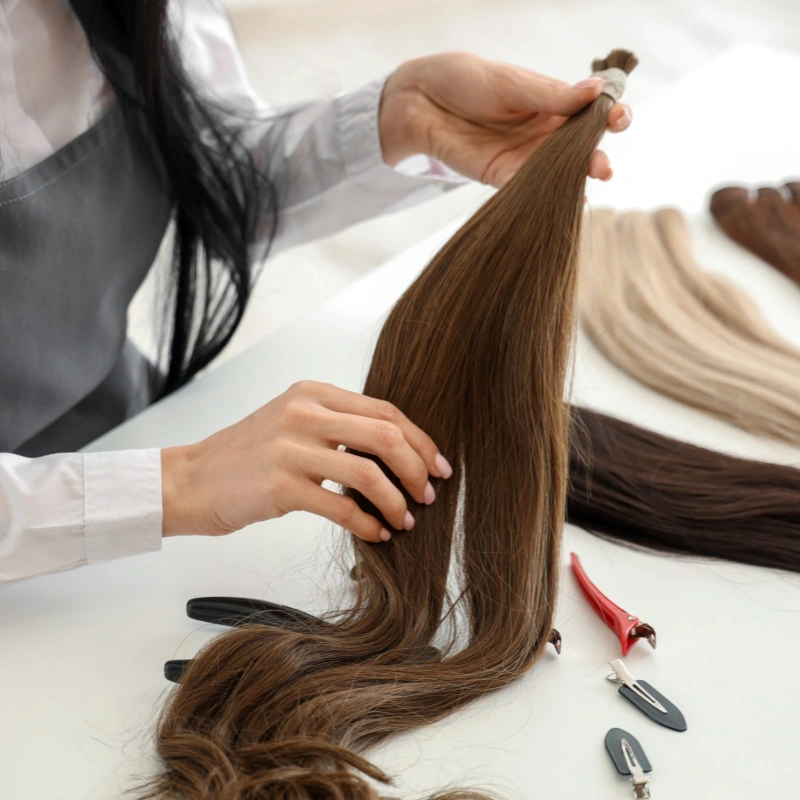
How are hair extensions made in a professional factory? The short answer is that the hair, color, construction and packaging must all follow the same approved specification. A typical order moves through eight connected stages: requirement review, sample approval, hair selection, sorting and preparation, color and texture development, extension construction, quality inspection, and private-label packing.
Each stage affects the next. Hair that is poorly aligned cannot be corrected by attractive packaging. A shade that is approved under one light source may look different in a salon. A well-made weft can still fail if the weight or seam does not match the order. That is why our hair extension production process starts with a written product brief and an approved reference sample rather than an assumption.
Step 1: Translate Your Product Idea into a Production Specification
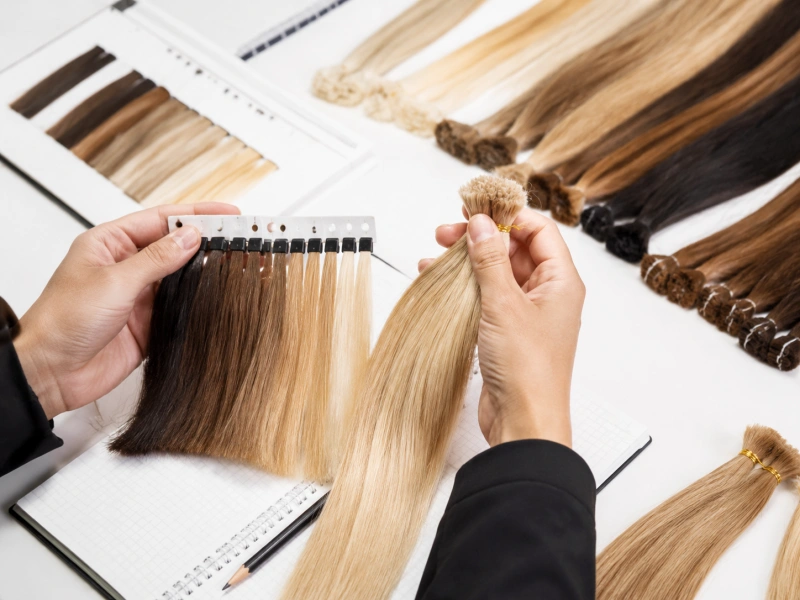
Before raw material is allocated, our team reviews the commercial and technical requirements of the product. This normally includes the extension method, hair type, finished length, net weight, drawing ratio, texture, shade or blend, attachment dimensions, packaging, labeling and target quantity. For an existing line, you can also provide a reference product or approved color swatch.
The purpose is simple: remove avoidable ambiguity before production begins. We record the details that can be checked later, and we flag combinations that may create unnecessary cost, long lead times or inconsistent performance. If you are still deciding between standard and fully custom development, our OEM and private-label hair extension service explains the available routes.
Step 2: Select Full-Cuticle Remy Hair for the Intended Range
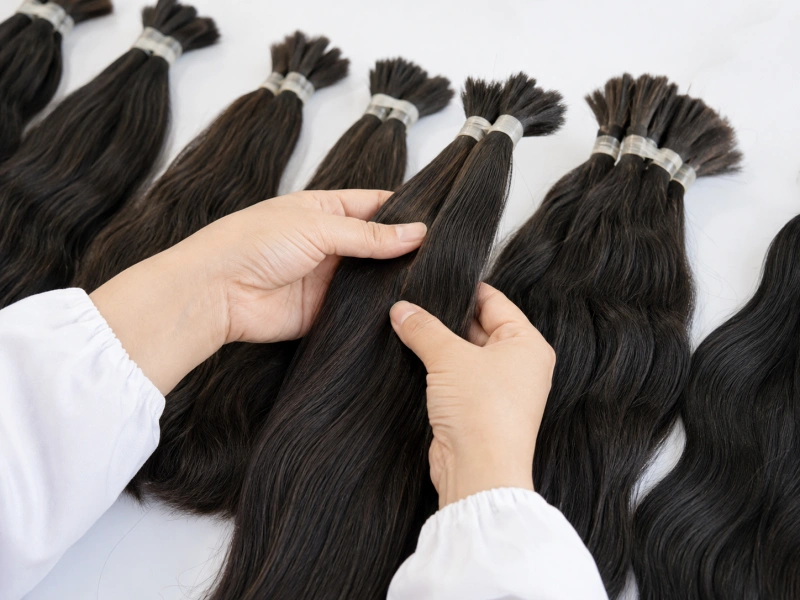
The finished extension can only be as reliable as the hair selected for it. Alpha focuses on full-cuticle Remy hair, keeping the strands aligned in the same root-to-tip direction. During selection, the team considers usable length, natural color, strand condition and suitability for the intended shade and texture.
Not every bundle is suitable for every SKU. Very light shades, longer lengths and certain texture targets require a different material plan from natural dark colors. Rather than treating “Remy” as a complete specification, buyers should also define the drawing ratio, finish and expected use. For a deeper material comparison, see full-cuticle Remy vs. Remy vs. non-Remy hair.
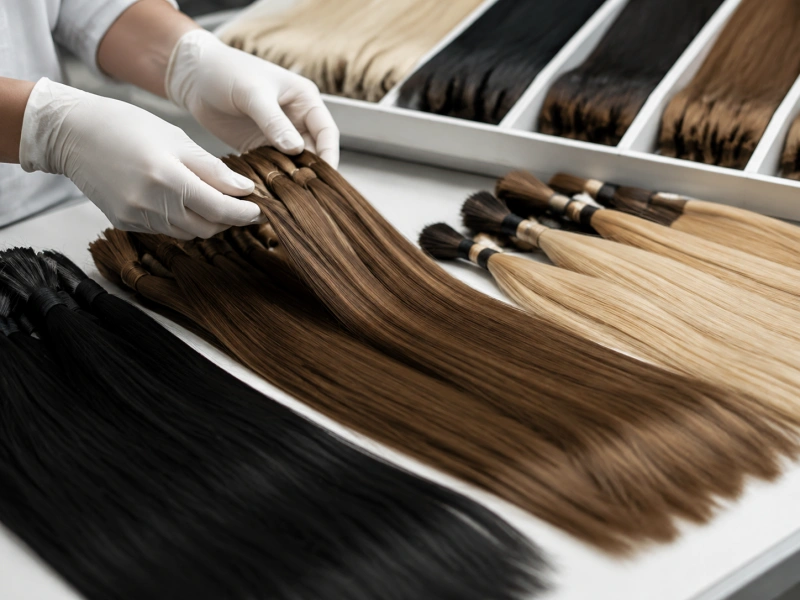
Step 3: Sort, Align and Prepare the Hair
Selected hair is sorted into workable groups before coloring or construction. The team separates it by length, tone and strand characteristics, removes unsuitable fibers, and keeps the cuticle direction aligned. The hair is then prepared for the required process while the production record remains connected to the approved order specification.
This stage is less visible than a finished color ring, but it directly affects blending, weight distribution and batch consistency. Careful preparation also provides the color team with a more stable starting point. For buyers, the key question is not simply “Is the hair sorted?” but “Which attributes are sorted, and how are they checked against the approved sample?”
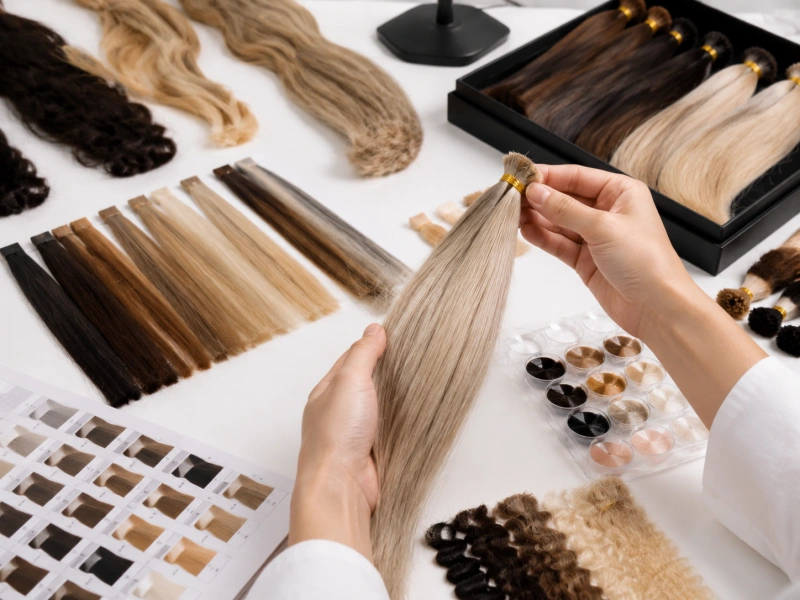
Step 4: Develop the Color and Texture
Color work begins from an approved target—not from a shade name alone. Our team reviews the base hair, undertone, depth, blend ratio and final finish, then prepares a lab sample or production sample for confirmation when customization is required. Multi-tone blends, rooted shades, ombré effects and very light colors need especially clear references.
Color is checked in consistent lighting and compared with the retained standard. Texture is developed to match the required straight, wave or curl profile, with attention to repeatability rather than an exaggerated first impression. If a requested result could over-process the hair or become difficult to reproduce, we discuss a more practical option before bulk production.
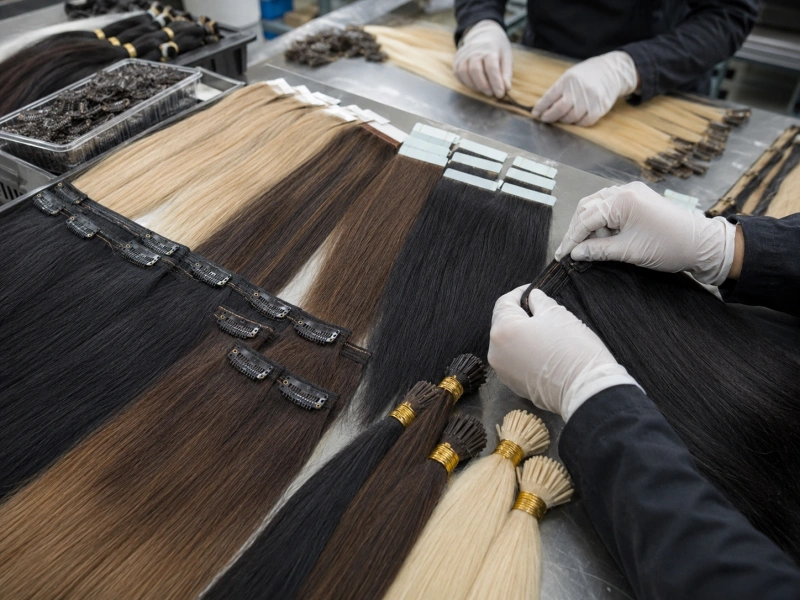
Step 5: Build the Extension Method
Once the prepared hair meets the target, it is constructed into the selected application system. The method determines the attachment materials, dimensions, weight distribution and process controls. Alpha produces wefts, tape-ins, clip-ins and pre-bonded or tip extensions for professional and retail programs.
- Wefts: Hair is distributed and secured to create the specified seam, width and density.
- Tape-ins: The hair section, polyurethane area, adhesive format and tab dimensions are matched to the approved design.
- Clip-ins: Weft pieces are cut to the required widths and assembled with the specified clip placement and set configuration.
- Keratin and tip extensions: Strand weight, bond shape, attachment size and consistency are controlled for the chosen method.
While different hair extension products require specific construction methods, they all follow the same core manufacturing workflow. See how tape-in hair extensions are manufactured and how Genius Weft extensions are made. You can also review our main weft extension range and K-tip hair extensions when defining a product mix.
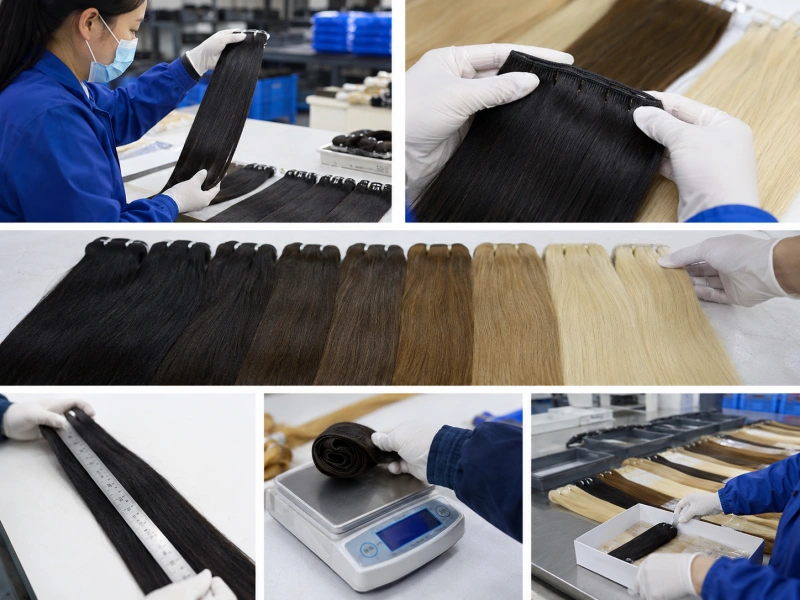
Step 6: Inspect Quality During Production and Before Packing
Quality control is not one final glance at a finished bundle. The team checks the product at relevant stages so that a problem can be corrected before it becomes a full-batch issue. Depending on the method and specification, inspection may cover hair alignment, shade consistency, finished length and weight, seam or bond construction, attachment dimensions, shedding, tangling, odor, labeling and pack count.
The retained sample and written specification provide the reference for final inspection. This page intentionally summarizes the control points; the full testing topic is covered in our hair extension quality control process. Buyers can use that page to agree on checks, tolerances and evidence before an order is released.
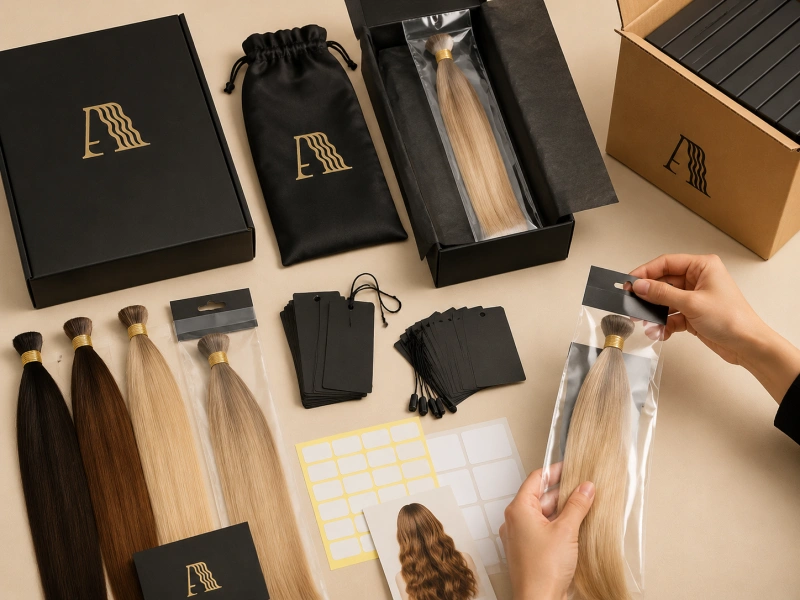
Step 7: Add Private-Label Packaging and Order Identification
After final approval, the extensions are counted, identified and packed according to the order. A private-label program may include branded boxes or pouches, hang tags, shade and length labels, barcodes, care cards and carton marks. Packaging should protect the hair in transit while making the SKU easy to identify in a warehouse, salon or retail environment.
New packaging often takes longer than stock packaging because artwork, print proofs and physical samples may need approval. Plan these decisions early, especially for a launch with many shades. Explore our custom hair extension packaging options before finalizing the production calendar.

Step 8: Prepare the Order for Global Delivery
The shipping stage begins before cartons leave the factory. The team confirms pack counts, carton identification and the delivery instructions agreed for the order. Shipping method, destination, customs requirements and seasonal capacity can all affect the final schedule.
For a realistic launch date, work backward from the required arrival date and include time for sampling, revisions, packaging approval, production and transit. Our guide to hair extension production time explains the variables in more detail. Final timing is confirmed against the approved specification and order quantity.
How OEM Hair Extension Orders Move from Sample to Repeat Production
1. Share the brief: method, lengths, weights, shades, texture, packaging, quantity and target market.
2. Confirm the sample route: select a stock sample, modify an existing specification or develop a custom sample.
3. Test and comment: evaluate the sample in the conditions that matter to your clients and send consolidated feedback.
4. Approve the standard: confirm the product and packaging details that will control bulk production.
5. Run and inspect the order: production follows the approved record, with in-process and final checks.
6. Review and repeat: keep change requests documented so the next order does not rely on memory.
Why Brands Work With Alpha?
Alpha is designed for buyers who need a manufacturing partner, not just a catalog. Since 1990, we have supported professional and commercial hair programs with product development, full-cuticle Remy hair, custom colors, multiple extension methods and private-label packaging.
Our practical advantage is the ability to connect the decisions: the hair selected must suit the color; the color must suit the construction; the construction must meet the approved weight and dimensions; and the final pack must remain easy to identify and reorder. You can review our broader hair extension factory capabilities or arrange a hair extension factory tour before starting a program.
Hair Extension Manufacturing FAQs
1. How Are Human Hair Extensions Made?
Human hair extensions are made by selecting suitable hair, keeping the strands aligned, sorting and preparing the material, developing the required color and texture, and constructing it into a weft, tape, clip or bonded-tip format. The finished product is inspected against the approved specification before labeling and packing.
2. Can Alpha manufacture extensions under my brand?
3. What Is the Minimum Order Quantity?
MOQ depends on whether you choose an existing specification, a custom color or construction, and custom packaging. A mixed launch assortment may also be planned differently from a repeat order. Ask for a quotation based on your SKU list rather than relying on one general MOQ.
4. How Long Does Production Take?
Timing depends on sample revisions, raw material and color requirements, extension method, packaging approvals, order size and seasonal capacity. We confirm the schedule after the specification is clear. Build transit and customs time into your required arrival date as well.
5. Can You Match a Custom Shade or Texture?
Custom shade, blend and texture development is available for suitable projects. Send a physical swatch, reference product or clearly defined target. The team will confirm feasibility, sample requirements and any effect on quantity or lead time before bulk production.
6. How Can I Verify the Factory Process Before Ordering?
Start with samples and a written specification, ask which checks apply to your product, and retain an approved reference for bulk comparison. You can also request relevant production evidence or book a live factory tour. The goal is to verify the controls that matter to your SKU, not to collect generic factory photos.
Turn Your Product Brief into a Manufacturing Plan
Tell us what you want to make: extension method, hair type, shade range, lengths, weights, packaging and target quantity. Alpha will review the brief and recommend the next practical step—sample selection, custom development or a factory conversation.