
ape-in hair extension manufacturing is more than attaching adhesive tabs to human hair. For brands, salons and wholesale buyers, the consistency of raw hair, tab construction, adhesive coverage, color matching and batch inspection determines how reliably the product can be sampled, approved and reordered.
This guide explains how Alpha manufactures Tape-In hair extensions and where quality is checked from raw hair selection through final packing. If you are ready to compare specifications and product formats, explore Alpha’s wholesale Tape-In hair extensions.
Key Takeaways
- Tape-In quality starts with consistent Remy human hair selection and color classification.
- Flat, evenly constructed tabs and consistent adhesive coverage are important for repeatable application and product appearance.
- Samples should be approved before bulk production so hair, shade, construction, weight and packing can be recorded as the project reference.
- Finished goods should be checked against the approved specification before shipment.
- Tape-In hair can be removed, cleaned, retaped and professionally reinstalled. A typical installation cycle is about 6–8 weeks, while the hair itself may last up to 1–2 years with proper care and professional reuse.
Tape In Hair Extension Manufacturing Process
Alpha’s Sourcing and Hair Selection
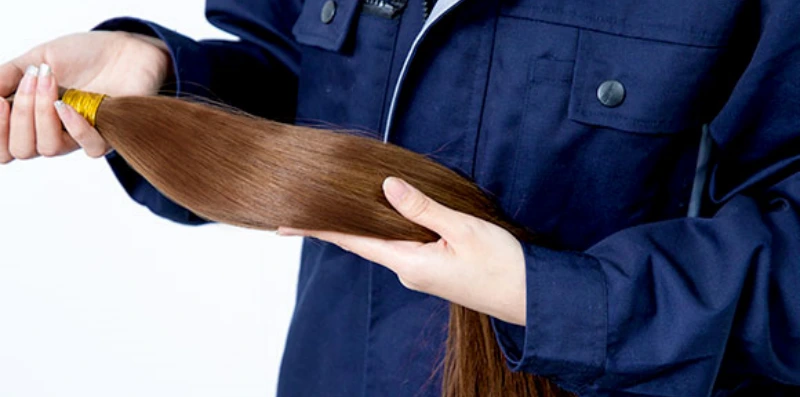
You want Tape-In hair extensions that look and feel consistent from one order to the next. That starts with the raw hair. Alpha uses 100% Remy human hair and includes donor affidavits and fair-compensation documentation within its sourcing process. The manufacturing team then sorts and classifies the raw hair before color processing and Tape-In construction.
This wording is deliberately precise. Sourcing records support responsible procurement, but they should not be read as a claim that every individual strand is traceable to one named donor.
Step-by-Step Production
Ever wondered how Tape-In hair extensions are made? The process is detailed and careful. Here is how Tape-In production moves through Alpha’s factory:
- Raw Hair Sourcing and Material Selection — select the Remy human hair required for the project.
- Hair Sorting and Classification — group the hair by relevant quality, texture and color references.
- Washing, Sanitizing and Cuticle Treatment — prepare the hair for controlled processing.
- Lightening and Coloring — develop the approved shade while protecting the usable condition of the hair.
- Drying, Styling and Final Finishing — prepare the processed hair for Tape-In construction.
- Tape-In Tab and Panel Construction — distribute the hair, form the tab and apply the adhesive layer consistently.
- Quality Control and Batch Inspection — compare finished goods with the approved specification and packing list.
- Packaging and Shipment Preparation — count, label and pack the order according to the confirmed requirements.
Tape-In is one production method within Alpha’s complete hair extension manufacturing range. The manufacturer hub covers the broader product family; this article stays focused on Tape-In construction and QC.
What Makes a Tape-In Panel Consistent?
A finished Tape-In piece may look simple, but several construction details affect whether it can be repeated reliably across a batch:
- Hair distribution: the hair should be spread consistently across the attachment area rather than gathering into uneven points.
- Tab shape and size: the finished tab should match the approved sample and product specification.
- Flatness and alignment: the hair and tab should sit evenly without unnecessary bulk or crooked edges.
- Adhesive coverage: the bonding layer should cover the intended tab area consistently.
- Clean edges: the finished panel should be neatly formed and packed without loose adhesive or irregular borders.
Key Materials Used
The key materials are 100% Remy human hair, the Tape-In tab construction and the selected adhesive layer. Buyers should review the finished combination as a product system: the hair determines feel and appearance, while the tab and adhesive construction affect flatness, handling and consistency. Packaging materials are confirmed separately according to the project.
Adhesive Technology in Alpha Tape-In Extensions
Adhesive Selection and Bonding Consistency
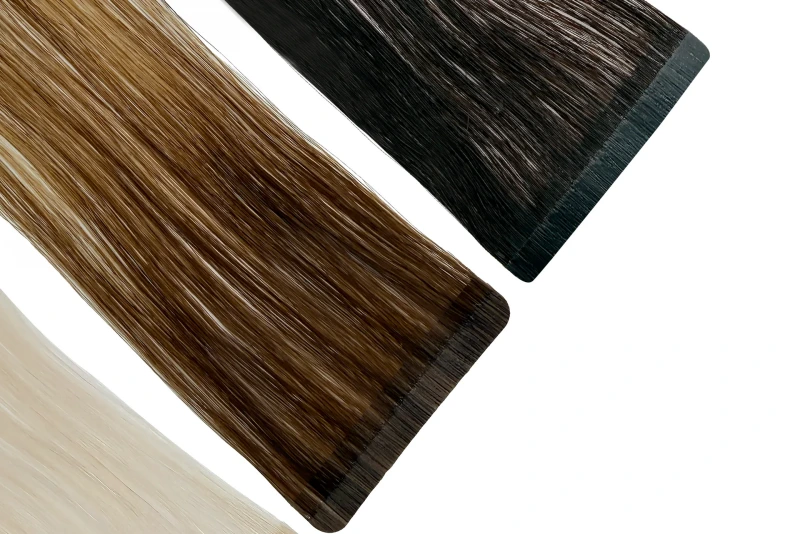
Adhesive selection affects how evenly the Tape-In panel bonds, how flat the tab sits and how consistently the product performs across a batch. During production, the adhesive layer should be applied evenly across the tab so the finished panel has clean edges and consistent coverage. For wholesale projects, buyers can review samples and confirm the preferred Tape-In construction before bulk production.
Adhesive performance should be assessed against the approved sample, intended installation method, storage conditions and professional-use instructions. Alpha does not use this article to make medical-grade, hypoallergenic or sensitive-skin safety claims without current material or supplier documentation.
Even Coverage and a Flat Finish
A consistent adhesive layer supports a flat, neat panel. During inspection, the team looks for even coverage, aligned tabs and clean edges. These checks reduce variation between pieces, but installation technique, client hair condition, aftercare and storage also affect real-world wear. The manufacturing goal is a repeatable product—not a blanket performance guarantee for every wearer.
Tab Design and Construction
Tab Materials and Structure
Tape-In tabs are designed to be thin, flexible and easy for a professional stylist to position. The important manufacturing questions are practical: Is the hair distributed evenly? Does the tab match the approved dimensions and construction? Are the edges clean? Is the adhesive layer consistent across the panel? These details are reviewed as part of sample approval and production inspection.
Seamless Blending
A flat Tape-In construction helps the attachment sit close to the client’s hair. The final blend also depends on shade selection, hair distribution, placement and professional installation. Alpha’s role as the manufacturer is to keep the approved hair, color and tab construction consistent; the stylist controls placement and blending on the client.
Tape-In Panel Formats
Different Tape-In formats may use different panel shapes or visibility treatments, but the manufacturing principles remain the same: consistent hair distribution, controlled tab construction, even adhesive coverage and a finished piece that matches the approved sample.
Product-format details and current wholesale options remain on the Tape-In product page rather than being repeated here.
Reuse and Repositioning
A Tape-In installation is typically repositioned after about 6–8 weeks as natural hair grows. If the hair remains in good condition, a professional can remove the old tape, clean the bonding area, apply replacement tape and reinstall the extensions.
With proper care and professional reuse, Alpha’s Tape-In hair has a potential hair lifespan of up to 1–2 years. This describes the possible lifespan of the hair, not the length of one installation cycle.
For a detailed consumer-facing procedure, read how to remove Tape-In extensions. This manufacturing article intentionally does not repeat a step-by-step removal tutorial.
Quality Control at Alpha
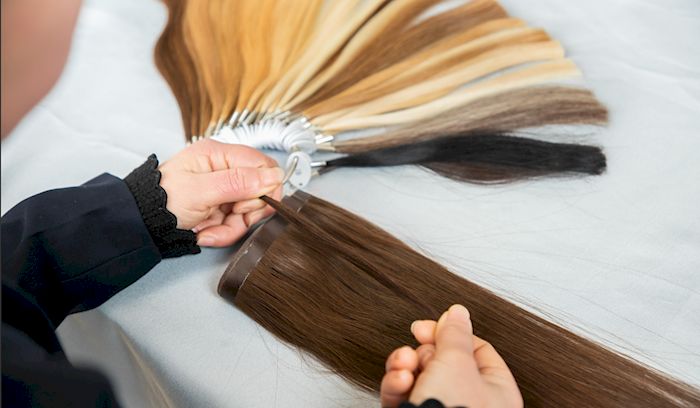
Quality control connects the approved sample with bulk production. Alpha records the confirmed specification, checks finished goods against the agreed requirements and refers back to the same information for repeat orders. For the wider factory system, see Alpha’s hair extension quality-control process.
Inspection Steps
| Step | Inspection Stage | What Happens |
| 1 | Review Samples | Prepare stock or custom samples for checking hair, shade, tab size and adhesive performance. |
| 2 | Approve the Specification | Record confirmed hair standards, color, length, weight, Tape-In construction, piece count and packing details. |
| 3 | Production and Inspection | Check finished goods against the agreed specification and packing list after production approval. |
| 4 | Shipping and Reorders | Confirm shipment method and delivery documents, then use the approved specification as the reference for repeat orders. |
The value of this workflow is consistency. A buyer can compare the bulk order with what was approved, and the manufacturing team has a clear reference when the product is reordered.
What Buyers Approve Before Bulk Production?
| Approval Item | What Is Confirmed |
| Hair | Hair quality and texture reference |
| Shade | Approved color or color reference |
| Length & Weight | Confirmed order specification |
| Tape Construction | Tab format and approved construction sample |
| Piece Count | Pieces per pack or order requirement |
| Packaging | Bag, label, box or packing details where applicable |
Once the sample is approved, Alpha records the confirmed specification and uses it as the production and reorder reference. Finished goods are inspected against the approved requirements before shipment. Buyers who still need to validate the product can request hair extension samples before bulk production.
Common Tape-In Manufacturing Problems
| Risk | What the Factory Checks | Why It Matters |
| Uneven tabs | Hair distribution, tab shape, alignment and clean edges | Helps pieces sit and look consistent across the batch. |
| Inconsistent adhesive coverage | Coverage across the intended tab area and visible finishing quality | Reduces avoidable variation between Tape-In pieces. |
| Color mismatch | Approved shade reference compared with finished goods | Supports repeatable color delivery. |
| Length or weight variation | Finished order checked against the confirmed specification | Protects the agreed pack and order requirements. |
| Piece-count or packing errors | Count, labels and packing list checked before shipment | Reduces fulfillment mistakes. |
| Unexpected tangling or shedding | Hair selection, processing condition and sample feedback reviewed | Provides a practical basis for investigation and reorder improvement. |
No manufacturing process can remove every variable after installation. Product condition, professional application, client hair, climate, storage and aftercare all affect wear. The factory’s job is to control the product specifications it can verify and to respond with evidence when a concern is reported.
Conclusion
For wholesale buyers, consistent Tape-In manufacturing depends on more than the finished appearance. Raw hair selection, color control, tab construction, adhesive coverage, approved samples and final inspection all influence whether a product can be repeated reliably from one order to the next.
Alpha uses sample approval and recorded specifications to connect product development with production and reorder consistency.
Ready to review product formats or request a quote? Explore Alpha’s wholesale Tape-In hair extensions. If your project also needs branded bags, labels or boxes, review the private label hair extensions program.
FAQ
Can you reuse Alpha tape-in hair extensions?
Yes, if the hair remains in good condition. A professional can remove the old tape, clean the bonding area, apply replacement tape and reinstall the extensions. Reuse depends on the condition of the hair and professional handling.
How long do Alpha tape-in extensions last?
One installation is typically repositioned after about 6–8 weeks as natural hair grows. With proper care and professional retaping and reuse, Alpha’s Tape-In hair has a potential lifespan of up to 1–2 years. For a consumer-focused explanation of the factors involved, see how long Tape-In extensions last.
Can you curl or dye Alpha tape-in extensions?
Remy human hair can be styled with appropriate heat protection. Coloring can change the condition or shade of the hair, so professional assessment and strand testing are recommended. For routine maintenance rather than manufacturing detail, see how to care for Tape-In extensions.
What makes Alpha tape-in extensions blend so well?
Cuticle-intact Remy human hair supports a natural look and feel, while a flat Tape-In construction helps the attachment sit close to the client’s hair. The final result also depends on correct shade selection, placement and professional blending.
How do you remove tape-in extensions safely?
Professional removal is recommended. The stylist uses a suitable remover, separates the bond without force, cleans the attachment area and checks the condition of both the client’s hair and the extensions before retaping. Detailed removal steps belong in the dedicated removal guide.
What does Alpha check before bulk Tape-In production?
After sample approval, Alpha records the hair quality or texture reference, shade, length, weight, Tape-In construction, piece count and packing details. Production and final inspection use the approved specification as the order and reorder reference.