
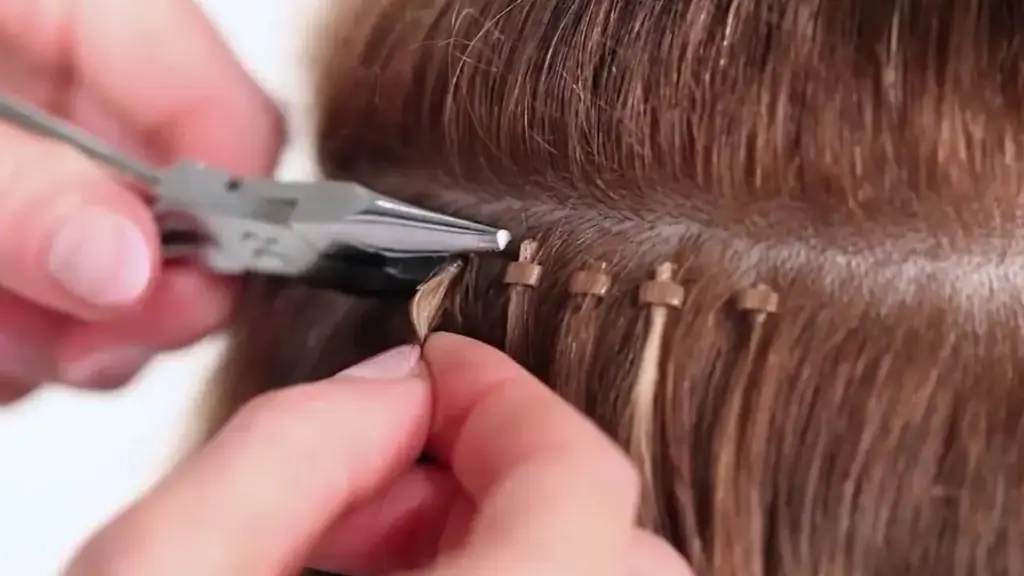
If you are asking, “What are I Tip hair extensions?”, the short answer is simple: they are individual hair extension strands with a slim, stick-shaped tip. Your stylist places each tip inside a small bead or ring with a section of your natural hair, then closes the bead with extension pliers. The fitting uses no heat and no liquid glue.
That small attachment makes I Tips flexible. Your stylist can control the color, length, and density strand by strand, so the finished hair moves naturally and can be tailored around your face, parting, and hairline. The method is also reusable, but it is not maintenance-free or suitable for every head of hair.
This guide explains how I Tip extensions work, what they are made from, how long they last, who they suit, and what you should check before you buy them for yourself, your salon, or your hair brand.
Key Takeaways
- I Tip extensions are individual strands secured with small beads; the installation does not melt the tip or use adhesive on your natural hair.
- “I Tip” describes the extension strand, while “microbead” or “micro ring” describes the attachment used to hold it.
- You normally need a professional move-up every 6 to 10 weeks as your natural hair grows.
- Good-quality human hair can be removed, cleaned, and reused through several fitting cycles.
- I Tips can still cause slippage, tangling, or tension damage if the strand weight, placement, or aftercare is wrong.
- You should judge quality by more than softness on day one. Cuticle alignment, tip consistency, color stability, shedding, and wash-test performance all matter.
What Are I Tip Hair Extensions?

I Tip hair extensions, also called stick-tip extensions, are a strand-by-strand system used to add length, fullness, or color. Each extension contains a small amount of hair gathered into a narrow tip shaped roughly like the letter “I.”
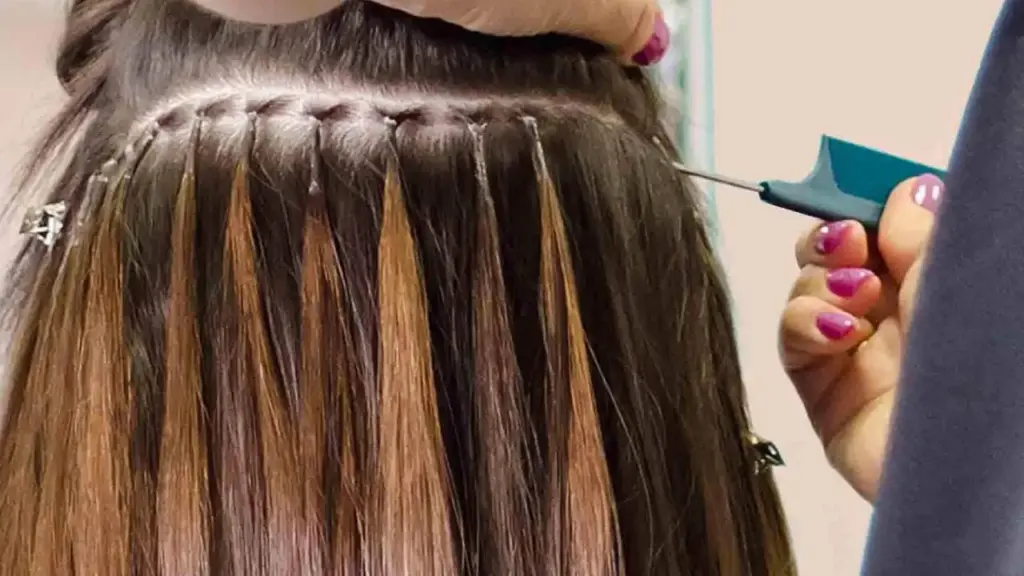
During installation, your stylist threads a small section of your hair through a microbead, inserts the I Tip into the same bead, and clamps the bead closed. The bead holds both the natural hair and the extension by mechanical pressure. The tip itself is not melted.
This distinction clears up two common points of confusion:
- I Tip versus microbead: The I Tip is the hair strand you buy. The microbead, micro ring, or cylinder is the fitting that secures it. People often use the names interchangeably because the two parts work together.
- I Tip versus cold fusion: Some salons use “cold fusion” as a broad name for strand-by-strand methods that do not use a hot fusion tool. Always ask what attachment is actually being used, because salon terminology varies.
You may also see I Tips sold as I-link, stick-tip, shoelace-tip, or micro-ring hair. Product names differ by market, but the basic system is the same: an individual tipped strand held by a small reusable bead.
How Do I Tip Hair Extensions Work?

A full application is detailed work. The exact pattern depends on your haircut, density, head shape, and styling habits, but a professional fitting generally follows these steps.
- Consultation and color matching. Your stylist checks your scalp, natural hair strength, length, density, and daily routine. They then choose the extension length, texture, shade mix, and strand weight.
- Sectioning. Your hair is divided into clean rows. Enough natural hair must be left around your hairline and parting to cover the beads when you move.
- Bead placement. A small, controlled section of natural hair is pulled through a silicone-lined bead with a loop or threading tool.
- I Tip insertion. The extension tip is placed inside the bead alongside your natural hair.
- Clamping. The bead is positioned a short distance from the scalp and closed with the correct pliers. It should sit securely without pinching or pulling.
- Blending. Once all strands are fitted, your stylist cuts and blends the extension hair into your natural shape.
Because every strand is placed separately, an application may take several hours. A few highlights or a volume fill is faster than a full length-and-density transformation.
Professional fitting matters. Sections that are too small can carry more weight than your hair can support. Sections that are too large may slip. Crossed hairs, beads placed too close to the scalp, or uneven spacing can cause discomfort and unnecessary tension.
What Are I Tip Hair Extensions Made Of?
An I Tip has three working components: the extension hair, the formed tip, and the bead used during installation.
Extension Hair
You can find I Tips made from human hair or synthetic fiber. If you want natural movement, heat-styling flexibility, and more than short-term wear, human hair is usually the better choice.
Within human hair, labels can be confusing. “Remy” should mean the cuticles run in the same root-to-tip direction, which helps reduce friction and tangling. Full-cuticle Remy hair keeps more of the protective cuticle intact. However, a label alone does not prove performance. Processing, color treatment, sorting, and production control affect how the hair behaves after repeated washing.
The I-Shaped Tip
The narrow tip is commonly formed with keratin or another bonding polymer. Although the material may be similar to that used on fusion extensions, your stylist does not melt it during an I Tip application. It acts as a firm insert that sits inside the bead.
Tip size and consistency matter. A tip that is bulky, brittle, uneven, or poorly bonded may be difficult to insert, uncomfortable to wear, or more likely to shed.
Microbeads or Rings
Beads are usually made from metal and may have a silicone lining. The lining helps cushion your natural hair and improves grip. Beads come in different colors, diameters, shapes, and wall thicknesses. Your stylist should match the bead to the tip size, hair density, and desired visibility instead of using one bead for every client.
Why Do People Choose I Tip Extensions?
I Tips solve several problems that wider attachment methods cannot.
You Get Precise, Strand-by-Strand Placement
Your stylist can add a few lighter strands near the face, build density in a specific area, or distribute several shades throughout the hair. That control is useful when one solid extension color would look flat.
The Hair Moves Freely
Individual attachments allow more separation and swing than a continuous weft. When the placement and color match are right, you can wear many updos, ponytails, and parted styles without exposing a wide track.
Installation Uses No Heat or Liquid Adhesive
The fitting does not require a hot fusion tool or adhesive remover. This is useful if you prefer a mechanical attachment. It does not mean the method is automatically harmless; weight and tension still need to be managed.
The Hair Can Be Reused
At a move-up appointment, your stylist opens the beads, removes the extension strands, clears shed hair, and reinstalls suitable strands closer to the scalp with new beads. Reuse can lower the cost per wear when the hair and tips remain in good condition.
Your Scalp Remains Accessible
There is no wide tape tab or sewn track covering the scalp. You can clean between the rows, although you still need to wash gently and dry the root area thoroughly.
What Are the Drawbacks of I Tip Hair Extensions?
I Tips are not a shortcut to low-maintenance hair. Consider these tradeoffs before you book an installation.
- The appointment takes time. A strand-by-strand fitting is slower than applying a small number of tape wefts.
- You need regular move-ups. As your hair grows, the beads move away from the scalp and become more prone to tangling and visibility.
- Beads can slip. Incorrect sizing, excess oil or conditioner at the roots, poor clamping, or very silky hair can reduce grip.
- Attachments may feel noticeable at first. You may feel the beads when you sleep or run your fingers through your roots, especially during the first few days.
- Fine or fragile hair needs extra caution. A heavy extension strand on a weak natural section can cause breakage or traction.
- Daily detangling is essential. Naturally shed hairs stay trapped above the bead until maintenance. If you ignore the roots, those hairs can knot together.
- The total service can be expensive. You are paying for the hair, the installation time, the custom blend, and ongoing maintenance.
If an attachment feels sharply painful, causes bumps, or keeps pulling after the settling period, contact your stylist. Do not wait for the next scheduled appointment.
Who Are I Tip Hair Extensions Best For?
I Tips often work well when you have a healthy scalp, enough length to cover the beads, and medium or strong natural hair that can support individual extensions. They are a good fit if you want a semi-permanent result, like wearing your hair in different styles, and can return for regular professional maintenance.
They may also suit you when you want:
- A customized mix of two or more shades
- Targeted volume instead of one heavy row
- Reusable hair for several application cycles
- A heat-free and glue-free installation process
- Easy access to your scalp between attachments
You should ask for a careful assessment if your hair is very fine, heavily bleached, breaking, or thinning. I Tips may not be appropriate if you have active hair loss, bald spots, an irritated scalp, or a condition that makes tension unsafe. If you are experiencing unexplained shedding or scalp problems, speak with a qualified medical professional before considering extensions.
Short hair can also be challenging. Your stylist needs enough top and perimeter hair to hide the beads and enough length to create a believable blend. The exact minimum depends on your haircut, density, texture, and the result you expect.
How Many I Tip Extensions Do You Need?
There is no honest one-number answer. The right amount depends on your head size, natural density, haircut, desired length, and the weight of each strand.
As a broad planning range, a small volume or color service may use around 50 to 75 strands. A fuller transformation often uses about 100 to 200 strands. Those numbers are not interchangeable across suppliers: one brand may sell 0.5-gram strands while another sells 1-gram strands.
Compare total hair weight, not just the piece count. One hundred 0.5-gram strands provide 50 grams of hair, while one hundred 1-gram strands provide 100 grams. Your stylist should balance the target weight against what your natural hair can safely carry.
If you are buying for a salon or retail line, print both the per-strand weight and the total pack weight clearly. This helps stylists quote accurately and prevents customers from comparing unequal packs.
How Long Do I Tip Hair Extensions Last?
Two different timelines are involved:
| Timeline | Typical Range | What It Means for You |
|---|---|---|
| Wear before a move-up | About 6–10 weeks | Your stylist removes and repositions the strands as your natural hair grows. |
| Usable life of the extension hair | Often 6–12 months for high-quality human hair | The same hair may be reused for several installations if it remains healthy. |
| Premium full-cuticle hair | Potentially longer with excellent care | Longevity depends on processing, color treatments, maintenance routine, and frequency of wear. |
Your growth rate, home care, product use, heat exposure, swimming, and hair quality can shorten or extend these ranges. Blond and very light shades usually undergo more processing than dark shades, so they may need gentler care.
Do not stretch the move-up interval just because the hair still looks good at the ends. Long regrowth increases root tangling and changes how the extension weight pulls on your natural hair.
How Do You Care for I Tip Hair Extensions?
A consistent routine protects both the extension hair and your own hair.
Brush the Roots Every Day
Use a loop brush or extension-safe brush. Support the attachments with one hand, start at the ends, and work upward. Gently separate the rows with your fingers so shed hairs do not join neighboring beads.
Wash Without Scrubbing the Beads
Keep your head upright and let the water flow downward. Massage shampoo between the rows with your fingertips rather than piling the hair on top of your head. Apply conditioner and masks from the mid-lengths downward, not directly on the beads.
Dry the Attachment Area
Leaving the roots damp for hours can encourage tangling and may affect bead grip. Blot the hair instead of rubbing it, then dry the root area thoroughly on a controlled heat setting.
Protect the Hair From Heat and Friction
Use a heat protectant on the lengths and keep hot tools away from the tips and beads. Before bed, make sure the hair is dry and place it in a loose braid or low ponytail. A satin or silk pillowcase can reduce friction.
Plan for Swimming and Exercise
Secure the hair before swimming, and rinse after exposure to salt water or chlorine. If you exercise heavily, dry the root area after sweating and check that the rows are not tangling.
Keep Your Maintenance Appointment
Do not re-clamp slipping beads repeatedly at home. A stylist needs to check the natural hair section, remove trapped shed hair, replace unsuitable beads, and make sure each extension is still safe to reuse.
I Tip vs Other Hair Extensions
| Method | How It Attaches | Heat or Adhesive During Fitting? | Reusable Hair? | Main Advantage | Main Tradeoff |
|---|---|---|---|---|---|
| I-Tip | Individual strands are clamped inside beads | No heat or liquid glue | Usually yes | Precise placement and natural movement | Slow fitting and regular bead maintenance |
| K-Tip / Fusion | Individual keratin bonds are fused to natural hair | Controlled heat | Usually not reinstalled in the same form | Small, discreet bonds | Removal and replacement require more labor |
| Tape-In | Hair wefts are sandwiched between adhesive tabs | Adhesive | Yes, with new tape | Fast application and flat panels | Oils and hair products can weaken the adhesive |
| Beaded Weft | A continuous weft is attached to a beaded foundation | No glue; fitting method varies | Usually yes | Efficient fullness with fewer attachment points | A full row may be less flexible than individual strands |
| Clip-In | Wefts are secured with clips and removed by the wearer | No | Yes | Temporary, convenient, and easy to change | Must be removed regularly and may feel bulky |
The best method is the one your natural hair can support and your routine can maintain. A consultation should cover more than the look you want; it should also cover your scalp, styling habits, budget, and willingness to return for service.
How Can You Tell If I Tip Hair Is Good Quality?
Softness straight out of the packet is not enough. Silicone coatings can make weak hair feel smooth for a short time. If you own a salon, retail extensions, or build a private-label range, test performance before placing a large order.
Use this checklist:
- Confirm hair direction and cuticle claims. Ask what “Remy” or “full cuticle” means in the supplier’s specification, and check how the hair performs after repeated washing.
- Check strand-weight consistency. Weigh a sample from several packs. Large variation makes application planning difficult and can create an uneven result.
- Inspect the tips. Tips should be neat, firm, and consistent in length and diameter. Look for loose hair, cracks, sharp edges, and bulky joins.
- Test bead compatibility. The tip should enter the recommended bead without forcing, and it should hold securely when clamped with the correct tool.
- Run a wash-and-dry trial. Test tangling, shedding, dryness, color bleeding, odor, and texture change over several washes, not just once.
- Compare color from batch to batch. Check shade, root depth, blend ratio, and end color under consistent lighting.
- Review density from top to ends. Choose natural thickness, double drawn, or a fuller grade based on your market and price point. Make sure the description matches the actual end density.
- Check customization and repeat-order control. If you need private labels, barcodes, custom colors, or mixed-length packs, confirm tolerances and approval samples before production.
Alpha manufactures I Tip and stick-tip hair extensions for professional buyers using full-cuticle Remy human hair, with custom colors, strand weights, lengths, and private-label packaging available. You can request samples and run your own wash, color, and installation tests before committing to a production order.
FAQ
Are I Tip Extensions the Same as Micro-Link Extensions?
They are closely related, but the words describe different parts of the system. I Tips are the tipped extension strands. Micro-links, microbeads, or rings are the small attachments used to secure them. Some salons also call beaded weft services “micro-links,” so ask which hair format is included.
Do I Tip Hair Extensions Damage Your Hair?
They do not require heat or adhesive during installation, but no semi-permanent extension is risk-free. Damage can occur when the extension is too heavy, the section is too small, the bead is fitted incorrectly, maintenance is delayed, or the extensions are pulled. A trained stylist, correct weight, and disciplined aftercare reduce the risk.
Can You Wash and Style I Tip Extensions?
Yes. Human-hair I Tips can be washed, blow-dried, curled, and straightened. Keep conditioner and oily products away from the beads, use heat protection, and avoid placing hot tools directly on the attachment area.
Can You Use I Tips on Fine Hair?
Sometimes, but the service must be customized. Your stylist may use lighter strands, fewer extensions, smaller attachments, or a different method. If your hair is fragile or actively shedding, adding individual weight may not be a sensible choice.
Can I Tip Extensions Be Reused?
Yes, if the hair and tips remain in good condition. At maintenance, your stylist can remove the strands and reinstall them with new beads. Extensions that are badly tangled, shedding, cracked at the tip, or excessively dry should be replaced.
Can You Install I Tip Extensions at Home?
You can buy the tools, but self-installation is difficult because you cannot see or control every section. Poor placement may lead to discomfort, exposed beads, slippage, or tension. For a full head, professional installation and removal are the safer choice.
So, Are I Tip Hair Extensions Right for You?
I Tip extensions are worth considering when you want strand-level customization, free movement, reusable hair, and an installation that uses no heat or glue. In return, you need to accept a longer fitting, daily root care, and move-up appointments roughly every 6 to 10 weeks.
Start with the health of your natural hair, not the final photo. Choose a trained stylist, select a strand weight your hair can support, and test the quality of the extension hair beyond its first-day softness. If you buy for a salon or brand, consistent tips, color, weight, and post-wash performance will matter as much as the hair grade printed on the label.
For more detail, read Alpha’s guides to I Tip installation, I Tip pros and cons, I Tip lifespan, and professional removal.