
Quick verdict: Tape-in extensions are a strong choice if you want a flat, natural-looking way to add length or volume without a long installation. Their biggest advantages are a low-profile attachment, relatively fast salon service, and the ability to reuse good-quality hair after re-taping.
Their main drawbacks are scheduled move-ups, product restrictions around the adhesive, and the risk of slippage or visible tabs when the tape, placement, or aftercare is wrong. If you are comfortable with professional maintenance and want a semi-permanent result that feels lighter than many bulky methods, tape-ins can be worth it.
If you want a completely maintenance-free option, they probably are not your best match.
This guide stays focused on the overall decision. If you need the basic installation concept first, see what tape-in hair extensions are and how they work.
Tape-In Hair Extensions Pros and Cons at a Glance
| Advantages | Disadvantages |
| Flat attachment can create a natural, low-profile finish | Requires scheduled move-up and re-taping appointments |
| Faster professional installation than many strand-by-strand methods | Oils, heavy products, and poor root care can weaken the bond |
| Lightweight panels spread the attachment over a wider area | Incorrect prep, adhesive, or pressure can cause slippage |
| Quality hair can be removed, re-taped, and reused | Tabs can become visible when the width or placement is wrong |
| Easy way to add length, volume, or color effects | Safe removal and reapplication require the right process |
| Different tape sizes and formats can be matched to hair density and placement | Not every hair condition, scalp, or lifestyle is a good fit |
| Reuse can improve value over multiple salon appointments | Low-quality hair or tape can erase many of the method’s advantages |
What Are Tape-In Hair Extensions? A Short Explanation
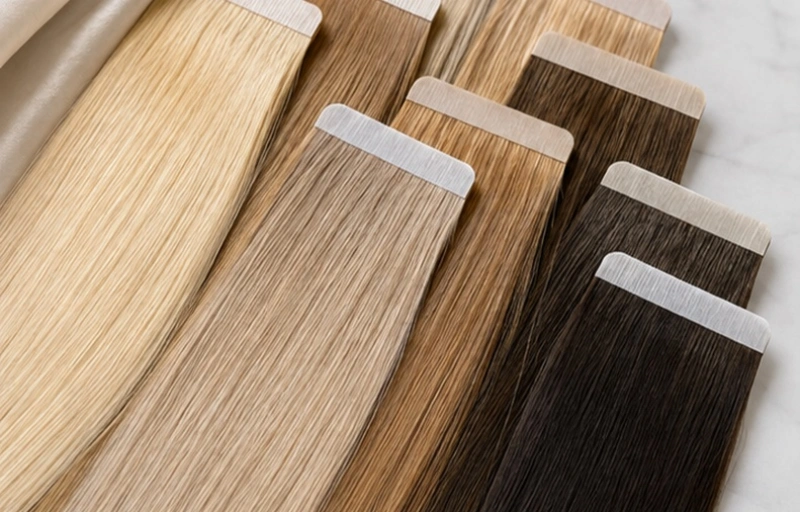
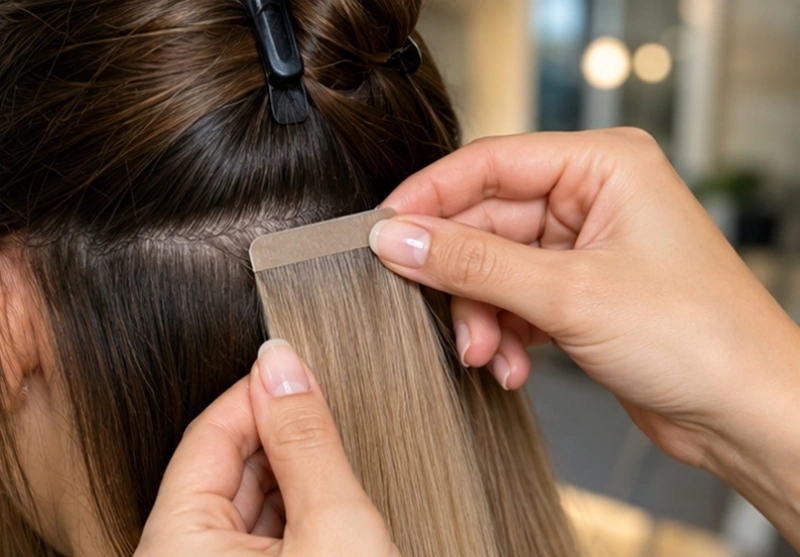
Tape-ins are pre-taped hair panels installed close to the scalp, usually by sandwiching a controlled section of natural hair between adhesive tabs. The method is semi-permanent: you wear the panels continuously, then have them moved up as your natural hair grows. The attachment is flat rather than strand-by-strand, which is why the method can look discreet and install relatively quickly.
The important point is that the wear cycle and the lifespan of the hair itself are different. A move-up appointment does not automatically mean the hair needs to be replaced.
7 Advantages of Tape-In Hair Extensions
1. A Flat, Natural-Looking Profile
The biggest visual advantage is the attachment shape. Instead of a bulky clip or a series of individual bonds, tape panels sit flat against the head. When the tape width, color, and placement match the client, the attachment can disappear under the natural hair. That makes tape-ins especially useful when the goal is added density without obvious hardware.
The result still depends on coverage: a perfectly thin tape placed too high can show, while a well-positioned panel can stay discreet.
2. Faster Professional Installation
Tape-ins cover more hair with each panel, so a stylist can build length or volume without attaching hundreds of individual strands. No heat is required to activate the standard tape attachment. That generally makes the service faster than many fusion or strand-by-strand methods.
The exact appointment time still depends on the number of panels, color blending, haircutting, and whether the service includes removal or re-taping from a previous installation.
3. Lightweight Feel When the Weight Is Matched Correctly
A tape panel distributes its weight across a wider section of natural hair. That can feel comfortable when the stylist matches the panel size and hair amount to the client’s density. “Lightweight,” however, should not be treated as a guarantee that every tape-in is suitable for every person. A panel can still create tension when too much extension hair is attached to too little natural hair.
Good results come from balancing panel weight, section size, and placement.
4. The Hair Can Be Reused After Re-Taping
Reusability is one of the strongest practical benefits. When the extension hair is still in good condition, a stylist can remove the panels, clean the attachment area, apply replacement tape, and reinstall them closer to the scalp. This is why the wear cycle and hair lifespan should be evaluated separately.
Reuse depends on the condition of both the hair and the tape area, not simply on how many weeks have passed. For a deeper explanation, see can you reuse tape-in extensions.
5. Easy to Add Length, Volume, and Color Effects
Tape-ins are not only for dramatic length. Stylists can use fewer panels for targeted volume, face-framing, or color effects without chemically processing the client’s natural hair. Because the panels create a broad, smooth section of hair, they are also useful for building density through the sides and back.
The best result comes from selecting the right weight and color distribution rather than simply adding the maximum number of pieces.
6. Multiple Tape Formats Give Stylists More Placement Options
Not all tape-ins use the same panel. Classic, seamless, PU, invisible, slim, and mini formats can change how much surface area, weight, and visible bulk sits at the root. Smaller or flatter pieces can help with more precise placement, while standard panels can be efficient for broader coverage.
Fine hair needs more careful planning rather than a blanket “yes” or “no.” If that is your main concern, use the dedicated guide to tape-in extensions for thin or fine hair.
7. Reuse Can Improve Long-Term Value
A reusable method can make sense financially when the hair quality stays consistent across repeat installs. You are not necessarily buying a completely new full set at every move-up appointment. The trade-off is that re-taping, removal, and salon labor still have a cost.
Tape-ins are therefore most cost-efficient for someone who values a semi-permanent result and plans to maintain the same hair rather than constantly switching methods.
7 Disadvantages of Tape-In Hair Extensions
1. You Need Regular Move-Up Appointments
Tape-ins grow away from the scalp as your natural hair grows, so the attachment cannot stay in the same position indefinitely. You need periodic removal and repositioning to keep the panels comfortable, concealed, and easy to manage.
This is a commitment rather than a one-time service. If you want a detailed routine, use the separate tape-in extension care guide instead of trying to treat a pros-and-cons article as a full maintenance manual.
2. Root Products Can Affect Adhesive Performance
Tape needs a clean, compatible surface. Oil, heavy conditioner, silicone-rich buildup, or product applied directly around the tabs can reduce adhesion. That does not mean you have to stop caring for your hair; it means you need to keep rich products away from the attachment zone and follow your stylist’s product guidance.
Clients who strongly prefer frequent scalp oils or very heavy root treatments may find tape-ins less convenient.
3. Slippage Can Happen When Prep or Installation Is Wrong
Slippage is not one single problem. It can come from residue before installation, too much or too little natural hair between the panels, weak or inconsistent tape, insufficient pressure, washing too soon, or heavy products near the bond.
If several panels slip early, the useful question is not “Are tape-ins bad?” but “Which part of the system failed?” That makes installation discipline and tape consistency especially important.
4. Tape Tabs Can Show in the Wrong Position
The low-profile design helps with concealment, but it does not make visibility impossible. A wide panel placed too close to a part line, crown, or hairline can peek through when the hair moves. The same can happen when natural density is too low to cover the attachment. The solution is usually better placement, a smaller panel, or a different method—not simply adding more hair. See the full tape-in placement guide for the technical details.
5. Removal and Re-Taping Add an Extra Service Step
Reusability sounds simple, but the reinstallation process includes removal, adhesive cleanup, replacement tape, sectioning, and repositioning. Pulling a panel out without the correct remover or technique can stress the natural hair and contaminate the extension with residue. That is why professional removal matters. The complete process is covered in how to remove tape-in extensions.
6. They Are Not Automatically Safe for Every Hair or Scalp Condition
Tape-ins can be a lower-tension option when correctly selected and installed, but they should not be described as “zero damage.” Fragile, over-processed, actively shedding, or irritated hair and scalp conditions need individual assessment before any semi-permanent extension service.
Risk also increases when panels are overloaded, left grown out for too long, or removed roughly. For a focused safety discussion, read are tape-in hair extensions bad for your hair?.
7. Product Quality Has a Major Effect on the Experience
Two tape-in sets can look similar in a photo but behave very differently in use. Hair direction, weight consistency, tape alignment, adhesive quality, processing, and color consistency all affect whether the finished service stays smooth and predictable.
Poor hair can tangle even if the tape holds perfectly; poor tape can slip even if the hair is excellent. This is why evaluating tape-ins as a complete system is more useful than judging the method by price alone.
Who Are Tape-In Extensions Best For?
Tape-ins are usually a better match when you want semi-permanent length or volume, prefer a flat attachment, and are willing to return for professional maintenance. They can work across different hair densities when the tape format and placement are adjusted.
They are a weaker match when you want something you can remove every night, cannot keep oils or heavy products away from the root area, or do not want scheduled salon upkeep.
| Tape-Ins May Suit You If… | Think Twice If… |
| You want a flat, low-profile attachment | You want zero follow-up appointments |
| You want continuous wear instead of daily clip-in removal | You rely on heavy oils or root treatments every day |
| You are comfortable with professional installation and removal | You plan to remove and reinstall the panels yourself without training |
| You value reusability and repeat salon wear | Your natural hair or scalp is currently too fragile for added tension |
| You are willing to adjust products and styling around the tape area | You need unrestricted placement for every high ponytail or exposed parting |
What Changes the Pros and Cons of Tape-In Extensions?
From a manufacturer’s perspective, tape-in performance is a system. Hair quality matters, but so do the tape structure, adhesive consistency, panel alignment, placement, and re-taping process. A “pro” such as reusability only remains a benefit if the hair stays usable and the panel can be cleaned and re-taped correctly.
A “con” such as visibility becomes much smaller when the panel width and placement match the client.
| Variable | Why It Changes the Result |
| Hair quality | Aligned, consistent hair is easier to keep smooth through repeated wear and washing. |
| Tape format and width | Panel size changes coverage, root bulk, weight distribution, and where the piece can be hidden. |
| Adhesive consistency | The bond must hold predictably without excessive residue during the re-taping process. |
| Panel alignment | Uneven tape edges or poorly aligned hair can affect comfort, sealing, and appearance. |
| Placement and section density | The stylist must balance extension weight with enough natural hair and enough coverage above the panel. |
| Re-taping process | Old adhesive, contamination, or rushed cleanup can reduce the quality of the next installation. |
Alpha manufacturer note: Alpha has manufactured hair extensions since 1990. For wholesale tape-in production, our stated QC checks include hair direction, weight accuracy, tape alignment, color consistency, shedding, tangling, and packaging details before shipment.
These checks do not replace correct salon installation, but they help control the product variables that influence the advantages and disadvantages above. See Alpha’s tape-in hair extension manufacturing options.
If adhesive performance is the main concern, compare the factors in how to choose tape for tape-in hair extensions rather than treating every adhesive as interchangeable.
Are Tape-In Extensions Worth It?
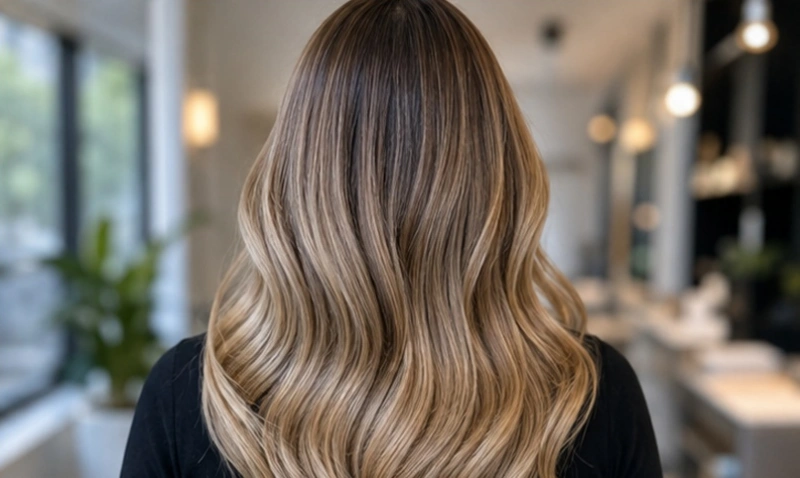
Tape-in extensions are worth considering when your priorities are a flat finish, relatively fast professional installation, continuous wear, and the option to reuse quality hair. They make less sense if your priority is zero maintenance, unrestricted root products, or a method you can remove at home every day.
The best decision is not “tape-ins are good” or “tape-ins are bad.” It is whether the method fits your natural hair, your routine, and the quality of the product and service available to you.
Choose tape-ins when: you want a discreet semi-permanent system and you are willing to maintain it correctly.
Choose another method when: you want daily removability, cannot work around adhesive-sensitive care, or a professional advises that your current hair condition is not suitable.
FAQ
What are the biggest pros and cons of tape-in hair extensions?
The biggest pros are a flat natural-looking attachment, faster salon installation, lightweight wear, and reusability. The biggest cons are regular move-ups, adhesive-sensitive care, possible slippage, visibility when placement is wrong, and the need for proper removal and re-taping.
Are tape-in extensions worth it for first-time extension wearers?
They can be, especially if you want continuous wear without a long strand-by-strand installation. The deciding factor is whether you are comfortable with the maintenance schedule and professional removal. A consultation is more useful than choosing only by price or before-and-after photos.
Why do some tape-in extensions slip while others stay secure?
Slippage can come from several variables: residue before installation, too much or too little hair between the tabs, inconsistent adhesive, poor panel pressure, washing too soon, or oil and heavy products around the attachment. Early slippage should be diagnosed as a system problem rather than automatically blamed on the entire tape-in method.
Is a thinner tape panel always better?
No. A thinner or smaller panel can reduce visible bulk and improve precise placement, but the panel still has to carry an appropriate amount of extension hair and attach to enough natural hair. The best tape size depends on hair density, placement area, desired coverage, and the specific tape-in construction.
Does reusability automatically make tape-ins cheaper?
Not automatically. Reusing good-quality hair can reduce the need to buy a new full set at every appointment, but removal, cleanup, replacement tape, and stylist labor still add cost. Value depends on how well the hair performs across repeat installations.
Final Takeaway
The real tape-in extensions pros and cons come down to fit and execution. A good system can deliver a flat, natural-looking finish, faster application, comfortable wear, and reusable hair. Poor tape, placement, or re-taping can lead to visible panels, slippage, and unnecessary tension.
If the hair, tape width, adhesive, alignment, placement, and reapplication process are controlled—and you accept ongoing salon care—tape-ins remain a practical semi-permanent option.