
Nano ring hair extensions are not automatically damaging, but they are not risk-free. When a trained stylist matches the extension weight to your natural hair, uses comfortable tension, and completes move-ups and removal on time, the risk of breakage stays lower.
Poor placement, excessive weight, missed maintenance, or rough removal can still damage hair and may contribute to traction alopecia.
If you are new to the method, start with our guide to what nano ring hair extensions are. If your main concern is hair health, keep reading. This guide explains who should be cautious, which warning signs matter, and how to reduce avoidable tension on your natural hair.
Key Takeaways
- Nano rings avoid glue and installation heat, but the attached strands still place mechanical load on natural hair.
- Correct section size, strand weight, placement, and tension matter more than the small size of the ring alone.
- Fine hair can wear nano rings in some cases, but low-density, actively shedding, or already damaged hair needs a careful professional assessment.
- Pain, persistent tenderness, bumps, broken hairs, widening gaps, or unusual thinning are warning signs—not a normal adjustment period.
- Regular move-ups, gentle daily care, and professional removal reduce risk; they cannot make an unsuitable installation safe.
Are Nano Ring Hair Extensions Damaging? The Short Answer
The most accurate answer is: they can be gentle when fitted and maintained correctly, but any extension method can cause damage if it repeatedly pulls on the hair.
Nano rings use tiny metal beads to secure individual extension strands without adhesive or installation heat. That removes two potential sources of chemical or thermal stress. It does not remove mechanical stress. Your natural hair still supports the weight of each extension strand every day.
The American Academy of Dermatology warns that constant pulling from extensions can break hair and damage follicles. The British Association of Dermatologists also explains that repeated traction can cause hair loss and may become permanent when it continues for a long time.
Simple rule: No heat and no glue does not mean no tension. A safe result depends on the full system: hair condition + section size + extension weight + placement + maintenance + removal.
Why Nano Rings Can Be Gentle—but Not Risk-Free
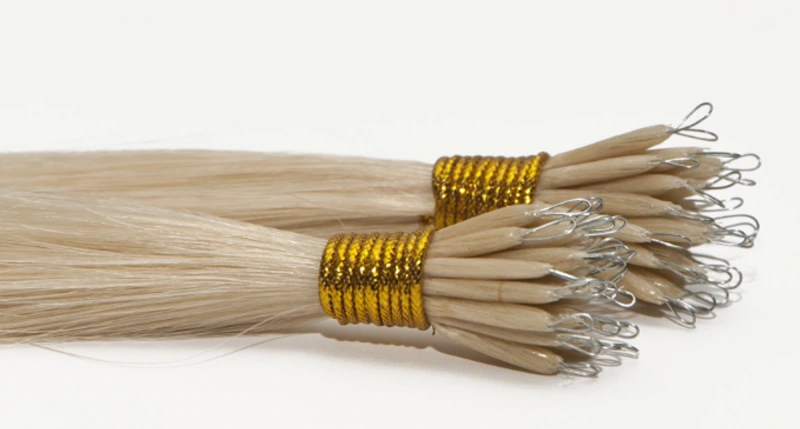
Nano rings are small and discreet. A stylist can distribute individual strands across the head, customize density, and avoid bulky attachment points. This flexibility can be helpful when the client has healthy fine hair and needs a carefully controlled amount of volume.
The same small attachment can become a problem when too little natural hair is asked to carry too much extension hair. A nearly invisible ring is not proof that the section beneath it is strong enough. Safety comes from appropriate loading and clean placement, not from bead size alone.
What Actually Causes Nano Ring Hair Extension Damage?
Too Much Tension or Poor Placement
Rings placed too close to the scalp, clamped at an uncomfortable angle, or installed across natural growth patterns can pull whenever you turn your head or tie your hair up. Pain, headache, stinging, or a tight feeling should be corrected immediately. You should not have to ‘wait for it to settle’ if an attachment hurts.
A careful fitting uses clean sections, neutral placement, and even distribution. See the full professional nano ring installation guide for the process and tools.
Extension Weight That the Natural Hair Cannot Support
Longer or denser extensions weigh more, especially when wet. If the natural section is too small, weak, or already compromised, the load can cause breakage near the ring. More strands are not always better. A skilled stylist should reduce length, strand count, or strand weight when your natural hair cannot safely support the original plan.
Late Maintenance, Matting, and Product Build-Up
As natural hair grows and sheds, the rings move farther from the scalp. Shed hairs can remain trapped inside the attachment until maintenance. If the grow-out becomes long, neighboring strands may twist together, mat, or pull unevenly. Heavy oils and conditioner near the rings can also contribute to slippage and tangling.
Follow your installer’s schedule, commonly around six to eight weeks, because hair growth and shedding vary. Use the nano ring aftercare guide for washing, brushing, sleeping, and product placement.
Rough or DIY Removal
Pulling, cutting, or forcing a ring open can snap natural hair. Removal should release the bead before the extension strand is separated and the shed hair is gently detangled. If a ring will not open easily, stop rather than applying more force.
For the correct sequence, review professional nano ring removal. If you cannot see the attachment clearly or your hair is matted, book a stylist rather than removing it alone.
Hair or Scalp That Is Not Ready for Extensions
Nano rings may be unsuitable during active shedding, postpartum hair loss, unexplained thinning, scalp inflammation, recent chemical breakage, or recovery from traction damage. Extensions can camouflage low density, but camouflage does not treat the cause. If you are losing more hair than usual or see new sparse areas, pause and ask a dermatologist or other qualified healthcare professional for an assessment.
Are Nano Ring Extensions Safe for Fine or Thin Hair?
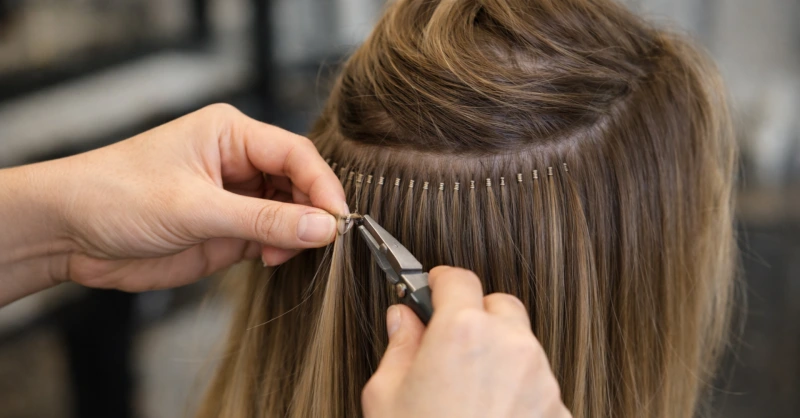
Fine hair and thin hair are not the same. Fine hair describes the diameter of each strand. Thin or low-density hair means fewer strands on the scalp. A person can have fine hair with high density, or coarse hair with low density.
Nano rings are easy to conceal in fine hair, but concealment is only one part of suitability. Fine strands may need lighter extensions, fewer attachment points, shorter lengths, and larger safety margins around the hairline. Low-density or actively thinning hair may not provide enough stable support.
| Natural-hair condition | General direction | Safer decision |
| Healthy fine hair with good density | Possibly suitable | Use lightweight strands, conservative length, even distribution and frequent checks. |
| Low-density hair without active loss | Needs specialist assessment | A stylist may reduce the plan or recommend a removable method. |
| Active shedding, postpartum loss or unexplained thinning | Delay installation | Identify and stabilize the cause before adding continuous load. |
| Bleach-damaged or snapping hair | Usually delay | Prioritize recovery; an attachment cannot strengthen a weak shaft. |
| Tender, inflamed or broken scalp | Do not install | Seek professional medical advice before any attached extension method. |
Warning Signs Your Nano Rings May Be Damaging Your Hair
A little awareness of the rings is possible after installation, but ongoing pain or visible hair loss is not something to ignore. Contact your stylist promptly if you notice:
- Pain, headache, burning, stinging, or persistent tenderness at an attachment.
- Redness, bumps, crusting, or increasing scalp irritation.
- Short broken hairs around several rings or excessive snapping during brushing.
- Widening gaps, sparse patches, or a receding-looking hairline near high-tension areas.
- Bonds that rotate, stick out, pull when you move your head, or repeatedly catch on a brush.
- Severe matting, an unpleasant odor, or build-up that cannot be cleaned without tugging.
- Sudden heavy shedding that continues away from the attachment points.
Do not self-diagnose hair loss: A stylist can correct installation and maintenance problems, but a dermatologist should assess unexplained shedding, bald patches, scalp disease, or suspected traction alopecia. Early action matters.
How to Reduce Damage Before, During, and After Installation
Before Installation
- Choose a stylist trained in strand-by-strand extensions and ask to see healed, maintained results—not only fresh installations.
- Discuss recent shedding, chemical services, scalp symptoms, medications, pregnancy/postpartum changes, and previous extension damage honestly.
- Agree on a conservative plan for length, strand weight, and total count. Add more later only if your natural hair remains comfortable and stable.
- Make sure the color and texture match is close enough to avoid unnecessary coloring or heavy heat styling after fitting.
During Installation
- Speak up immediately if a ring pinches or pulls during a head-turn test.
- Keep attachments away from fragile hairline areas and leave enough space for natural movement.
- Check that sections are clean, even, and large enough to support the selected extension strand.
- Ask for a maintenance date and written aftercare instructions before leaving the salon.
Daily and Weekly Care
- Support the roots with one hand and brush from the ends upward with an extension-safe brush.
- Wash gently; apply conditioner and oils through the mid-lengths and ends rather than directly on the rings.
- Dry the attachment area fully. Do not sleep with wet extensions.
- Wear a loose braid or ponytail at night and avoid tight styles that add a second source of traction.
- Keep high heat away from the attachment and the exposed nano tip.
Maintenance and Removal
Attend move-ups on the schedule set for your growth and hair condition, commonly around six to eight weeks. Do not stretch the interval just because the extensions still look acceptable from the outside. The hidden grow-out and shed hair matter.
The installed wear cycle is different from the usable life of the extension hair. Read how long nano ring extensions last for that distinction. Always remove or refit the hair professionally when bonds are overgrown, uncomfortable, or tangled.
Nano Rings vs Other Extension Methods: Which Is Gentlest?
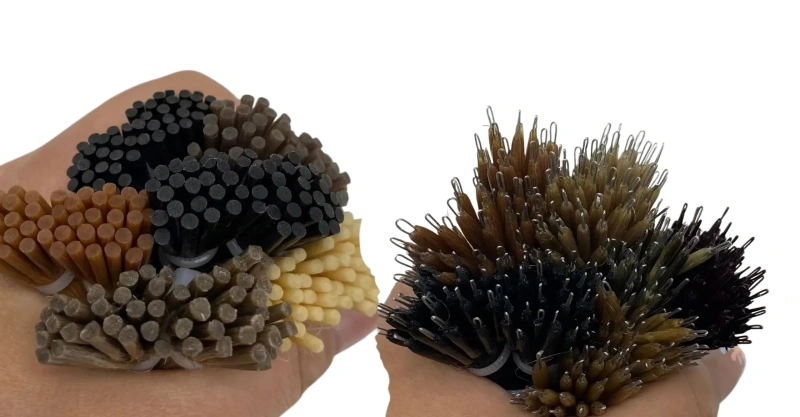
There is no single safest method for every person. The gentlest choice is the one that suits the condition and density of your natural hair, is installed with appropriate load, and can be maintained consistently.
| Method | Potential advantage | Main risk to control |
| Nano rings | No glue or installation heat; individualized placement | Continuous strand-by-strand load; small sections can be overloaded |
| Micro rings | No glue or installation heat; larger ring may hold a larger section | More visible; still creates continuous mechanical load |
| Tape-ins | Weight is spread across a wider tab | Adhesive, removal solution and tab placement require care |
| Clip-ins | Removable; no 24/7 load when used occasionally | Repeated clipping in the same weak area can still cause breakage |
| Keratin bonds | Discreet and individually placed | Heat/bonding and removal technique add variables |
For a closer bead-method comparison, see nano bead vs micro bead extensions. You can also review the full nano ring extensions pros and cons before choosing.
Safety Checklist for Salons and Hair Extension Brands
For salon owners, stylists, retailers, and private-label brands, safer results begin before the product reaches the client. Use a repeatable quality and education system:
- Publish strand weight, tip dimensions, bead material, recommended tools, and intended hair-density guidance for each SKU.
- Train teams to document consultation findings, row maps, strand counts, client comfort, and maintenance dates.
- Offer lighter-weight or shorter options instead of treating one full-head count as universal.
- Provide aftercare and warning-sign cards that tell clients when to contact the salon.
- Track slippage, breakage, irritation and early-removal reports by product batch and installation method.
- Never market nano rings as guaranteed ‘damage-free.’ Explain the conditions required for a lower-risk result.
Conclusion
So, are nano ring hair extensions damaging? They do not have to be, but the method is only as safe as the hair assessment, loading, installation, maintenance, and removal behind it. The absence of glue and installation heat is an advantage—not a guarantee.
Choose a trained stylist, start with a conservative plan, and act early if you feel pain or see breakage. If your hair is actively thinning or your scalp is inflamed, delay extensions and seek qualified advice first.
Alpha manufactures nano ring hair extensions for salons, hair brands, retailers, and distributors. Contact our team for product specifications, strand-weight options, color matching, OEM/ODM support, and technical guidance for your market.
FAQ
Can nano ring extensions cause bald spots?
They can contribute to localized hair loss if attachments repeatedly pull on the same areas or if an unsuitable installation remains in place. Pain, widening gaps, or smooth sparse patches need prompt attention. Remove the source of tension and ask a dermatologist to assess suspected traction alopecia.
Is the hair seen during removal always damage?
No. Naturally shed hairs can remain trapped in the rings until maintenance or removal, so seeing loose hair at one time can look alarming. However, many short snapped hairs, new sparse areas, or a clear loss of density are not explained by trapped shedding alone. Ask a professional to compare your scalp and hair condition with pre-installation photos.
How often should nano ring extensions be maintained?
Follow the schedule set by your installer for your growth rate and hair condition; around six to eight weeks is common. Earlier attention may be needed if bonds slip, rotate, mat, or become uncomfortable.
Do nano rings damage fine hair?
Fine hair is not automatically unsuitable, but it has a smaller safety margin. Lightweight strands, conservative length, correct section size, and careful placement are essential. Fine hair with active shedding, chemical breakage, or low density may be better served by a removable option or no extensions until it recovers.
Can I remove nano ring extensions at home?
Professional removal is safer, especially when you cannot see the back of your head or when there is matting. Forcing a bead open or pulling the extension can break natural hair.
When should I stop wearing nano ring extensions?
Stop and seek advice if you develop persistent pain, scalp inflammation, broken hairs around multiple attachments, widening thin areas, or ongoing excessive shedding. Do not reinstall over an unresolved problem.