

Wondering how much you need to launch your dream hair business? Your hair and beauty business startup costs can vary a lot. For example, dropshipping extensions might only set you back $500, while a premium salon could run over $20,000. Take a look at the table below for a quick comparison:
Business Model | Startup Cost Range |
|---|---|
Dropshipping hair extensions | $500 – $2,000 |
Mobile styling service | $1,000 – $3,000 |
Online hair consulting | $500 – $1,500 |
Premium salon (buildout) | $20,000 – $100,000+ |
Mobile hair salon (CAPEX) | $150,000 |
You want to make sure your budget fits your goals. Building an overall budget and business plan helps you avoid surprises. Alpha supports you every step, whether you’re just starting or growing your brand.
Key Takeaways
Understand your startup costs. Different business models have varying costs, from $500 for dropshipping to over $20,000 for a premium salon.
Create a detailed budget and business plan. This helps you avoid surprises and manage your finances effectively.
Consider starting small or online. Lower costs allow you to test your business idea without significant financial risk.
Plan for ongoing expenses. Regular costs like payroll, inventory, and utilities can add up quickly, so track them closely.
Utilize free marketing tools. Social media and referral programs can help you attract clients without breaking the bank.
Hair and Beauty Business Startup Costs
Starting a hair business means you need to understand all the hair and beauty business startup costs before you dive in. These costs can look very different depending on the business model you choose. Let’s break down what you need to know so you can plan your budget and avoid surprises.
Choosing Your Business Model
You have a lot of options when it comes to launching your hair business. Each model comes with its own set of hair and beauty business startup costs. Here’s a quick look at the most common business models and what you should consider for each:
Business Model | Startup Costs Range | Key Considerations |
|---|---|---|
Online Product Brand (DTC) | Low to moderate | Focus on branding, e-commerce setup, and marketing. |
Brick-and-Mortar Salon or Spa | High | Requires significant investment in lease, renovations, equipment, and staffing. |
Esthetic or Skin-Care Clinic | Very high | Involves costs for regulatory compliance, qualified personnel, and equipment. |
Hybrid Model (E-Commerce + Physical) | High to very high | Combines online and offline operations, so you need to coordinate logistics. |
💡 Tip: If you’re just starting out, you might want to test the waters with an online store or mobile service. These models usually have lower hair and beauty business startup costs and let you grow at your own pace.
Key Startup Costs
No matter which business model you pick, you’ll face some common hair and beauty business startup costs. Here’s what you should expect to budget for:
Initial Licensing & Permits
Salon Space Rental or Lease
Salon Equipment & Supplies
Technology & Booking Systems
Staffing & Payroll
Marketing & Branding
Unexpected Costs
If you’re opening a salon, you’ll need to think about salon start-up costs like rent, renovations, and equipment. For an online business, you’ll focus more on your website, branding, and inventory. Mobile and home-based businesses usually have lower salon start-up costs, but you still need to plan for supplies and marketing.
Alpha makes it easier for new entrants and established brands to manage these startup costs. You can start with a low minimum order quantity of just 500g, which helps you keep your inventory costs down.
Alpha also offers custom project solutions and OEM/ODM services, so you can create products and packaging that fit your brand without breaking the bank.
Feature | Description |
|---|---|
Low Minimum Order | Start with just 500g to reduce financial risk. |
Custom Project Solutions | Fully customizable packaging and product options for your brand identity. |
OEM/ODM Solutions | Flexible services for unique products, including custom colors and packaging. |
Cost Ranges by Business Type
Let’s get specific about the numbers. Here’s a breakdown of typical salon start-up costs and other business models in the hair industry:
Startup Cost | Cost Category | Min Amount | Max Amount |
|---|---|---|---|
Mobile Salon Vans | Vehicles/Assets | $110,000 | $110,000 |
Hairdressing Equipment | Equipment | $16,000 | $16,000 |
Initial Product Stock | Inventory | $10,000 | $10,000 |
Booking System Setup | Technology | $5,000 | $5,000 |
Website and Branding | Marketing/Digital | $4,000 | $4,000 |
Legal and Licensing | Compliance | $2,000 | $2,000 |
Working Capital Buffer | Liquidity | $85,915 | $85,915 |
Total | All Startup Costs | $232,915 | $232,915 |
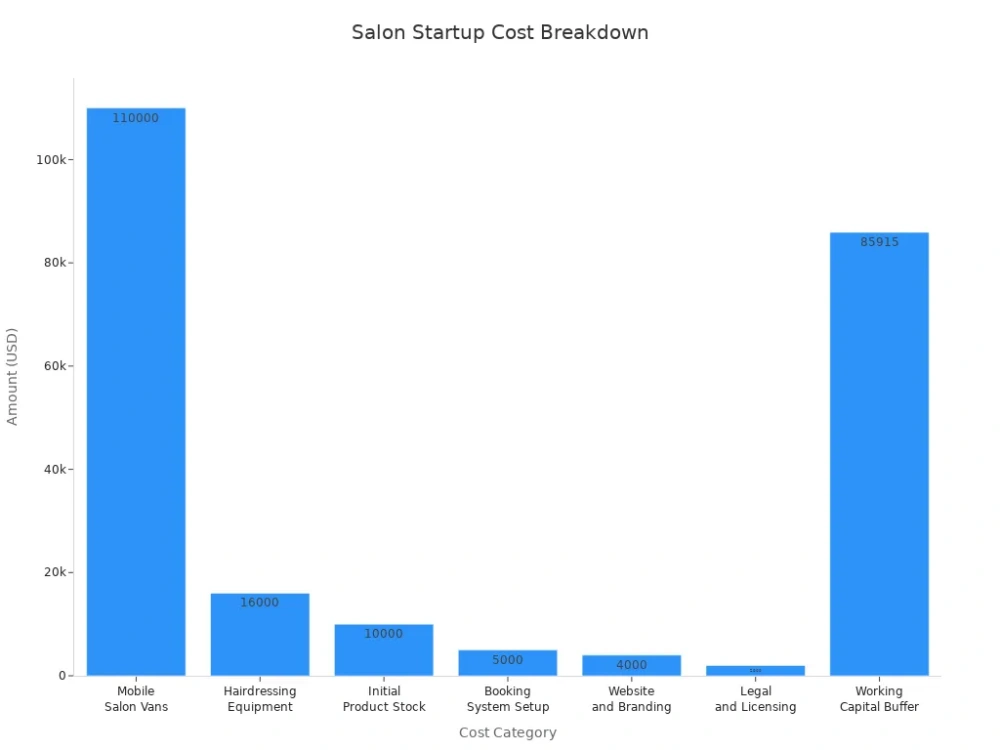
You can see that salon start-up costs can add up fast, especially if you want a physical location or a mobile salon van. Online businesses and home-based salons usually have much lower hair and beauty business startup costs, so they’re great if you want to start small.
Note: Alpha supports you whether you’re launching a boutique online brand or a full-service salon. You get access to premium products, low minimums, and expert guidance to help you manage your hair and beauty business startup costs from day one.
Startup Costs for a Hair Salon Business

Opening a hair salon business is a big step, and understanding the costs upfront helps you plan for success. Let’s break down what you’ll need to budget for when you open a salon, from finding the right space to hiring your team.
Space and Renovations
The first thing you need to decide is where you want your salon. The location and size will have a huge impact on your budget. If you choose a booth rental or a salon suite, you might spend between $3,000 and $15,000 to get started. A home-based salon can cost anywhere from $5,000 to $25,000.
If you want to open a small basic salon with two to four stations, expect to pay between $25,000 and $75,000. Medium full-service salons can run from $75,000 to $150,000, while a large luxury salon could cost $150,000 or more.
Salon Type | Estimated Startup Cost Range |
|---|---|
Booth rental / Salon suite | $3,000–$15,000 |
Home-based salon | $5,000–$25,000 |
Small basic salon (2–4 stations) | $25,000–$75,000 |
Medium full-service salon (6–10 stations) | $75,000–$150,000 |
Large luxury salon (high-end design) | $150,000–$300,000+ |
Spa, wellness center, or laser clinic | $250,000–$750,000+ |
Franchise salon | $200,000–$500,000+ |
Monthly lease costs can range from $2,000 to $15,000, depending on your city. Renovations might cost as little as $5,000 or go well over $100,000 if you want a high-end look. When you open a salon, make sure you budget for both the lease and the upgrades you need to create a welcoming space.
Equipment and Furniture
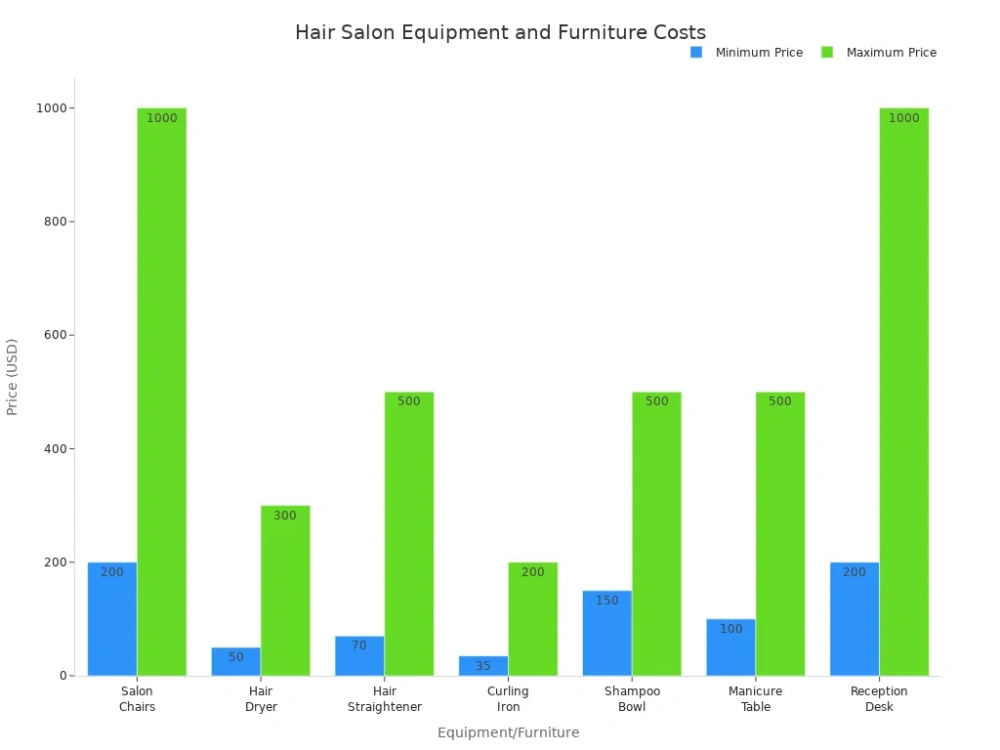
You can’t run a hair salon business without the right salon equipment and furniture. The cost to open a salon includes everything from chairs and shampoo bowls to styling tools and reception desks. Here’s a look at what you might spend:
Equipment/Furniture | Price Range |
|---|---|
Salon Chairs/Barber Chairs | $200 – $1,000 |
Hair Dryer | $50 – $300 |
Hair Straightener | $70 – $500 |
Curling Iron | $35 – $200 |
Shampoo Bowl | $150 – $500 |
Manicure Table | $100 – $500 |
Reception Desk | $200 – $1,000 |
The initial setup for salon equipment and furniture usually falls between $5,000 and $25,000. You can see how these costs add up in the chart below:
When you partner with Alpha, you get access to premium hair products that match your salon’s style. Alpha also offers OEM and ODM solutions, so you can customize your product line and packaging to fit your brand.
Licensing, Permits, and Insurance
Before you open a salon, you need to make sure you have all the right paperwork. Every hair salon business must follow local and state rules. Here are some of the most common licenses and permits you’ll need:
License/Permit | Description | Cost Range |
|---|---|---|
Federal Employer Identification Number | Unique number assigned by the IRS for business identification. | N/A |
Cosmetologist or Professional License | State-specific license with training and renewal requirements. | Varies by state |
Seller’s Permit | Required for selling retail products; varies by state tax laws. | N/A |
Salon Business Operation License | Needed to operate a business; can be applied for through the SBA. | $50 to several hundred |
Certificate of Occupancy | Ensures property compliance for business operations. | $20 to $80 |
OSHA Regulations | Compliance with health and safety regulations. | N/A |
You should also plan for insurance to protect your business and your team. These costs can vary, but they are essential for every hair salon business.
Inventory and Supplies
Stocking up on inventory is a key part of the cost to open a salon. The average initial inventory cost for hair products and supplies is about $10,000. This includes everything from shampoos and conditioners to styling products and hair extensions.
Alpha makes it easy to manage your inventory. You can start with a low minimum order, so you don’t have to tie up too much money in stock. Alpha’s high-quality hair products help you stand out from the competition, and you can customize your orders to fit your salon’s needs.
💡 Tip: Start with the essentials and expand your inventory as your salon grows. This helps you control costs and avoid waste.
Staffing and Payroll
Hiring the right team is one of the most important steps when you open a salon. Payroll is usually the largest ongoing expense for a hair salon business. If you have six full-time employees, you can expect to pay around $25,834 per month in payroll. This cost can have a big impact on your budget, so plan carefully.
Full-time employees require regular payroll, which can make financial management more complex.
Understanding payroll expenses helps you manage your budget and keep your salon running smoothly.
When you open a salon, you want to attract talented stylists and keep them happy. Offering competitive pay and a positive work environment helps you build a strong team.
Remember, the average cost to start a hair salon depends on your choices for space, equipment, inventory, and staffing. Careful planning and the right partners, like Alpha, can help you control costs and set your salon up for long-term success.
Ongoing Costs for Hair Salon Business
Running a hair salon means you need to keep an eye on your ongoing expenses. These costs can change depending on your salon location, the size of your team, and how busy you are. Let’s break down what you’ll need to cover each month to keep your business running smoothly.
Monthly Operating Expenses
Every month, you’ll face a set of regular bills. In 2026, the average monthly operating expenses for a hair salon are expected to be between $40,000 and $45,000.
Payroll is the biggest part of this, especially if you have a team of six. Your salon location can also affect your rent, utilities, and insurance. Make sure you review your expenses often so you can adjust your budget if needed.
Inventory Replenishment
You need to keep your shelves stocked with the products your clients love. Here’s how you can manage inventory at your salon location:
Check your product usage every week and do regular stock checks.
Focus on high-use items and track them closely.
Set reorder points so you never run out of essentials.
Automate your orders to save time and avoid overbuying.
Stick to your monthly budget by tracking expenses.
Alpha helps you manage inventory with reliable supply and cost-effective pricing. You get predictable lead times, stable prices, and access to trusted brands. This makes it easier to plan your orders and keep your salon location running without surprises.
Evidence Type | Description |
|---|---|
Supply Chain Reliability | Reliable distributors provide predictable lead times and transparent communication, aiding inventory management. |
Competitive Pricing | Stable pricing helps salons avoid unexpected cost increases, allowing for better financial planning. |
Access to Well-Known Brands | Salons can offer a better selection of trusted products, enhancing customer satisfaction and loyalty. |
Employee Salaries
Your team is the heart of your salon location. Here’s what you can expect to pay each month:
Employee Type | Average Annual Salary | Average Monthly Salary |
|---|---|---|
Full-time | $41,169 | $3,431 |
Part-time | $21,715 | $1,810 |
If you have several employees, payroll will be your largest ongoing cost. Plan ahead so you can offer competitive pay and keep your staff happy.
Utilities and Marketing
You can’t run a salon location without water, electricity, and internet. Expect to pay about $1,200 each month for utilities. Marketing is also important if you want to attract new clients.
Basic email marketing tools start at $35 per month, but you can use free tools if you’re on a tight budget. Some salons use integrated services to make marketing easier.
Tip: Review your utility and marketing costs every few months. This helps you spot savings and keep your salon location profitable.
Cost Reduction Strategies
Looking for tips to reduce startup costs? You have plenty of options to keep your spending in check and set your hair business up for success. Let’s explore some practical ways to save money from day one.
Start Small or Home-Based
Starting small or running your business from home can help you save a lot. You avoid high rent and utility bills, and you can grow at your own pace. Check out the table below for a quick look at the pros and cons:
Advantages | Disadvantages |
|---|---|
High profit margin due to high demand for services | High competition in the industry |
Low overhead costs compared to other businesses | Requires significant investment in equipment |
Generates repeat business from loyal customers | Low barriers to entry for new competitors |
If you want to test your ideas before opening a full salon, this approach makes sense. Alpha’s low minimum order quantities let you start with just what you need, so you don’t tie up your budget in inventory.
Buy Used Equipment
You don’t have to buy everything brand new. Used salon equipment can save you a lot of money. Many new owners find great deals on professional chairs and tools that still look and work like new. You can stretch your dollars further and invest in other areas of your business.
Used salon equipment often costs much less than new.
Buying used chairs helps you manage your budget.
Used barber chairs can be both affordable and comfortable for clients.
Negotiate with Suppliers
Negotiating with suppliers is a smart move. Here are some steps you can take:
Do your research and compare offers from different vendors.
Build long-term relationships to unlock better pricing.
Leverage bulk orders for discounts.
Offer regular orders for more favorable terms.
Ask for extras if discounts aren’t available.
Alpha’s expert consultation can help you get the best deals and find the right products for your needs.
Use Free Marketing Tools
You don’t need a big marketing budget to get noticed. Free tools can help you reach new clients and keep current ones coming back.
Google Business Profile boosts your local visibility.
Referral programs encourage happy clients to spread the word.
Email marketing campaigns keep your audience engaged.
Loyalty programs reward repeat customers.
Seasonal promotions and online booking incentives attract new business.
Minimal Inventory and Dropshipping
Want to avoid tying up cash in stock? Dropshipping lets you pay only for what you sell. You don’t need to manage inventory or shipping, so you can focus on growing your brand.
This approach lowers your startup costs and reduces financial risk. Alpha supports dropshipping and minimal inventory strategies, making it easier for you to launch with confidence.
Starting smart and staying flexible helps you control costs and grow your business at your own pace.
Financing Options for Startup Costs
When you start a hair business, you have several ways to cover your startup costs. Picking the right financing option can make a big difference in how fast you grow and how much control you keep.
Personal Savings and Loans
Many new salon owners use personal savings or take out a loan to get started. Using your own money gives you full control over your business. You do not have to answer to investors or share profits. Here are some pros and cons to consider:
You keep all decision-making power.
You avoid outside pressure from investors.
Growth may be slow if your savings are limited.
It can be hard to hire staff or buy enough inventory without extra funds.
A personal loan from a bank or credit union can help fill the gap if your savings fall short. Just remember, you will need to repay the loan with interest.
SBA and SNAP Financing
If you want more support, you can look into an SBA loan or SNAP financing. An SBA loan is backed by the government and often comes with lower interest rates and longer repayment terms. This makes it easier to manage your cash flow as you build your business.
SNAP financing is another option for small businesses that need flexible terms. Both options can help you secure the money you need without putting all your savings at risk.
Credit Cards and Lease Financing
Some owners use credit cards or lease financing to cover startup costs. Credit cards are easy to use but come with high interest rates. If you do not pay off the balance quickly, you could end up with a lot of debt.
Lease financing lets you get equipment without a big upfront payment, but you will have ongoing monthly bills. Here is a quick comparison:
Financing Option | Cost Considerations | Risk Factors |
|---|---|---|
Credit Cards | High-interest rates can add up fast if you carry a balance. | You risk debt and damage to your credit score if you miss payments. |
Lease Financing | No high upfront cost, but you pay monthly. | You may face restrictions from landlords or rent increases later. |
Investors and Crowdfunding
You can also raise money by bringing in investors or using crowdfunding platforms. To attract investors, you need a strong marketing strategy and a clear business plan. Crowdfunding sites like Kickstarter let you share your story and raise funds from supporters.
You can also work with influencers to spread the word and build excitement. Make sure your pitch shows what makes your salon special and how you plan to succeed.
Tip: Talk to a financial advisor or mentor before you choose a financing path. Good advice can help you avoid costly mistakes and set your business up for long-term success.
Budget Planning and Management
Creating a Business Plan
You need a solid business plan before you open your doors. This plan acts as your roadmap. It helps you stay focused and organized. When you create your business plan, you set clear goals and outline how you will reach them.
A strong business plan covers all the basics you need for your hair business. Here’s what you should include in your business plan:
Executive summary
Company description
Market analysis
Organization and management
Services and pricing
Marketing and sales strategy
Financial projections
Appendix for supporting documents
Your business plan should explain your business idea, your target customers, and your plan for growth. You want your business plan to show how you will stand out in the market. Alpha offers expert guidance to help you build a business plan that works for your needs.
Setting a Realistic Budget
You need to set a budget that covers your first six months. This budget helps you avoid surprises and keeps your business plan on track. Start by listing all your expected expenses. Use the table below to organize your business plan and budget:
Expense Type | Description |
|---|---|
Rent or mortgage payments | Cost of renting or buying your space, plus utilities and maintenance. |
Inventory replenishment costs | Money for restocking products and supplies. |
Employee salaries | Wages, payroll taxes, and benefits for your team. |
Marketing and advertising expenses | Funds for online ads, social media, and promotions. |
Utilities and operational expenses | Electricity, water, internet, and other business needs. |
You should plan for at least $20,000 to $40,000 in working capital. This helps you cover rent, payroll, and utilities for your first six months. Careful planning keeps your business plan realistic and helps you avoid running out of cash.
Financial Projections
Your business plan needs strong financial projections. These projections show how much money you expect to make and spend. You want to plan for your income, expenses, and profits. Good financial projections help you see if your business plan is working. They also help you adjust your plan if things change.
You can use your business plan to attract investors or apply for loans. Alpha’s product consultation can help you estimate your inventory costs and plan for growth.
Tools and Templates
You do not have to create your business plan from scratch. Many tools and templates can help you with your business plan and financial planning. Here are some useful options:
Tool/Template | Description |
|---|---|
Financial Plan Template | Helps you create accurate projections and plan your cash flow. |
Cash Flow Analysis Template | Let’s you track your business plan’s financial health. |
Break-even Analysis Template | Shows when your business plan will start making a profit. |
You can find user-friendly templates with organized tabs and easy navigation. These templates make your business plan and financial planning much easier. They also help you raise investment or apply for loans. Alpha supports new entrants with expert guidance, product consultation, and advice on business plan planning.
Tip: Take your time with your business plan. Careful planning now saves you time and money later. Use Alpha’s resources to make your business plan strong and your startup journey smoother.
Marketing and Growth
Online Presence and Branding
You want your hair business to stand out online. Start by building a strong marketing and website plan. Your website should look professional and match your brand style.
Use clear photos, easy navigation, and simple booking tools. Make sure your website works well on phones and computers. A good marketing strategy starts with a website that shows your services, prices, and story.
Alpha helps you create a unique brand. You can choose custom packaging and branding solutions that fit your vision. Custom labels, colors, and boxes make your products look professional and memorable.
Tip: Use your website to collect reviews and share before-and-after photos. This builds trust and attracts new clients.
Social Media and Influencer Marketing
Social media is a powerful tool for marketing your hair brand. Post photos and videos of your work on platforms like Instagram, Facebook, and TikTok. Share tips, tutorials, and behind-the-scenes moments. This keeps your followers engaged and brings in new clients.
Try working with local influencers. They can help you reach more people and build your reputation. A strong marketing strategy uses both regular posts and influencer partnerships. Respond to comments and messages quickly to show you care about your clients.
Social Media Tips | Why It Works |
|---|---|
Post regularly | Keeps your brand visible |
Use hashtags | Reaches new audiences |
Run giveaways | Encourages sharing |
Reinvesting for Expansion
As your business grows, reinvest your profits. Buy better equipment, add new services, or upgrade your marketing and website. A smart marketing strategy means you keep improving and reaching more clients. Track what works best and put more effort into those areas.
Alpha supports your growth with flexible product options and expert advice. You can scale up your orders and update your branding as your business expands.
Remember, marketing is not a one-time job. Keep learning, testing, and improving your approach to stay ahead.
Conclusion
Starting your hair business takes careful planning. You need to estimate your costs, set a smart budget, and manage your money as you grow. Here’s what you should do next:
List your startup and monthly expenses.
Build a simple budget for at least six months.
Track your spending and adjust as needed.
Ready to take the next step? Use Alpha’s expert support and resources to plan your launch. Start budgeting and building your dream hair business today!
FAQ
How much do startup costs vary for different hair business models?
Startup costs depend on your business model. You might spend less for an online store or mobile service. A physical salon usually requires higher costs. You should plan your costs based on your goals and location.
What are the main costs I should expect when opening a salon?
You need to budget for costs like rent, renovations, equipment, inventory, and payroll. Licensing and insurance add to your costs. Advertising and marketing costs help you attract clients. You should track all costs to avoid surprises.
How can I reduce my advertising costs when starting?
You can use free tools like social media and referral programs. These options lower your advertising costs. You should focus on building relationships with clients. You can also ask for reviews and use word-of-mouth advertising.
Do I need to budget for ongoing costs after launch?
Yes, you need to plan for ongoing costs. These costs include payroll, inventory replenishment, utilities, and advertising. You should review your costs every month. Tracking costs helps you stay profitable and avoid financial problems.
What is the best way to track my costs and advertising expenses?
You can use spreadsheets or budgeting apps. These tools help you organize costs and advertising expenses. You should update your records often. Tracking costs lets you see where your money goes and helps you make smart decisions.