
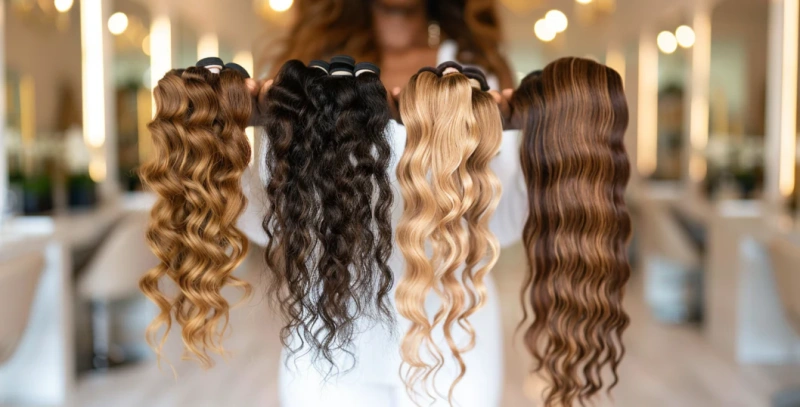
Curly hair extensions need a different routine from straight extensions. The curl pattern creates more contact between strands, so dryness, friction, and product buildup can turn into frizz or tangles faster. A few consistent habits can keep the curls defined while protecting both the attachment method and the hair itself.
The most important rule is to care for the hair according to how it is installed. Clip-ins and other removable pieces can be washed and dried away from the scalp. Tape-ins, wefts, keratin bonds, and micro-link methods need extra attention around their attachment points. Advice that works for one method can cause problems for another.
Quick Answer: How to Maintain Curly Hair Extensions?
To maintain curly hair extensions, keep the lengths moisturized, detangle gently from the ends upward, wash only when needed, avoid heavy buildup, and protect the curls from friction while sleeping or storing them.
For permanent or semi-permanent methods, keep conditioner and oil away from attachment points and make sure the roots, tapes, bonds, or weft tracks are fully dry after washing.
A Simple Curly Hair Extension Care Schedule
Daily or After Each Wear
- Check the ends for tangles before they tighten into knots.
- Use your fingers or a wide-tooth comb to separate curls gently.
- Add a small amount of lightweight leave-in conditioner if the lengths feel dry.
- Keep oils, rich masks, and heavy product buildup away from tapes, bonds, beads, and weft attachment areas.
- If you wear installed extensions, secure the hair loosely before sleep.
On Wash Day
- Detangle before washing.
- Use lukewarm water and a gentle, moisturizing shampoo.
- Condition the mid-lengths and ends.
- Squeeze out water instead of rubbing the hair with a towel.
- Dry according to the installation method.
Weekly or As Needed
- Check for product buildup, matting, or unusually dry ends.
- Deep-condition removable extensions when the hair needs more slip and softness.
- Refresh the curl pattern with water and a small amount of leave-in or curl product rather than shampooing again.
How Often Should You Wash Curly Hair Extensions?
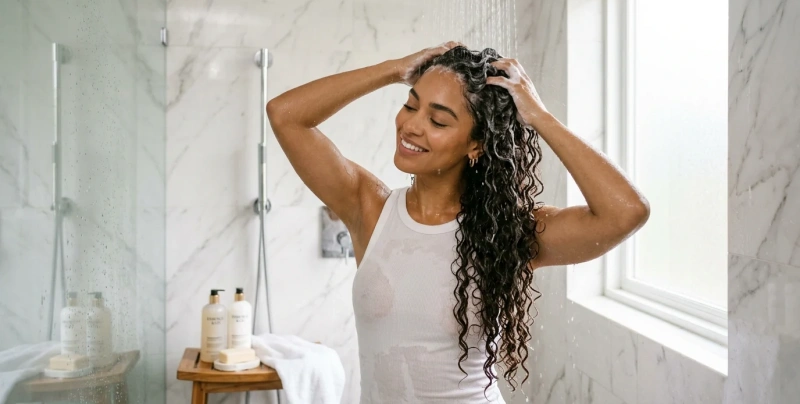
There is no single washing schedule that fits every type of curly hair extension. Washing frequency depends on the attachment method, how often the hair is worn, scalp oil, exercise, styling products, and the curl pattern.
Removable curly extensions such as clip-ins, halos, and ponytails usually do not need to be washed after every wear. Clean them when they have visible buildup, feel coated, lose movement, or no longer respond well to a water refresh. Frequent washing can dry extension hair because it does not receive the same natural oils as growing hair.
Permanent or semi-permanent curly extensions need a scalp-cleansing routine that fits the client’s installation and lifestyle. The scalp should stay clean, but the lengths do not need aggressive shampooing. Apply shampoo mainly at the scalp and let the lather move through the lengths as you rinse.
For a step-by-step wash routine, see How to Wash Curly Hair Extensions.
How to Wash Curly Hair Extensions Without Disturbing the Curl Pattern?
- Detangle first. Work through obvious knots before the hair is fully saturated. Hold the hair above the area you are detangling so you are not pulling on tapes, bonds, beads, or weft rows.
- Use lukewarm water. Very hot water can increase dryness and may be unsuitable for some attachment systems.
- Shampoo gently. Avoid bunching the lengths together or scrubbing in circles. Clean in a downward motion and focus on the scalp when extensions are installed.
- Condition strategically. Apply conditioner through the mid-lengths and ends. Keep rich conditioner, oils, and masks away from adhesive tapes, keratin bonds, beads, and other attachment points unless the supplier or stylist specifically recommends otherwise.
- Rinse thoroughly. Residue makes curls feel heavy and can reduce definition.
- Remove excess water gently. Use a microfiber towel or soft cotton T-shirt and press or squeeze instead of rubbing.
How to Detangle Curly Hair Extensions?
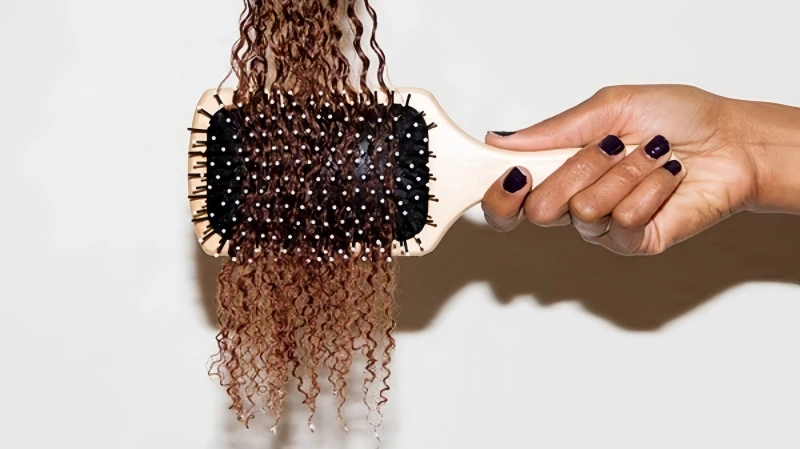
Curly extensions should be detangled with enough slip to prevent unnecessary pulling, but the exact timing depends on the installation. Before washing, remove obvious knots gently. During conditioning, use your fingers or a wide-tooth comb to work through the lengths in small sections.
Always start at the ends and move upward. Do not force a comb through a knot. Add more slip, hold the section above the tangle, and separate the knot a little at a time. For installed extensions, avoid dragging a comb or brush across the attachment area.
Dry brushing is usually a poor choice when you want to preserve a defined curl pattern because it separates curl clumps and creates frizz. If the extension method requires daily brushing around the roots to prevent matting, use the tool and technique recommended for that method, then redefine the lengths with a light water mist if needed.
For a deeper detangling routine, see How to Detangle Curly Hair Extensions.
Keep Curly Human Hair Extensions Moisturized, Not Coated
Curly human hair extensions often need more conditioning than straight extensions, but more product is not always better. Heavy creams, waxes, oils, and repeated layers of product can collect on the hair and make the curl pattern look flat or separated.
Start with a small amount of lightweight leave-in conditioner on damp lengths. Add more only where the hair feels dry, especially on the ends. A light curl cream or mousse can help redefine the pattern, but the goal is flexible movement rather than a stiff finish.
For removable extensions, a moisturizing mask can be used occasionally when the hair feels rough or difficult to detangle. Rinse well and allow the pieces to dry completely before storing them.
Drying: The Right Method Depends on the Installation
This is where generic extension advice often becomes confusing.
Removable extensions: After washing, lay the pieces flat on a towel or hang them so the hair can dry without being crushed. Air drying is a low-heat option that helps preserve the curl pattern. Do not store the hair until it is completely dry.
Installed wefts, tape-ins, keratin bonds, or micro-links: Do not leave attachment areas damp for long periods. Gently remove excess water, then dry the roots and attachment points thoroughly using controlled airflow and a low or moderate heat setting. The curly lengths can be diffused on low heat or allowed to finish drying with minimal disturbance, depending on the stylist’s aftercare instructions.
Whenever heat is used, apply a heat protectant to the lengths and use the lowest effective temperature. Repeated high heat can loosen curl definition and make extension hair feel dry sooner.
How to Sleep With Curly Hair Extensions?
Friction is one of the main reasons curly extensions tangle overnight. If the extensions are installed, make sure the hair is dry before bed. Detangle the lengths gently, then secure them in a loose braid, loose twist, or low ponytail with a soft scrunchie. A satin or silk pillowcase or bonnet can reduce friction further.
Avoid tight nighttime styles that pull on the attachment points. The goal is to keep the curls controlled, not stretched under tension.
Removable extensions should generally be taken out before sleeping unless the product is specifically designed for overnight wear. Detangle them, make sure they are dry, and store them in a way that keeps the curl shape from being compressed.
How to Refresh Curls Between Washes?
Curly hair extensions often look better when they are refreshed instead of repeatedly washed.
Lightly mist the lengths with water, then smooth a small amount of leave-in conditioner through dry areas. Scrunch the curls upward and let them reset. If a section has lost its pattern, twist it around your finger while damp and allow it to dry in that shape. A diffuser on a cool or low setting can speed up the process.
Avoid soaking attachment points during a quick refresh. Too much product can also create buildup, so start with less than you think you need.
Products to Use – and Where to Use Them
| Use on the lengths and ends | Keep away from attachment points unless approved |
| Gentle moisturizing shampoo | Rich conditioners |
| Hydrating conditioner | Hair masks |
| Lightweight leave-in conditioner | Oils |
| Light curl cream or mousse | Heavy styling creams |
| Heat protectant when using heat | Products that leave a waxy residue |
| Small amount of serum or oil on dry ends | Any product not approved for the attachment method |
For tape-ins and bonded methods in particular, product placement matters as much as the product itself.
Common Curly Hair Extension Maintenance Mistakes
- Overwashing. Extension hair can become dry when it is cleansed more often than necessary.
- Treating every installation the same. Advice for clip-ins is not automatically safe for tape-ins, wefts, bonds, or micro-links.
- Leaving installed attachment points wet. The lengths may tolerate air drying, but roots and attachment areas should be dried according to the method.
- Applying oil or conditioner to tapes and bonds. This can contribute to slippage or weaken attachment performance.
- Rough towel drying. Rubbing creates friction and makes curly textures harder to manage.
- Dry brushing the curl pattern. It can separate curl clumps and create frizz. Use method-specific root brushing when needed, then refresh the lengths separately.
- Using too much product. Buildup can make curls dull, sticky, or heavy.
- Sleeping with wet extensions. This increases friction and tangling and is especially risky around installed attachment points.
How Long Do Curly Hair Extensions Last?
The answer depends on what you mean by “last.” The time between salon maintenance appointments is different from the usable life of the extension hair itself.
Permanent and semi-permanent methods require scheduled maintenance as natural hair grows, even when the extension hair is still in good condition. Removable extensions may be worn for many months because they are not exposed to daily scalp washing or constant friction. Hair quality, color processing, heat, washing frequency, detangling technique, storage, and product buildup all affect how long curly extensions remain soft and defined.
Instead of relying on one universal lifespan number, follow the maintenance schedule for the installation method and replace the hair when it no longer detangles, holds its curl pattern, or performs to the standard you expect.
A Note for Salons and Hair Brands
Aftercare should be specific to the extension method. A single generic care card can create unnecessary complaints because a clip-in customer and a tape-in customer should not receive identical washing, drying, and product-placement instructions.
For salons and brands, separate aftercare guidance by attachment type, explain where conditioner and oils can be used, and make the drying instructions explicit. Clear aftercare helps clients protect the hair and can reduce avoidable problems such as matting, buildup, slippage, and flattened curls.
Alpha manufactures 100% full-cuticle Remy hair extensions and provides OEM/ODM support for hair brands, salon chains, wholesalers, and new entrants. If you are developing a curly hair extension line, curl pattern consistency and method-specific aftercare should be considered together from the sampling stage.
Final Curly Hair Extension Care Checklist
- Detangle gently from the ends upward.
- Keep the lengths conditioned without coating the attachment points.
- Wash based on buildup, wear frequency, scalp needs, and installation method.
- Rinse products out thoroughly.
- Dry installed roots and attachment areas completely.
- Use low heat and heat protection when styling.
- Reduce friction at night with a loose protective style and satin or silk.
- Store removable extensions only when clean, detangled, and completely dry.
- Refresh curls with water and lightweight product between washes.
- Follow the maintenance schedule recommended for the extension method.
Curly hair extensions stay easier to manage when care is consistent and method-specific. Protect the attachment points, keep the lengths moisturized, and avoid unnecessary friction or buildup. Those habits do more for curl definition and longevity than an overcomplicated routine.
If you are choosing or sourcing curly extensions, explore Alpha’s Curly Hair Extensions to compare options for different installation methods and curl requirements.
FAQ
Can you wash curly hair extensions?
Yes. Use lukewarm water, gentle shampoo, and a moisturizing conditioner on the lengths. For installed extensions, focus cleansing at the scalp and keep heavy conditioner or oils away from tapes, bonds, beads, or other attachment points.
How often should you wash curly hair extensions?
Wash when the scalp or hair needs cleansing rather than following one fixed number for every method. Removable pieces usually need less frequent washing than installed extensions. Product buildup, exercise, scalp oil, and wear frequency all affect the schedule.
Should you brush curly hair extensions every day?
Do not brush the curly lengths aggressively just to meet a daily schedule. Remove tangles gently and use a wide-tooth comb or fingers when appropriate. Installed methods may require method-specific brushing near the roots to prevent matting.
Can curly hair extensions air dry?
Removable extensions can usually air dry after washing. For installed extensions, dry the roots and attachment points thoroughly. The curly lengths can then be diffused on low heat or allowed to finish drying with minimal disturbance if the method allows it.
How do you keep curly hair extensions from getting frizzy?
Reduce friction, keep the lengths hydrated, avoid rough towel drying and high heat, and refresh the curl pattern with water and a small amount of lightweight leave-in product.
How do you keep curly hair extensions from tangling at night?
Go to bed with dry, detangled hair. Use a loose braid, twist, or low ponytail and sleep on satin or silk. Removable extensions should usually be taken out and stored before sleeping.