
Hand-tied wefts are thin hair-extension tracks made by tying hair onto a fine foundation thread by hand. The narrow seam is flexible and lies close to the head, which is why hand-tied weft extensions are often chosen for natural movement, soft volume, and discreet blending.
The construction and the installation method are related, but they are not the same thing. “Hand-tied” describes how the weft itself is made. A stylist may then attach that weft to a professionally planned row, commonly using a beaded foundation and sewing.
This guide focuses on the weft itself—its construction, benefits, limitations, client fit, cutability, lifespan, quantity planning, and how it compares with Genius and machine wefts—without duplicating a full installation tutorial.
What are Hand Tied Wefts?
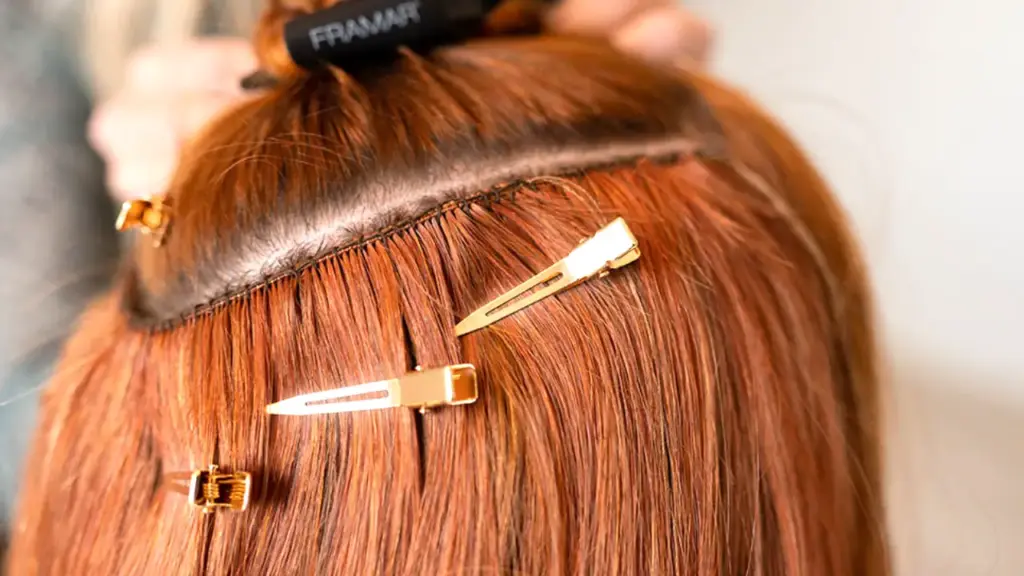
A hand-tied weft is a continuous strip of extension hair with a slim top seam created by securing small groups of hair to a foundation thread by hand. Compared with a traditional machine-sewn track, the finished seam is usually thinner, softer, and more flexible.
That low-profile construction helps the weft follow the shape of the head and disappear beneath the natural hair when the row is planned correctly.
Hand-tied weft hair extensions are not individual strand extensions. They are installed as weft pieces, so the stylist has to consider the width of the row, the total weight being added, the client’s natural density, and how much hair is available to conceal the attachment.
Hand-Tied Weft vs Hand-Tied Method: What’s the Difference?
The term “hand-tied” can describe two different things in salon conversations. A hand-tied weft is a product construction: the hair is tied to a fine foundation thread. A hand-tied or beaded-row method is an installation system: the stylist creates a support row and secures the weft to it.
In other words, the weft is the hair piece; the method is how that piece is attached. If you want the mechanics rather than the product definition, see how hand-tied extensions work.
How Are Hand-Tied Wefts Constructed?
The defining feature is the seam. Instead of building a thicker track with rows of machine stitching, traditional hand-tied construction uses a fine foundation thread with the hair tied along it. The result is a narrow, pliable edge that can sit close to the scalp and move with the natural hair.
- Fine foundation seam: The top edge is slim and flexible, which reduces visible bulk when it is properly concealed.
- Hand-secured hair: Small groups of hair are tied along the continuous foundation rather than locked into a heavy machine-stitched band.
- Full-width handling: Because the foundation is continuous and delicate, traditional hand-tied wefts are generally fitted by using appropriate widths, folding, or stacking—not by cutting straight through the seam.
- Construction quality still varies by supplier. For professional use, evaluate the actual sample for seam consistency, shedding, density, color, and how the weft behaves after washing and reinstallation instead of relying on the product name alone.
Benefits and Limitations of Hand-Tied Wefts
- The appeal of hand-tied wefts comes from the balance between a low-profile seam and natural movement. Those same construction choices also create handling limits that matter for stylists and clients.
- Natural-looking finish: A thin seam can sit close to the head and blend discreetly when there is enough natural hair for coverage.
- Light, flexible feel: The weft bends easily around the shape of the head, which can make the finished row feel less bulky than a thicker machine track.
- Useful for dimensional color: Lower-density pieces can be layered in different shades so highlights, lowlights, and rooted colors remain visible instead of forming one solid block.
- Reusable across maintenance visits: Quality human-hair wefts can often be cleaned, moved up, and reinstalled while the hair and seam remain in good condition.
- Main limitation—do not assume it is cuttable: Cutting through a traditional hand-tied foundation can loosen the knots and lead to shedding or unraveling.
- More delicate handling: The slim seam should be protected during fitting, stitching, removal, brushing, and reinstallation.
- Not automatically right for every fine-hair client: A thin seam does not cancel out total weight or tension. Fragile, actively breaking, or very low-density hair needs a conservative professional assessment.
Who Are Hand-Tied Wefts Best For?
Hand-tied wefts are often a strong option for clients who want a discreet row, soft movement, and controlled volume rather than one very dense track. They can work well on fine-to-medium natural density when the hair is healthy enough to support the selected weight and the attachment can be concealed.
They are also useful when the color plan calls for several shades to be layered through one row. Because individual hand-tied pieces are typically lighter and less dense than a heavy machine weft, a stylist can build dimension gradually instead of adding all the color and volume in one band.
However, “thin hair” is not an automatic green light. The row design, total grams, tension, perimeter coverage, and maintenance schedule still have to match the client. For a more specific suitability discussion, read Alpha’s guide to hand-tied extensions for thin hair.
Can You Cut Hand-Tied Wefts?
Traditional hand-tied wefts should not be cut through the top seam unless the specific manufacturer explicitly states that the construction is cuttable. Cutting a standard hand-tied foundation can loosen the tied sections and cause the edge to unravel or shed.
When the row is shorter than the weft, a stylist normally works with suitable pre-made widths or uses an approved folding or stacking approach rather than trimming the seam like fabric. If precise cut-to-fit customization is essential, a Genius weft or certain machine-weft constructions may be more practical.
Always follow the specifications for the actual product in hand. For the full handling explanation, see can you cut hand-tied extensions?.
How Long Do Hand Tied Wefts Last?
There are two different timelines to keep separate: the maintenance interval for the installed row and the reusable life of the extension hair. The row moves away from the scalp as natural hair grows, so many professionally installed weft systems are checked or moved up at roughly six to eight weeks. The exact schedule depends on growth, row method, tension, natural density, and home care.
The hair itself is not normally replaced at every move-up. A well-made human-hair weft can be reused across multiple installations as long as the hair remains soft and full, the seam is stable, and shedding or matting has not made the piece unsuitable.
Color processing, heat, washing habits, brushing, sleeping, and removal technique all affect how long that reusable life lasts. For a dedicated lifespan breakdown, see how long hand-tied hair extensions last.
How Many Wefts for Hand Tied Extensions?
There is no reliable universal number of hand-tied wefts for a full head because “one weft” is not a standardized unit. Different suppliers can use different widths, grams, densities, and lengths, and two clients with the same hair length may need very different total weight.
A better plan starts with the client and the product specification:
| Planning factor | What to evaluate |
| Natural hair density | How much weight the hair can support and how much coverage is available over the row. |
| Goal | Volume only, added length, or a full transformation require different amounts of extension hair. |
| Weft specification | Check width, grams, density, length, and seam construction rather than counting pieces alone. |
| Row plan | Decide how many rows are appropriate and how much weight each row can carry without overloading one area. |
| Color strategy | Layering multiple shades may increase the number of pieces even when the total target weight stays controlled. |
For low-density hair, the priority is usually conservative total weight and reliable concealment. Medium-density hair gives the stylist more flexibility. Dense hair or a major length-and-volume change may require more total hair, more rows, or a denser weft construction.
If the question is specifically about row count, use the guide to how many rows of hand-tied extensions rather than applying a fixed chart to every client.
How Are Hand-Tied Weft Extensions Installed?
Professional installation usually begins with a consultation, density assessment, and row plan. The stylist sections the hair and commonly builds a supportive beaded foundation, then places the hand-tied weft along the planned row and sews it securely to that foundation.
Traditional hand-tied seams are kept intact, so the stylist works with suitable widths or an approved fold/stack approach instead of cutting through the top edge. The row is then checked for even tension, secure end points, concealment, and movement before the hair is blended.
For the complete tools, bead pattern, stitching sequence, and finishing process, follow Alpha’s how to install hand-tied extensions. For row positioning specifically, use the hand-tied extensions placement guide.
What About Removal and Maintenance?
Removal should be treated as a separate professional service, not as the reverse of a DIY installation tutorial. The stylist identifies the sewing thread and bead row, releases the weft without cutting natural hair, opens the beads, and removes shed hair or tangles before deciding whether the weft is healthy enough to reinstall. See the professional hand-tied extension removal guide for the full process.
Between appointments, gentle brushing, thorough drying around the row, controlled heat, and keeping heavy oils away from the attachment area help protect both the natural hair and the weft seam. The detailed routine is covered in how to care for hand-tied extensions.
Hand-Tied vs. Genius vs. Machine Weft: Quick Comparison
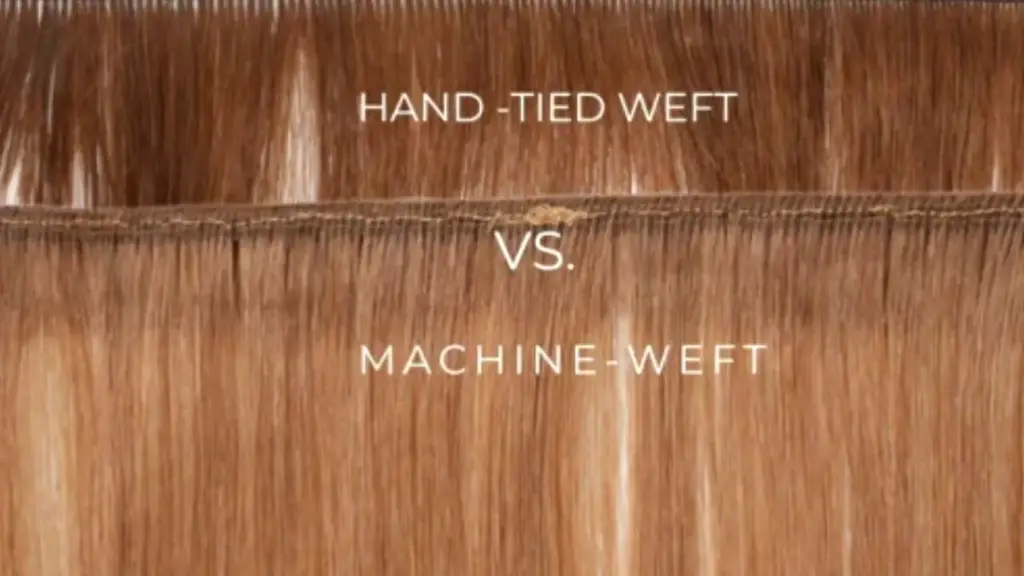
All three are professional weft formats, but their construction changes how they can be fitted and where they make the most sense. Use this as a high-level comparison; exact specifications vary by supplier and collection.
| Factor | Hand-Tied Weft | Genius Weft | Machine Weft |
| Typical seam profile | Very thin and flexible | Very thin / low-profile | Thicker and more substantial |
| Construction | Hair tied by hand onto a continuous foundation thread | Modern slim weft construction designed for low bulk | Hair secured with machine stitching |
| Can it be cut? | Traditional seam: generally no | Often designed to be cut; verify the product | Often cuttable, but edge handling depends on construction |
| Best fit | Soft movement, shade layering, discreet light-to-moderate volume | Cut-to-fit flexibility with a slim profile | Dense volume, robust handling, and efficient coverage |
| Main trade-off | Delicate seam and limited cutability | Specifications vary widely by manufacturer | More seam bulk to conceal |
If you are choosing among the three for a salon menu or product range, use Alpha’s full Genius vs. hand-tied vs. machine weft comparison for a deeper construction and client-fit analysis.
Final Thoughts: Choose the Weft by Construction, Not Just the Name
Hand-tied wefts are best understood as a specific weft construction: a thin, flexible track created by tying hair onto a fine foundation thread. Their main strengths are low-profile blending, soft movement, and the ability to build color and volume in controlled layers.
Their main limitation is equally important: a traditional hand-tied seam is delicate and should not be treated as a cut-anywhere weft.
If your next question is how the row is built and secured, continue with the hand-tied installation guide or the explanation of how hand-tied extensions work. If you are evaluating hair for a salon, brand, or wholesale program, review Alpha’s hand-tied weft hair extensions and confirm the actual seam construction, weight, color, texture, and customization requirements before ordering.